Top 15 Best Slow Hay Feeder Hacks You Can’t Miss!
Hay feeders that don’t slow down the process end up wasting a lot of feed, leaving a mess that takes extra time to clean. Choosing the best slow hay feeder helps control how quickly horses consume their food, reducing waste and discouraging them from pulling out large mouthfuls in one go. A poor, cheaply made feeder often breaks under regular use or fails to prevent the hay from falling to the ground, which can lead to mold and spoilage.
The best slow hay feeders are usually made from durable, weather-resistant materials like heavy-duty steel or thick polyethylene plastic. Size matters too, accommodating standard hay bales while limiting access enough to force slower eating. Safety features, such as smooth edges and secure fittings, prevent injuries.
Ease of cleaning is important since feeders can accumulate dirt and old feed quickly, so designs that allow quick disassembly or hose-down cleaning tend to work better in the long run.
Need a Quick Check?
| Image | Product | Price |
|---|---|---|
Our Top Picks 1  | Majestic Ally Hay Net | Check Price |
Our Top Picks 2  | Weaver Equine Hay Net | Check Price |
Our Top Picks 3  | Tahoe Web Gate Feeder | Check Price |
Our Selected Top 15 Slow Hay Feeder Worth Buying
This list features a variety of slow hay feeders designed to reduce waste and promote healthy feeding habits for animals. Each review covers performance, ideal users, key advantages, and potential drawbacks, helping you choose the best option for your specific needs.
1. Majestic Ally Slow Feed Hay Net
Keeping hay consumption slow and steady can prevent digestive issues in horses, which is exactly why this hay net works so well. Suited for horses of all life stages, it manages hay intake while matching a horse’s natural grazing habits. Its biggest strength lies in the small 1.5 x 1.5 hole design that really slows feeding down.
Setting up the net is straightforward thanks to the strong top rope, and at 40 inches fully stretched, it’s large enough to hold about 3 to 5 flakes of hay. Daily care involves refilling the twin-pack nets and hanging them where your horse can access hay safely, indoors or outdoors. The durable nylon mesh won’t easily tear, even with regular, sometimes aggressive chewing.
The small-holed rope design does a good job slowing eating to help regulate digestion, working well for horses prone to indigestion. Constructed from durable nylon, it withstands heavy use. Most praise centers on how well it mimics natural grazing, while some note the weight and sometimes difficult refilling as minor drawbacks.
The net’s design closely mimics natural grazing and helps with digestion, but some find the weight and refilling process less convenient. While it holds 3 to 5 flakes of hay well, the smaller holes require patience when loading.
Ideal for those wanting controlled hay feeding with durable materials, it suits horses that need regulated eating times. Users seeking lighter or simpler refilling systems might prefer alternative options.
Pros
- Comes in twin pack with color variety
- Small holes slow down eating effectively
- Durable nylon withstands regular use
- Soft mesh simulates natural grazing
Cons
- Can be a bit heavy to handle
- Refilling with hay can be tricky
| Specification | Details |
|---|---|
| Item Weight | 1.63 pounds |
| Item model number | MA-0935 |
| Item Package Dimensions (L x W x H) | 10.98 x 9.09 x 3.86 inches |
| Hole size | 1.5″ x 1.5″ |
| Hay net length (fully stretched) | 40 inches |
2. Weaver Equine Slow Feed Hay Net
Smaller 1 to 1.5 holes are what make this slow feed hay net ideal for horses, goats, and livestock that need a slower feeding pace. It suits those looking to improve digestion and prevent overeating without sacrificing durability.
Its biggest strength lies in effectively controlling feeding speed through the tight mesh size.
Setup involves filling the net with hay and hanging it securely where the animal can easily reach. The net’s material is sturdy synthetic rope, so it holds up well against animals leaning or pulling at it. Cleaning is straightforward, and it works for outdoor use, shows, or travel, making daily feeding less rushed and less wasteful.
Performance-wise, the small holes really slow down the eating, which helps with better digestion and reduces overeating. The construction is tough enough to endure rough use without fraying or breaking. Most praise focuses on its reliability and effectiveness; a common complaint is that the smaller holes make filling the net a bit time-consuming.
The net is praised for its sturdy construction and its ability to slow feeding well, aiding digestion. A common drawback is that the small hole size can make refilling slower and a bit fiddly. People appreciate how it stands up to rough usage while achieving its purpose.
Those needing a slow feeder that works across several species and settings will find this suitable. It may not be ideal for users wanting quick filling or multiple nets in one purchase. For those prioritizing durability and feeding control, it fits well.
Pros
- Holes sized to slow down feeding effectively
- Strong synthetic rope holds up to animal leaning
- Suitable for multiple species and settings
- Easy to hang and refill
Cons
- Smaller holes take longer to fill with hay
- Single pack only, no multi-pack option
| Specification | Details |
|---|---|
| Target Species | Horse, Goat, Livestock |
| Material | Durable synthetic rope |
| Hole Size | 1″ – 1.5″ |
| Recommended Uses | Outdoor, Shows, Slow Feeding, Travel |
| Manufacturer | Weaver Leather, LLC |
3. Tahoe Web Gate Slow Feed Hay Feeder
Anyone who manages horses and is tired of hay waste will appreciate this slow hay feeder. It suits those looking to slow down their horse’s eating while keeping hay secure and accessible. The biggest strength lies in its durable nylon webbing and easy mounting system, making it practical for both home and travel use.
Mounting the feeder takes no time thanks to the ten heavy-duty Quick Grip double-locking straps that attach it firmly to any gate or pipe fence. Hay loading is simple, with no need to remove any hardware, just walk up and fill it.
Its size holds 6 to 7 flakes of hay, which means less frequent refilling and less fuss every day. The 2-inch openings help control hay intake naturally.
The feeder does a solid job slowing down eating habits, which contributes to better digestion and reduces boredom. Its build outlasts traditional rope or string-style nets because of the strong, 1-inch nylon webbing resisting fraying over time. Common praise highlights its durability and ease of use, while a usual complaint mentions the slower feeding openings could frustrate some horses at first.
The feeder earns praise for its strong nylon material and simple mounting system that hold up well over time. Many find the 2-inch openings helpful to slow down eating, though it can be a challenge for some horses adapting to the restricted access.
Perfect for people with horses who want to reduce hay waste and encourage natural feeding habits. Those needing something smaller or dealing with very frustrated horses at feeding time might consider other options.
Pros
- Durable 1-inch nylon webbing resists fraying
- Easy to attach to any gate or fence
- Large capacity reduces feeding frequency
- 2-inch openings encourage slower eating
Cons
- Feeding openings may frustrate some horses initially
- Large size might not fit all stable setups
| Specification | Details |
|---|---|
| Product Dimensions | 42 x 25 x 11 inches |
| Item Weight | 3.5 pounds |
| Hay Capacity | Holds 6–7 flakes |
| Opening Size | 2” slow feed openings |
| Mounting | 10 Quick Grip double-locking straps |
4. Derby Originals XL Slow Feeder Hay Bag

Designed to hold one full bale of hay, this slow feeder bag is perfect for people with horses who want to extend feeding time and cut down on waste. Its standout feature is a patented four-sided nylon web design that lets horses eat from any angle without tearing the material.
Setting up the bag takes just seconds thanks to its wide and sturdy 1.75-inch square openings. The size of 19x19x41 inches fits a whole bale, whether Timothy, Orchard, or Alfalfa hay, and hangs easily in stalls or trailers.
The reinforced bottom keeps it hanging tough day after day, making daily feeding smoother and less frustrating.
Eating from the bag is controlled to slow down horses, which helps reduce digestive issues and boredom. The patented nylon webbing doesn’t rip easily, avoiding the wear and tear common in other feeders.
One highlight is its solid construction, while a downside is the bag’s sizeable package dimensions, which may require a bit more storage space.
The bag’s strongest feature is its patented nylon web design, which allows horses to feed with minimal risk of tearing. The one common issue is its bulk, which can make storage a bit cumbersome when not in use. This trade-off comes with durability benefits.
Ideal for anyone needing to feed a full bale slowly to one or more horses while minimizing waste. Those with limited storage or who feed smaller hay amounts might look for a more compact slow feeder option.
Pros
- Holds approximately one full bale of hay
- Patented 4-sided design for easy access
- Reinforced bottom prevents rips and tears
- Quick and easy to stuff and hang
Cons
- Large package size requires more storage space
- Might not fit smaller hay quantities easily
| Specification | Details |
|---|---|
| Item Weight | 0.01 ounces |
| Size | 19x10x41 Inch |
| Color | Black |
| Material | Nylon webbing |
| Manufacturer | Royal International |
| Warranty | 1 Year Limited Manufacturer Warranty |
5. Slow Feed Hay Nets for Horses

MKO SHUN Slow Feed Hay Nets for Horses offer a smart way to slow down your horse’s hay consumption, aimed at healthier digestion. Ideal for horses that eat too fast or waste hay, this net’s mesh size cuts feeding speed by 40%, helping keep your horse engaged and reducing digestive issues.
Setting up the net is straightforward thanks to two handle rings and two support ties in the middle, making it easy to attach securely. The 1.2 mesh holes stretch to 1.5 when the net fills with hay, delivering a consistent slow feeding experience.
Four nets come in a pack with carabiner clips, making it easy to replace or move them between stalls or paddocks. The net’s cotton material is softer for the horse’s teeth while still being durable enough for typical outdoor exposure.
Feeding slows down effectively, mimicking natural grazing and limiting rapid hay intake. The polyester rope build stands up well to weather without sagging or fraying over time.
Many appreciate how long the nets last despite outdoor conditions. Some mention that the net size and setup might feel bulky or slightly heavy at 3.82 pounds, but that didn’t affect function. It remains a reliable choice for managing eating pace and reducing hay waste.
Users highlight the net’s effectiveness in slowing feeding and the durability against weather as strong points. A frequent note is that the net’s size and weight can be cumbersome during handling and installation. This design successfully aligns with its goal to mimic natural grazing and reduce hay waste.
Anyone wanting to slow down a horse’s eating pace and protect digestive health will appreciate this net’s construction and features. Those looking for a lighter, simpler option for quick setups might seek alternative products.
Pros
- Slows hay consumption by 40%
- Durable polyester rope withstands weather
- Soft on horse’s teeth
- Includes carabiner clips for easy attachment
Cons
- Weighs 3.82 pounds, somewhat heavy for handling
- May feel bulky for some setups
| Specification | Details |
|---|---|
| Item Weight | 3.82 pounds |
| Material | Cotton |
| Color | Black |
| Size | 4PCS |
| Included Components | 8 Carabiner Clip |
| Item Package Dimensions (L x W x H) | 15.63 x 10.75 x 4.33 inches |
6. Slow Feed Hay Nets for Horses

Hay nets that slow down a horse’s grazing can make a big difference, especially for those that tend to gulp their hay too quickly. Perfect for stabled horses or those in training, these nets slow eating speed by 40%, helping keep horses occupied longer and promoting better gut health through a more natural feeding pace.
Setting up the nets is straightforward, and they come in a pack of two. The stretchable mesh adjusts from 1.2 to 1.5 inches as you fill it, making it easy to stuff full without tearing.
Daily use involves hanging them in the stable or trailer, where they reliably slow down overeager eaters and reduce hay waste, keeping feeding routines simple but effective.
The slow grazing mesh does exactly what it promises by cutting down eating speed significantly and mimicking outdoor grazing. Build quality holds up well to regular use, with strong mesh material that stretches without damage.
Praise focuses on how much longer horses stay busy, while most complaints mention occasional difficulty stuffing very dense hay types.
These hay nets effectively keep horses grazing longer, with mesh designed to stretch as you fill it fully, supporting a slower eating pace. Some find it tricky to stuff very dense hay inside, which can pose minor challenges during feeding prep.
Horse caregivers hoping to enhance digestive health and manage overeating will find these nets helpful. Those using particularly compacted or dense hay might consider alternatives better suited for easy stuffing.
Pros
- Mesh stretches from 1.2 to 1.5 inches
- Slows horse eating speed by 40%
- Includes two hay nets per pack
- Reduces hay waste significantly
Cons
- Hard to fill with very dense hay
- Mesh may stretch unevenly if overstuffed
| Specification | Details |
|---|---|
| Brand Name | Gmhortn |
| Unit Count | 2 Count |
| Included Components | Hay Nets for Horses Slow Feed 2 Packs |
| Model Number | Gmhortn |
7. Round Bale Slow Feed Hay Net

Perfect for weight-conscious, senior, or easy-keeping horses, this hay net is designed to slow down intake by mimicking natural grazing. Its 1.5 knotless mesh encourages healthier feeding habits while wrapping around and protecting the entire bale to cut down on hay waste.
Setup is straightforward since the net includes everything needed: a 23 ft cinch cord and 20 self-locking rope straps hold the net tightly around the bale. Daily use simply involves placing the net over a 5×5 ft bale, securing it from the bottom, and letting your horse nibble through the smaller holes that slow feeding naturally over time.
Performance-wise, the net does a good job at pacing your horse’s hay consumption by simulating all-day grazing. The build feels sturdy enough to withstand regular use and reduces hay trampling significantly. Some mention the drawstring closure takes a little getting used to but proves effective once mastered.
Round Bale Slow Feed Hay Net helps slow down hay consumption by using a 1.5-inch knotless mesh, encouraging more natural grazing habits. It wraps around the entire bale and cinches at the bottom, which keeps hay contained and prevents it from being wasted or trampled. Some find that adjusting to smaller holes takes a few days, but most animals settle.
Horse people with easy keepers, senior horses, or those needing to manage weight will likely find this slow feeder effective. For animals that prefer larger bites or require more free access to hay, a feeder with bigger openings or traditional hay racks might be more suitable. Durable construction fits well for round bales but limits use with smaller hay amounts.
Pros
- Slows feeding to mimic natural grazing
- Wraps entire bale, reducing hay waste
- Heavy-duty mesh resists tearing
- Includes all needed straps and cords
Cons
- Drawstring closure tricky to use at first
- Heavier net might be harder to handle alone
| Specification | Details |
|---|---|
| Item Weight | 7.65 pounds |
| Size | 5×5 ft |
| Mesh Opening | 1.5″ (3.8 cm) knotless mesh |
| Included Components | Hay net, 23 ft cinch cord, 20 self-locking rope straps, netting needle shuttle, 66 ft repair rope |
| Brand | BRINGERPET |
8. Hay Nets for Horses 3-Pack

Durable dual-braided handles and a large 58-inch design make these hay nets ideal for horses that need slow feeding and less frequent refills. These slow feeder nets are perfect for people with horses who want to stretch out feeding times and cut down on hay waste, offering the right size and simplicity to encourage natural grazing.
Setup involves tying the nets directly to fences, rails, or trailer rings using the sturdy braided handles, avoiding any metal parts that could scratch your horse’s environment. Each net holds a good amount of hay thanks to its 58-inch size, so daily refills happen less often. The 2.36-inch mesh slows down your horse’s eating, encouraging slower, healthier grazing while keeping the feed neatly contained.
These hay nets effectively slow down the pace of eating and cut down on waste by holding hay securely in its mesh holes. Built tough to handle outdoor or travel conditions, the nets don’t have metal hardware and are easy to attach. Most users praise their size and durability, while some mention the mesh size might still allow bits of hay to spill out occasionally.
The nets hold a generous amount of hay and slow down eating effectively, which most find very useful. Common feedback highlights the occasional loss of hay through the mesh, meaning some hay waste can still happen despite its design.
People looking for a large, durable slow feeder that lasts for indoor or outdoor use will appreciate these nets. Those needing a tighter mesh or feeding smaller animals may want to look for other options better suited to those specific needs.
Pros
- Large 58-inch size reduces refill frequency
- Slow feeding mesh encourages natural grazing
- Durable dual-braided handles without metal parts
- Comes in a 3-pack for daily feeding needs
Cons
- Mesh size may still allow some hay to spill out
- Only suitable for horses, not smaller animals
| Specification | Details |
|---|---|
| Model Number | 58″ Extra-Long Hay Net for Horses |
| Included Components | 3 * hay net |
| Target Species | Horse |
| Number of Packs | 3 |
| Number of Items | 3 |
| Recommended Uses | Indoor, Outdoor, Travel |
9. Ultra Slow Feed Hay Nets 2-Pack

Wider openings on slow hay feeders make loading easier, and that’s exactly what you get here. Designed to fit about 3-4 flakes of hay comfortably, it suits horses that need a slower feeding pace without constant refills.
Its biggest strength lies in balancing hay capacity with convenience.
Loading hay is less of a chore due to the wider opening and flexible rounded shape. Every day feeding is simple, and you won’t struggle to fit the hay through the mesh.
The 1.57-inch small-hole mesh controls how much hay your horse can grab, encouraging smaller bites. Handwoven soft cords reduce any discomfort around the horse’s lips and nose during feeding.
It does slow down eating effectively by restricting hay bites, helping prevent boredom or overfeeding. The soft but strong handwoven cord is gentle but durable enough to last.
Strong praise often points to the softness of the material, while some say the size might still fill up quickly for larger horses or those with a bigger appetite.
The feeder is praised for its soft, comfortable material that keeps horses happy during feeding. A common downside is that some horses with bigger appetites can empty the net faster than expected, which may require more frequent refills.
This product suits those who want an easier-to-load, gentle slow feeder for moderate hay portions. For very large horses or heavy eaters, choosing a larger capacity feeder might be more practical to reduce refills.
Pros
- Wider opening fits 3-4 flakes easily
- Soft, handwoven cord gentle on horses’ noses
- Small holes encourage slower eating pace
- Durable yet flexible material
Cons
- May fill up quickly for larger horses
- No included additional components
| Specification | Details |
|---|---|
| Item Weight | 1 pounds |
| Item Package Dimensions | 11 x 5 x 3 inches |
| Model Name | YS-GCD |
| Color | 2Pack-Blue-Green/Black-Green |
| Size | Pack of 2PCS |
| Mesh Hole Size | 1.57 inches |
10. Country Pride Ultra Slow Feed Hay Net
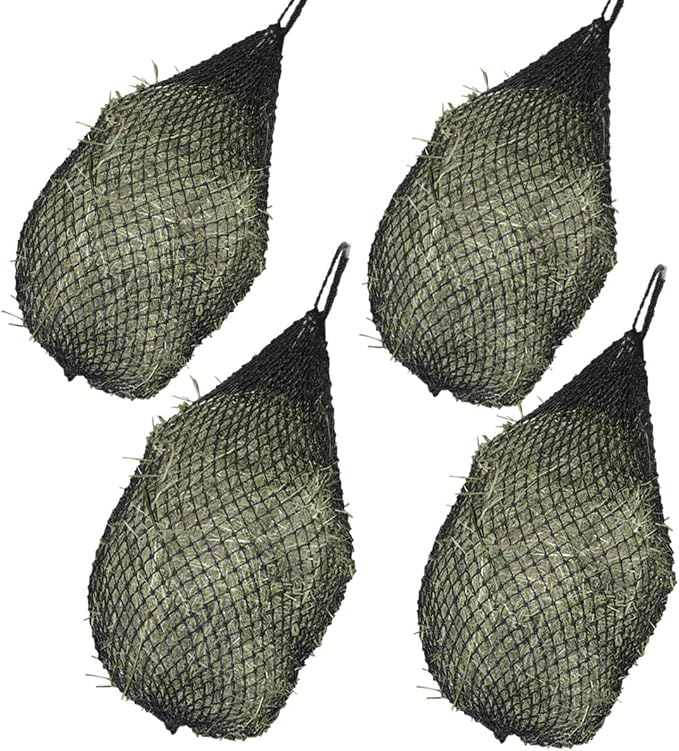
Slowing down fast eaters is the main reason to grab the Country Pride Ultra Slow Feed Hay Net. It suits horses prone to overeating or those on stall rest needing careful controlled feeding.
Its durable build and 1-inch openings help prevent hay waste while supporting better digestion.
Setting it up is straightforward with the top-loading design that makes filling hay quick and mess-free. Hang it on hay hoops or with your preferred snap for stable placement. The large capacity holds about five to six flakes, making daily feeding easier and reducing frequent refills.
Thick weaving means it stands up well against eager horses pulling at the net.
The 1-inch openings effectively slow down eating without frustrating your horse, cutting hay waste noticeably. Constructed to handle hard use, the net resists tearing or fraying over time. Most praise points to its durability and size, while common feedback notes the weight can be a bit heavy when fully loaded.
The toughest praise highlights its thick, durable construction that holds up to vigorous use by eager hay eaters. The most frequent complaint centers on the net feeling heavy once loaded fully, which can make handling a bit cumbersome.
Horses that tend to gulp hay quickly or need restricted feeding on stall rest will benefit from this net’s design. Those looking for a lighter option or faster feeding may want to look at models with larger openings or lighter materials.
Pros
- Durable, thickly woven construction
- Large capacity for longer feeding intervals
- Top-loading design easy to fill
- Compatible with hay hoops or snaps
Cons
- Can be heavy when fully loaded
- Opening size may slow feeding too much for some
| Specification | Details |
|---|---|
| Manufacturer | Country Pride |
| Item model number | 257464-4PK |
| Model Name | Large Ultra Slow |
| Color | Black |
| Capacity | 5 to 6 flakes of hay |
| Opening Size | 1 inch |
11. Bloomoak Slow Feed Hay Net

Keeping hay consumption slow and controlled can be a challenge, especially for horses that tend to gobble their feed. Ideal for horses that need portion control, the Bloomoak Slow Feed Hay Net offers a tough, handwoven design that slows down eating while holding a generous hay load. Its biggest strength is durability combined with a practical slow-feeding function.
Setting up the net is straightforward due to its large 40-inch length, easily fitting multiple flakes at once. The thicker ropes, each woven with eight strands, give it a sturdy feel right from the start.
The 1-inch hole size ensures hay comes out slowly to keep your horse occupied longer, and the absence of metal rings in that version adds a safety edge. Daily use shows the net holds well without frequent adjustments.
Designed to last, the polyethylene material stands up to rough chewing and weather conditions without quick wear. It does a solid job slowing down hay intake, with heavy-duty weaving reducing breakage and hay loss.
Some appreciate the handwoven quality for toughness, while the most common downside mentioned is the lack of metal rings in the smaller hole variation, which might affect attachment options for some users.
The net’s handwoven design and thicker ropes make it sturdy and dependable for slow feeding, but the smaller hole version doesn’t have metal rings, which some find limits how securely it can be fastened. It holds a good amount of hay, making it practical for longer feeding times.
Those needing a tough, slow feeding solution that prioritizes safety and durability will find this net suitable. Those wanting quick attachment options with metal rings might look at the larger hole sizes or different models.
Pros
- Handwoven with 8-strand rope for durability
- Holds several flakes for extended feeding
- Polyethylene material resists wear and weather
- 1-inch hole version excludes metal rings for safety
Cons
- 1-inch hole net lacks metal rings for attachment
- Heavier weight may make moving a bit tougher
| Specification | Details |
|---|---|
| Item Weight | 15.2 ounces |
| Length | 40 inches |
| Hole sizes | 1 Inch (no metal rings), 2 & 4 Inch (with metal rings) |
| Material | Polyethylene |
| Capacity | Holds 3 to 4 hay flakes |
12. Hay Nets XXL Slow Feeder

With a large capacity that holds up to 44 lb of hay, the Hay Nets XXL Slow Feeder is perfect for those wanting to cut down on constant refilling. It stands out by controlling feeding speed through a carefully sized mesh, which supports the horse’s natural slow-feeding rhythm and helps avoid choking and digestive issues.
Setting up takes just a moment as the hay net hangs securely indoors or outdoors. Its optimal mesh size tricks the horse into eating slowly, making feeding time last longer and keeping the horse engaged. The design helps prevent boredom by reducing fast eating and associated discontent behaviors, fitting well with daily routines.
Built to hold a full load of hay without tearing, the net performs its main job reliably. Praise often points to how it promotes better digestion and fewer colic concerns, while some note the mesh can be a bit stubborn to fill at first. Strong enough for daily use, it offers a great balance between durability and function.
The net receives strong praise for supporting slow feeding and digestive health, helping horses stay engaged while eating. Some find filling the optimal mesh size challenging at first, requiring patience to load hay efficiently.
Those needing a durable, high-capacity feeder for everyday use will appreciate this net’s design and size. Those seeking smaller sizes or multi-pack options may want to consider other products.
Pros
- Large 44 lb hay capacity
- Mesh slows feeding speed effectively
- Suitable for indoor and outdoor use
- Helps prevent choking and colic
Cons
- Mesh can be difficult to fill initially
- Lacks multiple pack options
| Specification | Details |
|---|---|
| Manufacturer | BAIIEGO |
| Model Number | GCW-0630 |
| Target Species | Horse |
| Unit Count | 1 Count |
| Included Components | hay net for horses |
| Recommended Uses For Product | Indoor, Outdoor |
13. Weaver Equine Slow Feed Hay Net

Anyone feeding horses, goats, or livestock who wants to slow down grazing time will appreciate the Weaver Equine Slow Feed Hay Net. Its well-sized 1 to 1.5 holes are the key to regulating how quickly animals eat, which helps with digestion and prevents overeating.
The black nylon design suits practically any stable setup.
Setup involves simply filling the net with hay and hanging it in a spot accessible to animals. The synthetic rope material holds strong when hung and allows animals to pull out just small mouthfuls of hay at a time. These smaller holes slow the feeding pace naturally.
Daily use means less waste and more controlled feeding without constant monitoring.
Sturdiness is a highlight, built to endure the tug and lean of animals searching through the net. Daily wear doesn’t wear out the material quickly. Main praise focuses on its durability and effectiveness at slowing feed intake.
Some find the smaller holes a bit time-consuming when filling, but that is part of the design to control eating speed.
Animals can lean on the strong synthetic rope structure while they pick out the best hay, making feeding gentle yet controlled. Filling the net can take extra time due to the purposely small holes designed to slow down how quickly hay is eaten.
The product suits those who want to reduce waste and help their animals eat at a healthier pace. It is less suited for those seeking instant hay access or quicker refills during busy feeding times.
Pros
- Durable synthetic rope stays intact under pressure
- Small 1″ – 1.5″ holes slow down feeding effectively
- Lightweight and easy to hang anywhere
- Simple to clean and refill
Cons
- Smaller holes make filling the net slower
- Black color may hide dirt more easily
| Specification | Details |
|---|---|
| Material | Nylon |
| Size | 36-Inch |
| Outer Material | Synthetic Rope |
| Item Dimensions LxWxH | 4 x 4 x 14 inches |
| Package Weight | 0.31 kg |
14. Harrison Howard Slow Feed Hay Net

Designed to make hay feeding last longer, the Harrison Howard Slow Feed Hay Net suits small breed horses that tend to eat quickly. Its biggest strength lies in slowing down consumption to promote better digestive health while reducing hay waste. The bright tie string adds convenience in stable routines.
Setup is straightforward thanks to an easy-to-hook design and a contrasting white top closure rope that’s simple to spot during loading and unloading. The net is roomier than many others, holding a hefty amount of hay to keep your horse content for long periods.
Tying it securely with the provided rope is quick and easy, making daily feeding efficient.
Performance-wise, the hay net effectively slows rapid eating habits while encouraging activity. The high-quality nylon rope construction stands up well to energetic horses, especially the younger ones, showing strong durability over time.
Most praise highlights its sturdiness, while some find the large capacity a bit bulky when handling.
Most find the net very durable and effective at slowing down eating, which helps reduce waste and digestive issues. The bright white tie string makes tying easier, though some mention the size feels bulky during handling due to its large capacity. Durable materials are a highlight, while sizing limits its use to smaller horses.
Those with small breed horses needing slower hay consumption will appreciate how this net stretches hay supplies and keeps feeding manageable. Those with larger breeds or who prefer smaller, lighter feeders might want to look for alternative options better suited to their needs.
Pros
- Slows eating to promote digestive health
- Roomy enough to hold heavy hay loads
- Durable nylon rope withstands young horses
- Bright white tie string for easy spotting
Cons
- Large size can feel bulky to handle
- Specifically designed for small breeds only
| Specification | Details |
|---|---|
| Brand Name | Harrison Howard |
| Breed Recommendation | Small Breeds |
| Product Benefits | Promotes digestive health, reduces hay waste, keeps horses active |
| Material | High-quality nylon rope |
| Attachment | Easy to hook up with bright white tie string |
| Recommended Uses | Multiple Pets |
15. Derby Originals Superior Slow Feeder Hay Bag

Derby Originals Superior Slow Feeder Hay Bag helps horse caregivers reduce feed speed to prevent gastric ulcers and colic. It suits horses of all sizes and life stages. Its single biggest strength lies in providing a controlled feeding experience to promote healthier digestion.
Setting up the hay bag is straightforward, featuring a durable design that hangs easily in stables or pastures. The material and weave slow down hay consumption, making daily feeding less stressful for horses prone to overeating.
It fits a variety of breed sizes without causing discomfort, making it practical for different horses in a barn.
Construction from tough materials ensures the feeder holds up under regular use, even with vigorous eating. The design effectively slows hay intake, supporting better digestive health. The strongest praise is for its durability and ability to reduce fast eating.
Most common complaint mentions the occasional difficulty in cleaning the bag thoroughly.
The slow feeder is praised for its durable build and its efficiency in moderating hay intake, which supports horse digestive health. Some find cleaning the bag to be a bit difficult due to the material and design.
People with horses that tend to overeat and need slower feeding will appreciate this hay bag. Those managing several horses or seeking easy maintenance might want to consider other options.
Pros
- Durable material suitable for daily use
- Effective in slowing hay consumption
- Fits all breed sizes comfortably
- Helps prevent gastric ulcers and colic
Cons
- Cleaning can be somewhat challenging
- Single pack may not suit multiple horses
| Specification | Details |
|---|---|
| Brand Name | Derby Originals |
| Model Number | 71-7125RBL |
| Target Species | Horse |
| Recommended Uses | Everyday horse feeding, preventing gastric ulcers and colic |
| Age Range Description | All Life Stages |
Comparison of Top Slow Hay Feeders Side by Side
| Product | Brand | Weight | Size/Dimensions | Recommended Use |
|---|---|---|---|---|
| Majestic Ally Hay Net | Majestic Ally | 1.63 pounds | 10.98×9.09×3.86 inches | All Life Stages |
| Weaver Equine Hay Net | Weaver Equine | – | – | Outdoor, Slow Feeding, Travel |
| Tahoe Web Gate Feeder | Royal International | 3.5 pounds | 42x25x11 inches | – |
| Derby Originals XL Hay Bag | Derby Originals | 0.01 ounces | 14.84×13.46×4.02 inches | Horses Feeding Supplies |
| Generic Slow Feed Net | MKO SHUN | 3.82 pounds | 15.63×10.75×4.33 inches | – |
| Basic Slow Feed Net | Gmhortn | – | – | Slow Feed Hay Nets, 2 Packs |
| Round Bale Hay Net | BRINGERPET | 7.65 pounds | 14.45×13.07×7.24 inches | – |
| Horse Hay Nets 3-Pack | LIBKUR | – | – | Indoor, Outdoor, Travel |
| Ultra Slow Feed Nets 2-Pack | LIBKUR | 1 pound | 11x5x3 inches | – |
| Country Pride Hay Net | Country Pride | – | – | Horse Feeding |
| Bloomoak Hay Net | Bloomoak | 15.2 ounces | 12.64×5.43×3.7 inches | Horses |
| XXL Slow Feeder Net | BAIIEGO | – | – | Indoor, Outdoor |
| Weaver Equine Slow Net | Weaver Equine | 0.31 kg (0.68 lb) | 4x4x14 inches | – |
| Harrison Howard Hay Net | Harrison Howard | – | – | Promotes digestive health |
| Derby Originals Superior Bag | Derby Originals | – | – | Everyday Horse Feeding |
- BrandMajestic Ally
- Weight1.63 pounds
- Size/Dimensions10.98×9.09×3.86 inches
- Recommended UseAll Life Stages
- BrandWeaver Equine
- Weight–
- Size/Dimensions–
- Recommended UseOutdoor, Slow Feeding, Travel
- BrandRoyal International
- Weight3.5 pounds
- Size/Dimensions42x25x11 inches
- Recommended Use–
- BrandDerby Originals
- Weight0.01 ounces
- Size/Dimensions14.84×13.46×4.02 inches
- Recommended UseHorses Feeding Supplies
- BrandMKO SHUN
- Weight3.82 pounds
- Size/Dimensions15.63×10.75×4.33 inches
- Recommended Use–
- BrandGmhortn
- Weight–
- Size/Dimensions–
- Recommended UseSlow Feed Hay Nets, 2 Packs
- BrandBRINGERPET
- Weight7.65 pounds
- Size/Dimensions14.45×13.07×7.24 inches
- Recommended Use–
- BrandLIBKUR
- Weight–
- Size/Dimensions–
- Recommended UseIndoor, Outdoor, Travel
- BrandLIBKUR
- Weight1 pound
- Size/Dimensions11x5x3 inches
- Recommended Use–
- BrandCountry Pride
- Weight–
- Size/Dimensions–
- Recommended UseHorse Feeding
- BrandBloomoak
- Weight15.2 ounces
- Size/Dimensions12.64×5.43×3.7 inches
- Recommended UseHorses
- BrandBAIIEGO
- Weight–
- Size/Dimensions–
- Recommended UseIndoor, Outdoor
- BrandWeaver Equine
- Weight0.31 kg (0.68 lb)
- Size/Dimensions4x4x14 inches
- Recommended Use–
- BrandHarrison Howard
- Weight–
- Size/Dimensions–
- Recommended UsePromotes digestive health
- BrandDerby Originals
- Weight–
- Size/Dimensions–
- Recommended UseEveryday Horse Feeding
How to Choose the Right Slow Hay Feeder
Choosing a good slow hay feeder depends on durability, ease of use, and how effectively it reduces hay waste. Selecting the right feeder helps keep hay fresh longer and prevents animals from overeating, ultimately saving money and reducing daily maintenance efforts.
Durability and Materials
Most feeders end up outdoors, exposed to rain, snow, and sun, plus the constant pushing and chewing from animals. Wear and tear on poor-quality feeders shows quickly: rust spots, bent bars, or even broken panels. Choosing a feeder built from galvanized steel or heavy-duty powder-coated metal usually means it stands up better to these conditions.
Some cheaper ones use untreated metal or weak plastic that cracks or corrodes fast.
A solid frame and strong welds keep it from twisting or breaking when animals kick or nudge it. Look for thick bars spaced to prevent breakage but close enough to block animals from pulling hay out easily.
This balance is what keeps a feeder intact and functional for a full season or more, rather than needing replacements every few months.
Hay Capacity and Size
Feeding several animals means needing a feeder that holds enough hay between refills. A small feeder that fits in a tight space might constantly be empty, forcing frequent topping up.
Larger ones with a capacity of 10 to 20 cubic feet are common for groups of 4 to 6 animals, but you should size it to your herd. That prevents horses or goats crowding or one dominating access.
Dimensions must fit your barn or pen area without blocking paths or causing hazards. Depth and width are important, too, since some designs control hay flow with the spacing of bars to limit how much hay pulls out at once.
This reduces waste, but overly tight bars can frustrate animals or slow feeding too much. The sweet spot is a controlled but easy feeding pace.
Ease of Cleaning and Maintenance
Heavy hay residue can get stuck inside feeders, creating mold or odors if not cleaned regularly. Feeding with damp hay or leaving soiled hay inside invites these problems, which harm animals’ health.
A good feeder offers open access or removable panels so you can scrape and hose it out efficiently.
Materials like powder-coated metal or plastic resist absorbing moisture, unlike wood that holds dampness leading to rot or smells. Assembly that is straightforward improves maintenance frequency; complicated feeders with small parts often get neglected because they’re a pain to take apart. A simple latch or bolts make routine cleaning less of a chore and keep the feeder in better condition.
Safety and Animal Comfort
Animals are quick to injure themselves on sharp edges or narrow gaps in feeders. Cuts or hoof snags happen when metal ends are exposed or spaces between bars are too tight.
Look for smooth welds and rounded corners that reduce these risks. The bars’ spacing should let animals reach hay easily but be wide enough to avoid heads or legs getting stuck.
Good ventilation and enough hay exposure prevent moisture build-up that spoils feeding quality. A feeder with open sides or well-ventilated panels helps keep hay dry and fresh for longer periods.
Fresh hay encourages consistent eating, whereas damp or stale hay often gets rejected, raising waste and increasing feeding costs.
Waste Reduction Efficiency
Hay waste is a common problem when animals pull out more than they eat, leaving piles trampled and soiled. Designs that slow down feeding have tighter bar spacing or partial covers to restrict large mouthfuls and encourage picking small bites. This can double the feeding time compared to open hay racks.
Stable feeders with raised bottoms or mats keep loosened hay from falling to the ground where it gets ruined. Feeders encouraging slower consumption improve overall efficiency and reduce daily hay needed.
A well-built slow feeder can significantly cut costs by extending hay supply through controlling how quickly animals consume their feed.
Tips for Maximizing Efficiency and Longevity of Slow Hay Feeders
Proper placement plays a crucial role in getting the most out of slow hay feeders. Positioning the feeder on level, well-drained ground prevents the hay from getting damp or moldy, extending the feeder’s lifespan.
Regular checking and tightening of bolts and fasteners keeps the feeder secure, reducing wear and tear caused by movement during feeding.
Use feeders made from durable materials like heavy-gauge steel or reinforced plastic to withstand the biting and pulling by animals. Cleaning the feeder often helps prevent buildup of dust, mold, or debris which can affect hay quality and damage the feeder over time.
- Rotate feeders or their location periodically to avoid ground compaction.
- Cut hay to appropriate lengths that fit the feeder slots well – too long or too short can cause waste or blockages.
- Inspect feeder components seasonally, replacing worn parts promptly.
Combining these steps helps maintain feeder function and prolongs its service life while reducing hay waste effectively.
Common Mistakes to Avoid When Using Slow Hay Feeders
Placing slow hay feeders directly on soft or muddy ground leads to structural damage and uneven wear. The base may settle or sink, causing instability and faster deterioration. Avoid overloading the feeder beyond its recommended capacity, as this can bend or break bars and sides.
Using slow feeders without adjusting for the type of hay or animal behavior often results in wasted feed and feeder damage. Feeding overly coarse or tangled hay may clog feeder bars, frustrating animals and increasing hay loss.
- Don’t neglect regular cleaning, as buildup encourages mold and attracts pests.
- Avoid placing feeders too close together in feeding areas; this causes competition and rough treatment of feeders.
- Never leave feeders outdoors unattended for long periods without checking for damage or wear.
Recognizing and avoiding these common mistakes helps protect your investment and ensures hay feeders function as intended.
People Also Asked
How Do I Clean and Maintain a Slow Hay Feeder Properly?
Clean a slow hay feeder by removing old hay and debris regularly, then wash with mild soap and water. Dry thoroughly to prevent mold growth. Checking for sharp edges during cleaning helps avoid injuries to your horses.
What Size Slow Hay Feeder Is Suitable for Different Horse Breeds?
A feeder sized for the horse’s hay intake and physical space is best; larger breeds need feeders with more hay capacity. Measure your horse and available stall or paddock space before buying. Smaller feeders can cause crowding or frequent refills.
Are Slow Hay Feeders Safe for Foals and Young Horses?
Slow hay feeders can be safe for foals if designed to prevent them from getting stuck or injured; some models have smaller openings suited to younger animals. Always supervise young ones initially to ensure safe use.
How Long Does a Typical Slow Hay Feeder Last with Regular Use?
A typical slow hay feeder lasts several years with basic maintenance like cleaning and checking for damage. Metal feeders may rust while plastic ones can crack; inspect regularly to replace parts early.
What Common Problems Should I Expect When Using a Slow Hay Feeder?
Common problems include horses figuring out how to remove hay quickly, feeders rusting or breaking, and hay getting dirty or wet inside. Position feeders off the ground to reduce moisture and spoilage.
Conclusion
Choosing a slow hay feeder mostly comes down to durability, ease of cleaning, and how effectively it reduces hay waste. It should hold enough hay for your animal’s needs without being too bulky. Consider how well it prevents the animal from pulling out excessive amounts at once.
These factors help ensure the feeder lasts and keeps feeding efficient.
Think about your available space and how much you’re willing to spend on a feeder that fits your routine. A feeder that suits your setup will save headaches later on.
Review the comparison table and detailed picks above to find the one that fits your needs best.


