Top 15 Best Monocular for Bird Watching You Can’t Miss!
Using a cheap monocular for bird watching often results in blurry images and difficulty focusing on small, fast-moving birds. Those who seek the best monocular for bird watching understand the frustration of instruments that are either too heavy to carry comfortably or have poor optical clarity.
Many find that a low-quality monocular lets in too little light or distorts colors, making it hard to identify species accurately even in good weather.
The most important factors for a good bird-watching monocular are optical quality, magnification, and size. A 6x to 10x magnification provides a balance between detail and stability, as higher magnifications tend to shake more. Glass lenses with multi-coatings improve light transmission and color fidelity, which helps in early mornings or dim conditions.
Compact size and lightweight design matter for carrying ease on long walks, while waterproof and fog-proof features protect the lens from outdoor elements and simplify cleaning after exposure to moisture and dust.
Need a Quick Check?
| Image | Product | Price |
|---|---|---|
Our Top Picks 1  | Nocs Zoom Tube 8×32 | Check Price |
Our Top Picks 2  | Generic 12×60 Monocular | Check Price |
Our Top Picks 3  | Vortex Solo 10×36 | Check Price |
Our Selected Top 15 Monocular for Bird Watching for Every Budget
This list features carefully chosen monoculars ideal for bird watching, covering a variety of budgets and needs. Each review explains how the product performs, who it is best suited for, and highlights its main strengths and weaknesses to help you find the right option.
1. Nocs Provisions Zoom Tube 8×32 Monocular
For bird watchers looking for something light and easy to carry without sacrificing image quality, the Zoom Tube 8×32 stands out. It suits those who want bright views and a wide field of view in a compact, rugged package that won’t weigh down your gear during long outdoor trips.
Daily use is straightforward with the central focusing system making quick adjustments easy. The compact size and 9.5 oz weight mean it fits comfortably in your hand or pocket for hiking or casual spotting. Water resistance and scratch-proof coating ensure it holds up during varied weather and rough handling, while the tripod mount and smartphone compatibility add to its versatility.
It delivers sharp, bright views thanks to the Fully Multi Coated optics and Swiss-designed BaK4 prism, covering 384 feet at 1000 yards clearly. Built tough with a rugged, water-resistant body, it balances portability and durability well. The standout praise mentions the quality optics in such a small, light unit.
Occasional comments note the zoom level fixed at 8x might not suit those needing higher magnification.
The optics deliver bright and crisp views in a tough, small body that fits easily for travel. Some users find the fixed 8x zoom a bit limiting for longer distance bird watching.
Bird watchers who prioritize portability without sacrificing image clarity will appreciate how it handles outdoor conditions. Those looking for more powerful zoom might want to explore other options with higher magnification.
Pros
- Super lightweight and compact design
- Bright, clear optics with wide field of view
- Water-resistant and scratch-proof exterior
- Tripod mount and smartphone compatibility
Cons
- Fixed 8x zoom may limit distant viewing
- Not the best for users needing higher magnification
| Specification | Details |
|---|---|
| Weight | 9.5 oz. |
| Field Of View | 384 feet |
| Zoom Ratio | 8 |
| Focus Type | Center Focus |
| Coating | Fully Multi-Coated |
| Mount | Tripod mount |
2. 12×60 Monocular Telescope
Spotting birds in detail means having clear visibility from a comfortable distance. Ideal for enthusiasts who enjoy hiking or travel, this monocular offers high magnification and a wide field of view, making it easier to catch bird activity without losing sight.
Its main strength lies in delivering bright, sharp images thanks to its quality lens construction.
Setting it up takes just a few turns on the manual focus, letting you quickly lock onto distant subjects. The 12× magnification paired with a 60mm objective lens delivers a broad 6.5° field of view, so scanning treetops or wide landscapes feels natural. It’s powered by batteries and even supports smartphone attachment to snap photos through the lens, adding versatility for daily outdoor use.
Performance centers on clear images free from color distortion. The BAK-4 prism reduces light loss and keeps views vivid even in lower light. The build includes fully multi-coated optics to ensure brightness and clarity.
Most praise highlights how sharp and bright the view remains, though some note that manual focus requires patience for precise adjustment.
Sharp, vivid views make bird watching enjoyable, though manual focusing demands some patience to lock onto moving birds. Brightness stays consistent thanks to quality glass and coatings, helping when light conditions aren’t ideal. Being battery powered adds versatility but means it won’t work without power.
Bird watchers who value image clarity and a wide viewing angle will find this device rewarding, especially those comfortable with manual adjustments. Casual users wanting quick, automatic focus may prefer an alternative with auto-focus features or lighter operation requirements.
Pros
- Bright and clear images with minimal distortion
- Wide field of view for easier scanning
- Smartphone compatible for photos
- Professional BAK-4 prism for better light transmission
Cons
- Manual focus can be tricky for fast-moving subjects
- Battery powered, requiring occasional replacements
| Specification | Details |
|---|---|
| Magnification | 12× |
| Objective Lens Diameter | 60mm |
| Field Of View | 6.5 degrees |
| Focus Type | Manual Focus |
| Prism Type | BAK-4 |
| Coating | Fully Multi-Coated |
3. Vortex Solo 10×36 Monocular
10x magnification with a 36mm objective lens makes this monocular ideal for bird watchers looking for clear, detailed views without carrying bulky equipment. It delivers sharp images while remaining lightweight, fitting comfortably into casual outdoor activities or more focused bird watching sessions.
Setting up the monocular is simple, thanks to its manual focus and adjustable eyecup, which works well whether you wear glasses or not. The compact design and the multi-position utility clip mean it attaches easily to clothing or gear, so it’s ready to use on short notice or extended outings without wasting time fumbling.
Designed for durability, it has a full rubber armor that feels secure in hand and offers protection against rough handling. The nitrogen purging and o-ring sealing ensure it doesn’t fog up or let water in when conditions get wet or cold.
Reviews highlight crisp, clear images as a strong point, while some users mention the zoom is fixed with a 10:1 ratio, limiting flexibility.
Clear and crisp images stand out as the best feature, delivering satisfying detail during bird watching. The most common drawback revolves around the fixed zoom, which some feel could offer more flexibility for different viewing distances.
Bird watchers wanting a sturdy, clear, and easy-to-carry monocular will appreciate this model. Those needing variable zoom or battery-free operation might want to explore other options better suited to their specific preferences.
Pros
- Lightweight and compact design
- Non-slip rubber armor for grip
- Waterproof and fogproof construction
- Adjustable eyecup suits glass wearers
Cons
- Fixed 10:1 zoom ratio limits versatility
- Battery powered focus may not please all
| Specification | Details |
|---|---|
| Power Source | Battery Powered |
| Focus Type | manual Focus |
| Field Of View | 6.2 |
| Mount | Equatorial Mount |
| Eyepiece Lens Description | Monocentric |
| Coating | Multiple anti-reflective coatings |
4. Gosky 12×55 Monocular Telescope

Bird watchers looking for clear long-range views will appreciate its 12x magnification power paired with a wide field of view. Ideal for spotting birds at a distance without losing track, it combines detail and coverage for practical handheld use outdoors.
Setting it up is straightforward, with manual focus that responds quickly to adjustments. The included reflex finderscope helps locate targets before zooming in. You can comfortably hold it in one hand, and the multi-coated lenses bring a brighter image which is easier on the eyes during extended use.
The design also supports mounting on a tripod and attaching a smartphone if you want to capture what you see.
It delivers impressive clarity and detail thanks to the 55mm objective lens gathering ample light, even in lower lighting conditions. Users note the build feels solid with a waterproof and fogproof body, reliable in various weather. The most common complaint focuses on the manual focusing which can take some patience to lock in sharp images at times.
Users often praise how bright and clear the view is, especially in less-than-ideal lighting, a benefit of the large 55mm lens. However, some find the manual focus a bit fiddly when trying to quickly capture moving targets like birds.
Bird watchers wanting a solid balance of magnification and field coverage will find this model useful daily. Those seeking fast autofocus or extended eye relief might want to look for alternatives better suited to those needs.
Pros
- Wide 352 ft field of view for tracking targets
- Bright image from 55mm objective lens
- IPX7 waterproof and fogproof body
- Supports tripod and smartphone adapter
Cons
- Manual focus can be slow to lock sharpness
- Limited eye relief may affect comfort with glasses
| Specification | Details |
|---|---|
| Magnification | 12X |
| Objective Lens Diameter | 55MM |
| Field Of View | 2.1 degrees / 352 ft at 1,000 yds |
| Focus Type | manual |
| Coating | Multi-Coated |
5. 80×100 Monocular Telescope

Bright and clear optics make this monocular ideal for early mornings or late afternoons in the field. Lightweight design fits comfortably in a pocket or bag, perfect for those who want to carry minimal gear without sacrificing viewing quality.
Its wide-angle view helps spot and track birds with ease.
Manual focus allows you to quickly adjust for sharp views once you have the subject in sight. The soft, adjustable eyecup adds comfort during extended use. A smartphone adapter lets you take photos or videos through the lens without complicated setups.
Carrying it feels natural thanks to the slim, lightweight build that doesn’t weigh you down on walks or hikes.
High-transmission optical lenses provide bright images even in lower light, making it easier to see fine details on distant birds. The sealed internal design protects from dust and moisture but adds a bit of bulk compared to simpler models.
Most praise centers on the brightness and viewing angle, while some users mention the manual focus requires patience to get just right.
Brightness and wide-angle viewing receive high marks for enhancing spotting and tracking birds. At the same time, manual focus demands attention and adjustment, which may slow quick viewing moments.
The monocular suits bird watchers who value clear images and portability and don’t mind manual focusing. Those seeking faster autofocus or a lighter build may want to explore other options.
Pros
- Bright images even in low light
- Wide-angle view simplifies tracking
- Lightweight and slim for easy carrying
- Smartphone adapter for camera use
Cons
- Manual focus can be tricky to perfect
- Sealed design adds slight bulk
| Specification | Details |
|---|---|
| Eye Piece Lens Description | Brandon |
| Focus Type | Manual Focus |
| Finderscope | Straight-Through |
| Compatible Devices | Smartphone |
| Additional Features | High-transmission optical lenses; Sealed internal design; Wide-angle design; Soft, adjustable eyecup; Smartphone adapter |
6. 8×42 Monocular Telescope

8×42 Monocular Telescope offers clear, wide-angle views perfect for bird watchers who want solid magnification with a durable build. Its biggest strength lies in its high-quality optics that deliver an 8X zoom and a wide, 360ft field of view, making distant birds easy to spot during outdoor adventures.
Setting up involves manual focusing with a straightforward altazimuth mount, which makes it easy to adjust your view quickly in the field. The monocular’s rubber finish and built-in dust cover protect it from weather and dirt, so it can handle being tossed in a backpack or used in wet conditions. Pairing it with a smartphone for photos is convenient thanks to smartphone compatibility.
Performance is reliable with sharp, HD images thanks to FMC Superior BAK-4 Green Film Prism glass, providing excellent clarity and color. The build feels tough with shockproof and waterproof features, making it a solid companion outdoors. Most praise focuses on the wide field of view, while some find manual focus less smooth compared to other optics.
Many appreciate the wide-angle HD view delivered by the green film prism optics, which keeps bird details crisp and colors natural. The main drawback commonly pointed out is the manual focus mechanism, which sometimes requires extra effort to get pin-sharp images.
Folks wanting a rugged monocular built for outdoors will find this a good match, especially for casual bird watching and hiking. Those looking for higher zoom levels or faster focusing might prefer other options with more advanced focusing systems.
Pros
- Wide 360ft field of view at 1000 yards
- Durable shock-resistant rubber finish
- Compatible with smartphone for photos
- Effective dust and moisture lens cover
Cons
- Manual focus can feel stiff for some users
- Limited zoom ratio compared to zoom binoculars
| Specification | Details |
|---|---|
| Magnification | 8X |
| Objective Diameter | 42mm |
| Field Of View | 360 feet/1000 yards |
| Focus Type | Manual Focus |
| Coating | Fully Multi-Coated |
| Waterproof | Yes, nitrogen-filled |
7. 16×52 Monocular Telescope

Using a monocular that offers clear, bright views changes how you experience bird watching. Perfect for outdoor lovers who want a powerful view without lugging heavy equipment, it fits easily in your hand and delivers sharp images with 16x magnification.
Simple manual focus makes spotting birds straightforward, and the fully multi-coated lenses ensure details stand out in varied lighting. Waterproof, fogproof, and shockproof features mean it keeps working well on hikes or in damp conditions.
Reflex finderscope helps quickly locate subjects before you zoom in for a closer look.
It performs well for its size, reliably providing high-definition images thanks to the BAK4 prism and 2026 power prism. Built solidly for handheld use, it handles outdoor wear without problems.
The most praised aspect is its clear, bright images; some find manual focusing a bit fiddly at times.
High-definition images stand out the most when using this monocular, making bird watching enjoyable and vivid. The manual focus system, while precise, requires patience and can slow down quick spotting of moving birds.
Anyone wanting a powerful yet portable monocular for outdoor adventures will appreciate the durability and optics here. Those who need fast autofocus or a wider field of view might want to look for alternatives better suited to rapid tracking.
Pros
- Clear and bright view with 16x magnification
- Compact and easy to carry on hikes
- Waterproof and fogproof design for outdoor use
- Reflex finderscope speeds up locating subjects
Cons
- Manual focus can be challenging to adjust quickly
- Field of view is relatively narrow for some users
| Specification | Details |
|---|---|
| Magnification | 16x |
| Objective Lens Diameter | 52mm |
| Field Of View | 5.8 degrees |
| Focus Type | Manual Focus |
| Prism Type | BAK4 prism |
| Additional Features | Waterproof, Fogproof, Shockproof |
8. 80×100 Monocular Telescope

A powerful zoom makes this monocular ideal for bird watchers who want to spot fine details from a distance. Its standout feature is the 80x magnification, allowing users to observe wildlife clearly and up close without disturbing the scene.
Setting it up is straightforward thanks to the included tripod and an easy-to-mount phone bracket. You can manually focus the lens to bring subjects into sharp view.
The smartphone compatibility lets you capture and share images quickly. This makes it easy to carry around for day-long birding sessions without much fuss.
Optics use BAK4 prism and FMC lens, ensuring bright and clear images. The build feels solid but not overly heavy, adding to comfortable handling.
Users praise its detailed zoom but mention manual focusing takes some patience. The straight-through finderscope helps in quick target acquisition once you get the hang of it.
Many users appreciate the exceptional zoom that brings distant birds into sharp view, but the manual focus often requires several adjustments to achieve clarity. The sturdy tripod and phone compatibility contribute to enjoyable and shareable observations. Some find the setup a bit cumbersome compared to lighter models.
Great for those who value detail over quick setup and don’t mind a heavier build. Less suited for casual birders who prioritize compact gear or fast focus adjustments during rapid movement.
Pros
- Strong 80x zoom for distant details
- Compatible with many smartphones
- Sturdy tripod included for stability
- Clear imagery with BAK4 and FMC optics
Cons
- Manual focusing can be tricky
- Bulky size may reduce portability
| Specification | Details |
|---|---|
| Zoom Ratio | 80 |
| Focus Type | Manual Focus |
| Eye Piece Lens Description | Brandon |
| Finderscope | Straight-Through |
| Additional Features | BAK4 Prism & FMC Lens |
| Compatible Devices | Smartphone |
9. Gosky Titan 12×50 Monocular

Constructed with a sturdy build and waterproof design, this monocular suits bird watchers looking for powerful magnification and clarity. Its single biggest strength lies in delivering bright, clear images with 12x magnification and a wide 50mm objective lens, making distant wildlife appear much closer and more detailed.
Setup involves attaching the included tripod and adjusting the manual focus, which is simple enough for daily use. The one-hand focus and altazimuth mount allow quick adjustments while watching birds.
The fully multi-coated lens and BAK-4 prism ensure clear views in various lighting conditions. The monocular also supports smartphone attachment for easier photo capture of birds and wildlife.
This performance delivers vivid true colors and sharp images up to 1000 yards away with a wide field of view. The waterproof and fogproof design makes it reliable outdoors. Some users mention the monocular’s weight feels a bit heavier for long walks, but most praise its optical quality and durability under different weather conditions.
Most praise points to the bright, colorful images and reliable performance in different weather conditions. The main complaint involves the monocular feeling a bit heavy and the manual focus needing some getting used to for smooth operation.
Bird watchers who need strong magnification and a stable setup will appreciate this model’s features and durability. Those wanting a lighter, easier-to-focus monocular might look for other compact options better suited for long hikes.
Pros
- Bright and clear images with 12x magnification
- Waterproof and fogproof for outdoor durability
- Compatible with smartphones for photography
- Includes tripod for steady viewing
Cons
- Feels heavy during long carrying sessions
- Manual focus requires some practice to master
| Specification | Details |
|---|---|
| Magnification | 12X |
| Objective Lens Diameter | 50mm |
| Field Of View | 6.8 degrees |
| Focus Type | manual focus |
| Mount | Altazimuth Mount |
| Waterproof | Yes |
10. 80×100 Monocular Telescope

80x magnification paired with a 100mm objective lens provides a powerful view for serious bird watchers. Best suited for those who want to see intricate details of distant birds without needing to carry a bulky setup, it offers impressive clarity in daylight conditions.
Setting up involves manual focusing, which lets you adjust precisely depending on the distance of your target. A straight-through finderscope helps locate birds quickly, while the large lens gathers ample light for brighter images. The included smartphone adapter lets you capture what you’re seeing, making it practical for sharing sightings.
Performance is strong with the combination of a BAK4 prism and high-quality optics that reduce internal light loss. Most praise comes from how clear and bright the image appears even at high magnification.
The biggest downside is the need for steady hands or a tripod, as the powerful zoom can make images shaky without support.
The greatest strength lies in the bright, clear images made possible by the large objective lens and BAK4 prism. Most reports mention the image shaking at full zoom as the main drawback, requiring extra support for stable viewing.
Bird watchers needing detailed close-ups and willing to handle manual focus will appreciate this model. Those looking for a lightweight or tripod-free option might want to consider less powerful, more stable alternatives.
Pros
- High 80x magnification for distant viewing
- Large 100mm lens gathers more light
- Includes adapter for smartphone use
- BAK4 prism improves light transmission
Cons
- Manual focus requires practice to use smoothly
- High zoom can cause image shakiness without a tripod
| Specification | Details |
|---|---|
| Magnification | 80x |
| Objective Lens Diameter | 100mm |
| Focus Type | Manual Focus |
| Finderscope | Straight-Through |
| Compatible Devices | Smartphone |
| Additional Features | Smartphone Adapter Included |
11. Bushnell Legend 10×42 Monocular

Ideal for bird watchers who want clear, colorful views without lugging bulky gear, this monocular offers 10x magnification packed into a compact design. Its biggest strength lies in delivering crisp images even in low light, thanks to advanced ED Prime glass and special coatings.
Setting up involves simple manual focus adjustment, letting you zero in quickly on distant birds. Its small size fits in a pocket or backpack easily, making it convenient for long walks.
The rubber-armored exterior ensures a good grip on the move, while the waterproof and fog-proof construction means you can use it no matter the weather conditions.
Performance shines with sharp, vivid views through fully multi-coated lenses and extra low dispersion glass that cuts down on glare and color fringing. Built tough to handle outdoor use, it combines a solid tripod mount and durable materials. Praise often mentions outstanding clarity in various lighting, but some note manual focusing requires getting used to for fast-moving subjects.
Users find the optics deliver excellent clarity and color fidelity even in dim conditions, making it easy to spot birds at dawn or dusk. On the downside, the manual focus demands some patience and practice, especially when tracking quick or distant birds.
People who prioritize image quality and durability in a pocket-sized monocular will appreciate this model. Those needing faster autofocus or longer battery life might want to explore other options better suited for intense, fast-paced use.
Pros
- Clear images in low light thanks to ED Prime glass
- Compact and easy to carry during hikes
- Rugged rubber armor provides a secure grip
- Waterproof and fog-proof for outdoor use
Cons
- Manual focus can be slow on moving targets
- Requires 12V battery power for operation
| Specification | Details |
|---|---|
| Magnification | 10x |
| Lens Diameter | 42mm |
| Field Of View | 340 feet |
| Focus Type | Manual Focus |
| Coating | Fully Multi-coated |
| Power Source | 1 12V battery required |
12. 8×32 Pocket Monocular
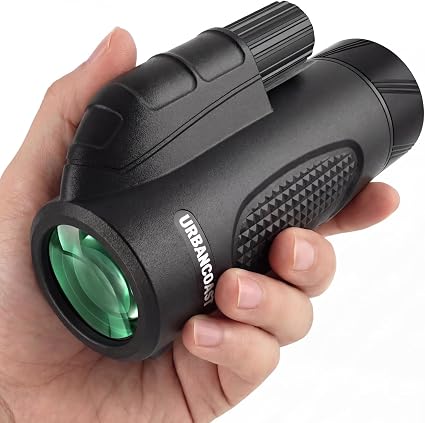
Trying to spot birds quickly on a hike or at the park calls for something lightweight and steady. The 8×32 Pocket Monocular fits easily into a pocket or daypack and offers a reliable 8x magnification with a wide field of view, making it a solid option for casual birdwatchers who value portability and ease of use.
Getting it ready is fast since it weighs only 9.9 oz and slips into a coat pocket without bulk. One-hand focus works well even on the move, which means there’s no need to fumble or slow down while tracking birds.
Rain or shine, its IP67 waterproof and fogproof rating provides confidence during changeable outdoor conditions.
With 315 feet field of view at 1,000 yards, it holds a steady image for quick spotting without a tripod. The fully multi-coated prism lenses give bright and clear views, although some mention the view could be a touch brighter in low light.
It feels sturdy and comfortable to grip but focusing can demand a bit more precision than auto models.
This monocular offers a steady and clear 8x view with a wide field of 315 feet, praised for its portability and weatherproof build. Some users find the brightness lacking in dim conditions, and manual focus needs care when following moving subjects.
Great for casual birdwatchers and hikers who appreciate a lightweight, durable option that’s easy to carry. Less suitable for those seeking automatic focus or brighter optics for dawn or dusk observation.
Pros
- Compact size fits pocket or small bag
- One-hand manual focus is quick to adjust
- Waterproof and fogproof for all weather use
- Wide 315 feet field of view at 1,000 yards
Cons
- View brightness could be better in low light
- Manual focus requires attention during tracking
| Specification | Details |
|---|---|
| Power | 8x |
| Field Of View | 315 feet |
| Weight | 9.9 oz |
| Protection | IP67 waterproof and fogproof |
| Focus Type | Manual Focus |
| Coating | Fully Multi-Coated |
13. 12×56 Monocular

12×56 power delivers bright, clear views ideal for bird watchers who need detailed long-distance observation. Compact and sharp, it suits those wanting a monocular alternative to binoculars without sacrificing clarity on their outdoor trips.
Setting it up requires simply adjusting the center focus wheel until the image is sharp, which feels straightforward and smooth. The large 21mm eyepiece makes looking through it comfortable, avoiding strain during longer observations. Portability gets a boost from its compact size, and compatibility with smartphones adds convenience for capturing moments on the go.
The monocular offers sharp, bright images thanks to fully multi-coated BAK4 prism lenses and a 56mm objective lens that captures plenty of light. Its build is solid, and features like an equatorial mount and tripod holder contribute to improved stability. Users appreciate the clarity but often mention the manual focusing needs patience for best results.
The monocular delivers excellent sharpness and brightness, praised most often for its clear long-distance views. Users frequently note that focusing manually takes some time to get precise, especially for quick wildlife spotting.
Bird watchers valuing portability and a high-powered zoom will find this monocular a practical choice. Those needing a broader field of view or faster focus might look for alternative models with wider lenses or autofocus features.
Pros
- Bright, detailed image with 12x magnification
- Comfortable 21mm large eyepiece
- Compact and portable compared to binoculars
- Compatible with smartphones for capturing images
Cons
- Manual focus requires careful adjustment for sharpness
- Not ideal for users wanting wider field of view
| Specification | Details |
|---|---|
| Eye Piece Lens Description | BAK4 Pirsm & Ultra-Broadband Multi-Waterproof-Coating |
| Focus Type | Manual Focus |
| Power Source | Adapter |
| Field Of View | 325 feet |
| Zoom Ratio | 12 |
| Focal Length Description | 21 millimeters |
14. 8×32 Mini Pocket Monocular

Bird watchers looking for a compact, reliable monocular that fits easily in a pocket will find this one suits well. Its standout feature is the crystal-clear image quality, offering sharp and bright views thanks to high-quality optics often seen only in more expensive models.
Setting it up takes just a moment, with manual focus making it easy to adjust on the fly. The 8x magnification strikes a balance that’s strong enough to get close but stable enough to hold steady with your hands. It comes with a hand strap and pouch for carrying convenience during long outdoor sessions.
Delivering sharp images with minimal color distortion comes from its fully multi-coated lenses and BAK-4 prisms. The build feels solid and portable but the manual focus means it takes a slight adjustment to get perfect clarity.
Common feedback highlights great image brightness, while a few found the manual focus a bit fiddly in fast-moving scenes.
Sharp and bright images consistently impress, thanks to fully multi-coated extra-low dispersion lenses. On the downside, manual focusing can feel slow when trying to track moving birds or when quick adjustments are needed.
Ideal for bird watchers who want portability combined with outstanding image quality in daylight settings. Those needing faster focus or extreme zoom might prefer a different model better suited for fast action or very distant subjects.
Pros
- Clear and bright image with high color accuracy
- Compact size ideal for pocket carry
- Wide field of view for comfortable viewing
- Comes with hand strap and pouch for convenience
Cons
- Manual focus can be tricky to adjust quickly
- Magnification may be limited for distant targets
| Specification | Details |
|---|---|
| Zoom Ratio | 8x |
| Field Of View | 397 feet |
| Focus Type | manual focus |
| Coating | Fully Multi-Coated XLT Coated |
| Focal Length | 4.0 millimeters |
15. Pentax VM 6×21 Monocular

Designed for easy one-handed use, the Pentax VM 6×21 Monocular is ideal for bird watchers who want a compact, high-performance option. Its standout feature is a waterproof design paired with specialized coatings that allow clear viewing in various conditions without missing a beat.
Setting it up is straightforward. The manual focus feels smooth and precise, making it simple to adjust on the fly.
The rubber coating offers a solid grip, which matters when you’re outdoors and on the move. Using it with one hand feels natural, and it even works with a tripod or smartphone adapter for added versatility during longer observation sessions or snaps.
Viewing through it reveals sharp images thanks to the fully multi-coated lenses and phase correction. The minimum viewing distance of 70cm lets you get detailed close-ups on small birds or insects.
It’s solidly built with a waterproof body, so there’s no worry in damp environments. The only downside is the need for an A battery, which some might find inconvenient compared to battery-free options.
Excellent waterproof construction and clear optics are standout features that support sharp, reliable viewing during bird watching. Users appreciate this especially in varied weather. The primary complaint revolves around battery use, which some find less practical compared to models with no power needs.
Those who value a compact, high-quality monocular with one-handed convenience and outdoor toughness will find this very fitting. People looking for completely battery-free or quick autofocus options might want to consider alternatives elsewhere.
Pros
- One-handed operation feels natural and secure
- Waterproof design suits outdoor use
- High optical quality with phase correction lenses
- Compatible with smartphone adapters for photos
Cons
- Requires 1 A battery, which may be inconvenient
- Manual focus might require patience for quick shots
| Specification | Details |
|---|---|
| Eye Piece Lens Description | Fully Multi-Coated with Phase Correction |
| Focus Type | Manual Focus |
| Field Of View | 5.8 degrees |
| Waterproof | Yes |
| Compatible Devices | Smartphone |
| Zoom Ratio | 18 multiplier x |
Best Monoculars for Bird Watching Comparison Table
| Product | Zoom Ratio | Field Of View | Focus Type | Coating |
|---|---|---|---|---|
| Nocs Zoom Tube 8×32 | 8 | 384 feet | Center Focus | Fully Multi-Coated |
| Generic 12×60 Monocular | 12 | 6.5 degrees | Manual Focus | Fully Multi-Coated |
| Vortex Solo 10×36 | – | – | Manual Focus | Multiple Anti-Reflective |
| Gosky 12×55 Telescope | 12 | 2.1 degrees | Manual Focus | Multi-Coated |
| Generic 80×100 Telescope A | – | – | Manual Focus | – |
| Generic 8×42 Telescope | – | 360 degrees | Manual Focus | Fully Multi-Coated |
| Generic 16×52 Telescope | 16 | 5.8 degrees | Manual Focus | Fully Multi-Coated |
| Generic 80×100 Telescope B | 80 | – | Manual Focus | BAK4 Prism & FMC |
| Gosky Titan 12×50 | 12 | 6.8 degrees | Manual Focus | Fully Multi-Coated |
| Generic 80×100 Telescope C | – | – | Manual Focus | – |
| Bushnell Legend 10×42 | – | – | Manual Focus | Fully Multi-coated |
| Generic 8×32 Pocket | 8 | 315 feet | Manual Focus | Fully Multi-Coated |
| Generic 12×56 Monocular | – | 325 feet | Manual Focus | Fully Multi-Coated |
| Generic 8×32 Mini Pocket | – | 397 feet | Manual Focus | Fully Multi-Coated XLT |
| Pentax VM 6×21 | – | 693.8 millimeters | Manual Focus | Multi-Coated |
- Zoom Ratio8
- Field Of View384 feet
- Focus TypeCenter Focus
- CoatingFully Multi-Coated
- Zoom Ratio12
- Field Of View6.5 degrees
- Focus TypeManual Focus
- CoatingFully Multi-Coated
- Zoom Ratio–
- Field Of View–
- Focus TypeManual Focus
- CoatingMultiple Anti-Reflective
- Zoom Ratio12
- Field Of View2.1 degrees
- Focus TypeManual Focus
- CoatingMulti-Coated
- Zoom Ratio–
- Field Of View–
- Focus TypeManual Focus
- Coating–
- Zoom Ratio–
- Field Of View360 degrees
- Focus TypeManual Focus
- CoatingFully Multi-Coated
- Zoom Ratio16
- Field Of View5.8 degrees
- Focus TypeManual Focus
- CoatingFully Multi-Coated
- Zoom Ratio80
- Field Of View–
- Focus TypeManual Focus
- CoatingBAK4 Prism & FMC
- Zoom Ratio12
- Field Of View6.8 degrees
- Focus TypeManual Focus
- CoatingFully Multi-Coated
- Zoom Ratio–
- Field Of View–
- Focus TypeManual Focus
- Coating–
- Zoom Ratio–
- Field Of View–
- Focus TypeManual Focus
- CoatingFully Multi-coated
- Zoom Ratio8
- Field Of View315 feet
- Focus TypeManual Focus
- CoatingFully Multi-Coated
- Zoom Ratio–
- Field Of View325 feet
- Focus TypeManual Focus
- CoatingFully Multi-Coated
- Zoom Ratio–
- Field Of View397 feet
- Focus TypeManual Focus
- CoatingFully Multi-Coated XLT
- Zoom Ratio–
- Field Of View693.8 millimeters
- Focus TypeManual Focus
- CoatingMulti-Coated
How to Choose the Right Bird Watching Monocular
Choosing the right monocular involves considering factors like magnification, lens quality, and size for comfort and clear views. Prioritizing these features ensures an enjoyable bird watching experience and avoids spending money on ineffective or bulky equipment that doesn’t meet your needs.
Magnification and Field of View
Using a high-power monocular can quickly become frustrating when the image shakes constantly, making it hard to track birds on the move. A magnification around 8x to 10x strikes a solid balance, providing enough zoom without amplifying every small hand tremor.
Higher magnifications tend to reduce image brightness and clarity, especially in lower light, which can make it difficult to spot subtle details.
A wide field of view plays an important role in following birds flitting about. Models offering at least 300 feet at 1000 yards help keep the subject in frame without constant repositioning. Sticking to this range makes bird watching more relaxing and less about chasing a tiny blurry target across the sky.
Optical Quality and Coatings
Quality optics show real differences during early mornings or late afternoons when lighting fades. Multicoated lenses improve light transmission, making images brighter and more vivid. This helps pick out the fine patterns and color nuances in feathers, which are crucial for accurate identification.
Glare or reflections can ruin a sightline, especially with bright sunlight or standing water nearby. Lenses with effective anti-reflective coatings reduce unwanted reflections, delivering a clearer, more natural view. These coatings also help maintain sharpness and contrast across the entire image.
Size and Portability
Carrying a monocular all day requires it to feel light enough to hold steadily without tiring the hand. Something under 10 ounces can be comfortably used for hours during hikes or birding sessions. Bulkier units tend to cause fatigue and distract from enjoying the experience.
Compact devices fit easily into pockets or small bags, making them a practical choice for quick access. An ergonomic shape with slight contouring offers a secure grip and allows swift deployment to catch sudden bird movements.
This reduces fumbling and missed opportunities.
Durability and Weather Resistance
Outdoor bird watching exposes equipment to moisture and bumps. A waterproof and fogproof monocular prevents internal fogging on chilly mornings and resists rain, keeping the view clear without frequent drying or maintenance.
Shockproof construction and the use of durable materials like rubber armor absorb impacts from accidental drops or knocks. This durability extends the lifespan of the monocular by protecting delicate internal optics and reducing corrosion over time.
Ease of Focus and Handling
Fast and precise focusing makes spotting birds easier, especially those that move quickly or hide behind foliage. A smooth focus wheel with minimal stiffness helps shift clarity efficiently without overshooting.
Comfortable eye relief, typically around 15mm or more, allows prolonged viewing without eye strain or losing the full field of view. Monoculars with nonslip rubberized surfaces improve grip stability, helping to prevent slips during active use.
Tips for Maximizing Your Bird Watching Experience with a Monocular
A fixed eyepiece focus on many monoculars allows quick adjustments, so you won’t miss a bird in action. Using a tripod can significantly stabilize the view, especially during long observation sessions, reducing hand shake that often blurs images. Try to keep the monocular at eye level for comfort and better stability.
Scouting an area before starting your watch helps to locate common bird spots, saving time and increasing successful sightings. Different times of the day can affect visibility; early morning and late afternoon light conditions usually provide the best viewing opportunities.
Other useful tips include:
- Using the right magnification; between 6x and 10x is typically best for birdwatching to balance detail and field of view.
- Wearing neutral-colored clothing to avoid startling birds.
- Learning basic bird calls to identify species from a distance before bringing up the monocular.
These practical steps help you get the most from your monocular and improve your bird watching sessions.
How to Properly Clean and Maintain Your Monocular for Longevity
Lens surfaces are delicate and need careful cleaning to avoid scratches. Always use a soft microfiber cloth designed for optics rather than clothing or paper towels.
Dust and loose dirt should be blown off gently using a rubber air blower or soft brush before wiping. When smudges or fingerprints remain, apply a small amount of lens cleaning solution to the cloth instead of the lens directly.
Keep the monocular stored in its protective case when not in use to prevent dust buildup and accidental damage. Avoid exposing it to extreme temperatures or moisture for prolonged periods, as these can degrade internal components and affect image quality.
Regularly check and tighten any loose screws or mounts to maintain proper alignment.
Following these steps will keep your monocular in good working condition, ensuring clear views for years to come.
People Also Asked
How Do I Clean and Maintain a Monocular for Bird Watching?
Use a soft, lint-free cloth and lens cleaning solution specifically designed for optics to clean the lenses. Avoid touching the glass with fingers and store the monocular in a protective case to prevent dust and scratches. Regular maintenance includes checking for moisture inside and wiping down the body after use in wet conditions.
What Is the Ideal Size Monocular for Comfortable Bird Watching?
A monocular around 6 to 8 inches long and weighing between 200 to 400 grams works well for bird watching. This size offers a good balance between magnification and portability, making it easier to carry during long walks or hikes. Smaller models might be less comfortable for detailed viewing.
Are Monoculars Safe for My Eyes During Prolonged Use?
Prolonged use of monoculars is generally safe for the eyes, as they do not emit harmful rays. However, take breaks if you feel eye strain or dryness, especially when using higher magnification or in bright sunlight. Adjusting the focus and using eye relief properly helps reduce discomfort.
How Long Does a Typical Bird Watching Monocular Last with Regular Use?
A well-made monocular can last 5 to 10 years or more with proper care. The lifespan depends on build quality, how often it’s used, and exposure to tough conditions like moisture and dust. Regular cleaning and safe storage significantly extend its usable life.
What Common Issues Should I Expect with a Monocular in the Field?
Fogging inside the lens, difficulty focusing, and occasional dirt on the optics are common field issues. Using silica gel packs in your carrying case helps reduce moisture buildup. Carrying a lens cloth and ensuring the focus wheel turns smoothly also avoids problems during use.
Conclusion
Choosing a monocular for bird watching mainly depends on how clear the image is, how easy it is to hold steady, and how well it works in different lighting. Size and weight also matter since you’ll likely carry it around for a while. Look for something that balances magnification with a wide field of view to help spot birds quickly.
Think about where you’ll use it most and how often before making a purchase. A bulky model might be fine for a backyard, while something lighter is better for hikes.
Check the comparison table and product details above to see which models fit your needs and budget best.