Top 15 Best Hay Feeder Options You Can’t Miss Today
Many who feed livestock understand the frustration of dealing with wasted hay or feeders that quickly rust and break. A cheap hay feeder often leads to more spills and losses, turning feeding time into a mess and raising costs unnecessarily.
Finding the best hay feeder means choosing one that holds up and reduces waste, so animals get more of their food.
Durability is key, so look for feeders made from galvanized steel or heavy-duty plastic, which resist rust and wear. A good feeder size allows enough space for the number of animals without overcrowding; typically, a feeder that holds 50 to 150 pounds of hay suits small to medium herds.
Easy cleaning is another big factor, simple designs without too many tight spots prevent mold and buildup, keeping feed fresh longer.
Need a Quick Check?
| Image | Product | Price |
|---|---|---|
Our Top Picks 1  | VEVOR Hay Feeder | Check Price |
Our Top Picks 2 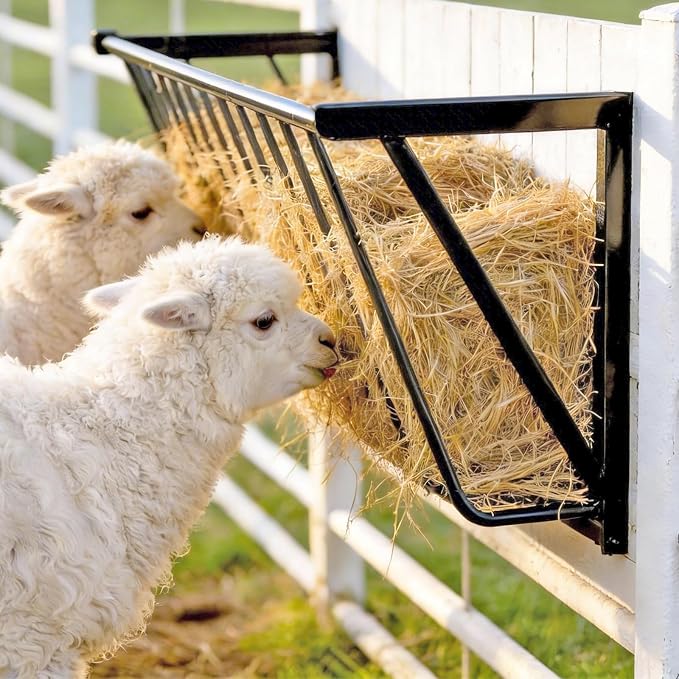 | Heavy Duty Goat Hay Rack | Check Price |
Our Top Picks 3  | VEVOR Hay Rack | Check Price |
Our Selected Top 15 Hay Feeder for Every Budget
This list features a variety of hay feeders designed to suit different needs and budgets. Each product is reviewed based on performance, suitability for specific animals or settings, and key strengths and weaknesses to help you make an informed choice.
1. VEVOR Livestock Hay Feeder
Combining a hay rack and a grain tray, the VEVOR Livestock Hay Feeder is perfect for goat keepers who need a large capacity solution. Its standout feature is holding enough feed for 10 to 12 goats, reducing the frequency of refills and keeping feeding organized.
Setup includes assembling with the included L-shaped screwdriver and nut wrench. The feeder’s large capacity and bottom tray catch loose hay, which helps keep the feeding area cleaner.
Rounded edges on the frame and tray make daily feeding safer, reducing chances of scratches to animals during mealtime.
Built from Q235 carbon steel tubing and galvanized steel plates, the feeder feels solid and resists outdoor wear. The stable welding boosts its durability.
It performs well in holding large amounts of feed, although the unit weighs nearly 48 pounds, which can make moving it a bit tougher. Rounded edges on all parts also stand out as a safety highlight.
The feeder’s strong point is holding a large volume of feed for many goats at once, with built-in safety features like rounded edges to prevent injuries. The most frequent complaint is its heavy weight, which can be inconvenient during relocation or cleaning.
Those with multiple goats and plenty of outdoor space will appreciate its capacity and durability. For smaller herds or tighter areas, a lighter, more compact feeder might work better.
Pros
- Feeds 10 to 12 goats simultaneously
- Large hay and grain capacity
- Galvanized steel resists rust
- Rounded edges increase safety
Cons
- Heavy weight makes moving difficult
- Large size requires ample space
| Specification | Details |
|---|---|
| Capacity (Hay) | 56 gallons |
| Capacity (Grain) | 24 gallons |
| Material | Carbon Steel + Galvanized Steel |
| Dimensions (LxWxH) | 57.87 x 27.56 x 34.06 inches |
| Weight | 47.8 pounds |
2. Goats Heavy Duty Iron Wall Hay Rack
Keeping hay dry and contained while feeding multiple goats, horses, or cows at once can be tricky. Designed with a steel frame that resists bending or rusting, this wall-mounted hay rack suits anyone looking for a durable feeder that handles heavy use without breaking down.
Setting up the rack is straightforward thanks to its wall-mount design and solid metal build. The wide top opening makes filling hay quick and easy, while the open slats in the middle slow animals down as they eat. That spacing helps prevent overeating and makes cleaning leftover hay simpler, saving time on daily maintenance.
The serious steel frame shows its strength in resisting damage from persistent animals, unlike plastic feeders that tend to crack. The rack feeds several animals at once with its 67-gallon capacity, covering needs for both horses and goats. A common complaint is that the feeder’s large size may not fit smaller spaces or suit solitary use.
The rack’s heavy-duty steel frame withstands animal wear impressively, ensuring long-lasting use. Most find the size great for groups but a bit bulky for tight spaces or smaller herds.
People managing several goats or horses together will appreciate its capacity and strength. Those with limited space or fewer animals might prefer a smaller feeder designed for compact areas.
Pros
- Durable steel frame resists rust and deformation
- Wide top opening for easy hay filling
- Large capacity feeds multiple animals simultaneously
- Open slats reduce risk of indigestion
Cons
- Too large for small or single-animal setups
- Wall mounting required, limiting placement options
| Specification | Details |
|---|---|
| Product dimensions | 35.5 x 13 x 17 inches |
| Capacity | 67 gallon large capacity |
| Target Species | Horse, Goat |
| Material | Steel frame, BPA free |
| Recommended Uses | Indoor, Outdoor |
| Warranty | 1 year |
3. VEVOR Livestock Hay Rack
18.5 gallons of hay capacity lets you feed multiple horses without constant refills, making it ideal for those managing several animals. Its wall-mounted design frees up ground space while accommodating up to five horses feeding at once.
Attaching the feeder on a secure wall is straightforward thanks to the sturdy mounting setup. Daily refills become less frequent with the large capacity, and the wide opening ensures easy access for animals feeding side-by-side. Rounded edges prevent accidental injuries, which means safer feeding times.
The cold-rolled steel material paired with a full welding process keeps the feeder strong and rigid over long periods outside. Powder coating helps it resist rust, although water protection is not guaranteed.
Most praise focuses on durability, while some point out it’s not waterproof, requiring sheltered placement during heavy rain.
Durability and safety stand out thanks to steel construction and rounded corners, but the lack of waterproofing means it requires a sheltered spot to avoid rust damage. Most users appreciate its solid build while noting exposure to rain is an issue.
People managing several horses and who want a sturdy wall-mounted feeder will find this very suitable. Those needing a fully weatherproof option or a different mounting style should consider alternatives.
Pros
- Large 18.5-gallon capacity feeds several animals
- Strong cold-rolled steel withstands outdoor use
- Rounded edges prevent livestock injuries
- Saves ground space with wall-mount design
Cons
- Not waterproof, needs covered placement
- Pull chain switch may feel unconventional for some
| Specification | Details |
|---|---|
| Switch Type | Pull Chain |
| Mounting Type | Wall Mount |
| Light Source Type | LED |
| Number of Light Sources | 1 |
| Is Waterproof | False |
4. Metal Hay Feeder Wall Mount

Perfect for anyone managing livestock in a barn or stable, especially where space is limited, this metal hay feeder wall mount stands out with its large 16-gallon capacity. It’s designed to hold plenty of hay, helping avoid constant refills, which is ideal for busy caretakers wanting a practical and reliable feeder option.
Installation is straightforward thanks to the included mounting hardware. It only takes a few minutes to set up on a wall, freeing up floor space.
Once mounted, daily feeding becomes easier since the wide 27” length holds ample hay and keeps it well contained, preventing unnecessary waste and mess. The design is simple but functional for regular barn use.
Durability is a key strength here, as the rack is built from rust-resistant carbon steel that feels solid and tough enough for years of use. Its non-toxic and BPA-free construction ensures it’s safe around animals.
Most praise focuses on how well it resists wear and tear, though a few users note it can get a bit heavy to handle during installation.
Most reviews highlight how well the hay feeder holds up over time without rusting, making it a dependable choice in barn environments. A common complaint centers on it being somewhat heavy to install, which might require extra help with mounting. Its durable build and safety features rank highly among its strengths.
Anyone needing to save floor space while keeping plenty of hay available will appreciate this feeder. Those looking for lighter or multiple-pack options might want to explore other feeders. Its sturdy design suits barns where durability and safety around animals are important priorities.
Pros
- Large 16-gallon capacity holds lots of hay
- Quick and easy wall mounting with included hardware
- Durable, rust-resistant carbon steel construction
- Non-toxic, safe for livestock
Cons
- Can be heavy to lift during installation
- Only comes with one unit, no multiple pack option
| Specification | Details |
|---|---|
| Capacity | 16-Gallon |
| Dimensions | 27” Long |
| Material | Rust-resistant carbon steel |
| Included Components | Hay rack |
| Brand Name | Topyznsup |
5. Pasture Hay Feeder Livestock Feed Trough

Designed for goats and sheep, the Pasture Hay Feeder Livestock Feed Trough stands out with its two-in-one feeding design allowing separate storage for hay and grain. Ideal for small herds needing a durable, low-waste feeding solution, it holds large amounts to reduce your refilling trips.
Setup is straightforward with all screws and hardware included, making assembly take about 10 minutes. The lightweight frame means moving it around your pasture isn’t taxing while the deep feeding pan helps keep feed inside instead of scattered on the ground.
Its design minimizes waste and supports feeding up to 14 animals simultaneously.
Performance-wise, the feeder does well holding 55 gallons of hay plus 22 gallons of grain without spillover. Made from powder-coated high-strength steel with a fully welded frame, it resists rust and wear even in poor weather. Rounded edges prevent injuries to livestock.
On the downside, some users mention its 49.6-pound weight can feel heavy when relocating without help.
The feeder is praised for its sturdy construction and large capacity allowing feeding of multiple animals at the same time without much waste. Its most frequent drawback is its weight, which some find makes moving it around harder than expected.
Those with small to medium herds wanting a reliable, spacious feeder should find it a good fit. Anyone needing an ultra-light or very portable option might want to look for something lighter or modular instead.
Pros
- Dual compartments minimize feed mixing
- Durable powder-coated steel resists rust
- Rounded edges protect livestock safety
- Feeds 14 goats or sheep at once
Cons
- Relocation can be tough due to weight
- Feeding pan depth might cause some feed to be less accessible
| Specification | Details |
|---|---|
| Weight | 49.6 pounds |
| Dimensions | 60.04 x 27.17 x 5.71 inches |
| Capacity | 55 gallons hay + 22 gallons grain |
| Feeds | 14 goats/sheep |
| Material | High-strength steel with silver powder-coated finish |
6. Heavy Duty Hay Feeder for Goats

Lesolar Heavy Duty Hay Feeder for Goats combines hay and grain feeding in one sturdy unit. Perfect for anyone with goats, sheep, or small livestock, it keeps feed tidy and separate with its dual compartments. Its biggest strength lies in reducing waste and cutting down refills thanks to its generous 30-gallon hay and 5-gallon grain capacity.
Setting up the feeder is straightforward since it arrives as one unit. Daily feeding is convenient because hay and grain stay clean and separate, preventing messes common with multiple feeders. The strong galvanized metal with rust-proof coating holds up through outdoor conditions, while the smooth surface keeps animals safe from scratches during feeding time.
Feed stays contained well, making sure less goes to waste. The heavy-duty frame stays stable under the weight of livestock activity and weather exposure.
A frequent compliment from reviews highlights its durability and how it keeps feed protected. Some users note it may be on the heavier side to move around, but that’s expected given its solid construction.
The feeder’s biggest praise is for holding feed securely and reducing waste, keeping the feeding area cleaner. The most common complaint revolves around its weight, which can make relocation a bit challenging. The durable build and rust-resistant coating ensure long-lasting outdoor use.
This product is perfect for people with livestock who want a single feeder for both hay and grain, reducing the need for refills and keeping things tidy. Those needing a portable or lighter option might want to consider alternatives.
Pros
- Combines hay and grain feeding in one unit
- Rust-proof galvanized metal construction
- Large 30 gal hay and 5 gal grain capacity
- Stable frame withstands outdoor weather
Cons
- Heavy to move once filled
- No detailed cleaning instructions provided
| Specification | Details |
|---|---|
| Brand Name | lesolar |
| Model Number | 0031 |
| Number of Items | 1 |
| Included Components | Hay Feeder |
| Manufacturer | lesolar |
| Manufacturer Part Number | USN10-0032 |
7. Heavy Duty Livestock Hay Feeder

Hay feeding is much easier with this heavy-duty feeder, perfect for livestock keepers looking to reduce waste and frequent refills. It suits those managing goats or other small animals, especially when you need both hay and grain in one spot. Its biggest strength lies in the metal tray that catches every bit of hay and stops messes.
Setup involves mounting the feeder using the included hardware, and daily feeding is straightforward thanks to its 2-in-1 design. Put hay or grass on the top rack and add grain or shredded feed below.
This arrangement saves trips with multiple buckets and helps keep feed clean and contained. Unlike fabric or mesh feeders, there’s no sagging or tearing to worry about.
The solid metal tray works well at catching loose hay, so animals actually get all the feed without wastage. Built tough and durable, it feels sturdy enough for rough outdoor use. Most users praise how clean feeding stays, but some point out the feeder requires proper mounting to prevent tipping or damage.
The feeder catches all hay efficiently, minimizing waste and mess. Most praise the durable metal tray and combo feeding options, while common concerns involve securing the feeder properly to prevent tipping during use. Its sturdy build and clean design are reliable for everyday feeding needs.
Ideal for those managing goats or small livestock looking for tidy feeding solutions. People with larger animals or who need a freestanding feeder might want to explore other options better designed for heavier use or different mounting styles.
Pros
- Solid metal tray catches all loose hay
- Feeds hay and grain in a single station
- Easy to mount with hardware included
- Durable construction suitable for outdoors
Cons
- Requires proper mounting to avoid tipping
- Not suitable for very large animals
| Specification | Details |
|---|---|
| Brand Name | Lazaluking |
| Model Number | HF-030 |
| Included Components | Hay feeder, metal tray, mounting hardware |
| Number of Items | 1 |
| Unit Count | 1 Count |
8. Heavy Duty Steel Livestock Hay Rack

Heavy Duty Steel Livestock Hay Rack is a solid choice for anyone needing a large, durable feeder for goats, sheep, ponies, or mini horses. Its biggest plus is the 35-gallon capacity, which lowers the need for constant refills and handles sizable amounts of hay or dry feed comfortably.
Setting it up involves placing the rack in a convenient spot, as it’s freestanding and sturdy. The angled hay rack design keeps the hay elevated but accessible from both sides, making feeding straightforward. Loose feed naturally slides into the lower trough, so animals can feed easily without much waste.
Regular cleaning is manageable given its open design and solid trough plate.
The hay rack holds up well to everyday use, thanks to its reinforced steel frame. Strong round rails and thick trough plate ensure it doesn’t bend or wobble under weight. It does its job by keeping hay organized and accessible without falling apart.
Most praise focuses on its toughness and large capacity, while the common complaint is that the steel frame can be heavy to move around.
The feeder is appreciated for its toughness and ability to hold a large volume of hay, making feeding less demanding and more organized. Most users mention the heaviness of the steel frame as the main downside, especially when it needs to be relocated.
People with larger herds needing space-saving feeding will find it a good fit. Those looking for a lightweight or easily portable feeder might want to consider other options that are less heavy and easier to handle solo.
Pros
- Large capacity reduces refilling frequency
- Angled rack lets animals feed easily from both sides
- Sturdy steel frame resists bending and wobbling
- Thick trough plate manages loose feed well
Cons
- Steel frame makes it heavy to move
- May require two people for setup and relocation
| Specification | Details |
|---|---|
| Brand Name | Lilvduybz |
| Capacity | 35 Gallon |
| Frame Material | Reinforced steel, 0.98 x 0.03 in round rails |
| Model Number | Lilvduybz-LXV-B07-B9H |
| Included Components | Livestock Hay Feeder 35 Gallon |
9. X Large Rabbit and Guinea Pig Hay Feeder

Metal construction gives this hay feeder solid durability and a noise-free feeding experience, perfect for rabbits, guinea pigs, and other small pets. Its extra-large size holds more hay, making refills less frequent and perfect for busy pet parents aiming to keep feeding tidy and mess-free.
Setup is straightforward thanks to two strong hanging hooks and six straps that secure it inside a cage or hut. Day-to-day use involves simply refilling the hay with minimal spillage, thanks to a sealed bottom design that keeps hay from dropping out.
Maintenance feels simple since the feeder stays clean and reduces waste by stopping your pet from pulling out or soiling hay.
Performance in holding and containing hay is dependable, with the metal frame able to withstand chewing and continual use. Its large capacity supports longer feeding intervals. Positive comments focus on its durability and cleanliness, while some users find it slightly bulky or challenging to fit in smaller cages.
Durability and a tidy feeding area stand out as key benefits; nearly every comment praises how well it keeps hay contained and survives active chewing. The biggest drawback is its size, which can feel bulky in smaller cages or setups, making it harder to fit without rearranging things.
Perfect for people with larger cages or several small pets looking to cut down on hay waste and messy cleanup. Those with minimal cage space or very small animals might want to consider feeders with a more compact design for easier integration.
Pros
- Extra-large size holds more hay
- Durable metal frame resists chewing
- Sealed bottom reduces hay mess
- Strong hooks and multiple straps for secure attachment
Cons
- May be bulky for small cages
- Some find installation a bit awkward
| Specification | Details |
|---|---|
| Material | Metal |
| Dimensions | 9.7 x 4.7 x 6.6 inches |
| Target Species | Rabbit, Guinea Pig, Chinchilla, Hamster, Rat |
| Included Components | 1x Hay Feeder, 2x Hooks, 6x Straps |
| Recommended Uses | Dry Food, Hay Feeder, Indoor, Multiple Pets |
10. Guinea Pig and Rabbit Hay Feeder

Heavy-duty metal construction stands out right away, making it a reliable choice for small animals like rabbits, guinea pigs, and chinchillas. It fits most standard pet cages, helping to keep hay neat and within easy reach for your pets. The biggest strength lies in its durability combined with an easy way to offer fresh hay daily.
Setting it up is straightforward thanks to the hook design, which fits securely on a cage without extra tools. Refilling is simple too, as the large mouth at the top allows enough hay for a day’s feeding without frequent trips to the feeder. It keeps the cage cleaner by reducing hay scatter and waste while providing a comfortable spot for pets to nibble.
The feeder does a solid job holding plenty of hay and standing up to daily use without bending or breaking. Its heavy-duty metal frame feels sturdy and stable.
Most praise highlights how it helps reduce mess and makes feeding easier, while the most common complaint is that the size might not suit larger animals or cages that don’t have compatible bars.
Users find that the feeder keeps hay tidy and accessible while being very durable due to its strong metal build. The main drawback is its size, which does not suit all cage types or larger pets, limiting versatility.
People with small pets looking for a sturdy, easy-to-install feeder that cuts down on hay waste will like this product. Those with larger cages or bigger animals may need to look for bigger or differently designed feeders.
Pros
- Durable heavy-duty metal construction
- Easy to install with hook design
- Large mouth for easy hay filling
- Reduces hay waste and mess
Cons
- May not fit larger animal cages
- Size limits hay quantity for multiple pets
| Specification | Details |
|---|---|
| Target Species | Rabbit Chinchilla guinea pig |
| Size | 6.9 inches long x 4.7 inches wide x 6.6 inches high |
| Material | Heavy-duty metal |
| Installation | Hook design suitable for most pet cages |
| Included Components | Stand |
| Age Range Description | All Life Stages |
11. Metal Hay Feeder for Goats

Large capacity and sturdy metal construction make this hay feeder ideal for anyone managing multiple goats. It suits farmers or people with goats who want to feed less often and give several animals plenty of space to eat together without crowding. Its biggest strength lies in holding plenty of hay for 6-8 goats at once.
Assembly is straightforward thanks to the simple open-frame design. Daily use involves placing the feeder outdoors where animals can easily access the hay through multiple openings. Weather resistance means no fuss with storage or protection from the elements, keeping refills less frequent and feeding smoother during all seasons.
Performance in holding large amounts of forage consistently meets expectations without damage or collapse. The black powder-coated metal finish lasts through rain and snow, proving durable in outdoor conditions.
Most users appreciate the spacious design for reducing crowding, while some mention the feeder’s metal frame could be a bit heavy when moving it around.
The large 38-gallon capacity and sturdy metal build are praised for feeding multiple goats without overcrowding. A common complaint is the feeder’s weight, which can make repositioning somewhat difficult. Despite that, its weather-resistant finish keeps it reliable through rain, snow, or sun.
Anyone managing a small herd outdoors will find the capacity and durability ideal for reducing daily work. Those needing lighter or more portable feeders might want to explore other, simpler models better suited for easy relocation or covered feeding.
Pros
- Spacious enough for 6-8 goats simultaneously
- Weather-resistant black powder-coated metal
- Open-frame design reduces crowding at feeding
- Durable for outdoor use in all seasons
Cons
- Metal frame can be heavy to move
- No cover, so hay may be exposed to rain
| Specification | Details |
|---|---|
| Brand Name | ETELI |
| Model Number | 4807 |
| Manufacturer Part Number | NX4807 |
| Capacity | 38 gallons |
| Number of Items | 1 |
12. Heavy Duty Pasture Hay Feeder

Hay feeders that limit waste and keep feed clean are crucial on any farm. Designed for people managing livestock with messy feeding areas and costly feed, this model emphasizes saving hay and grain efficiently. Its standout feature is a smart dual-compartment system that separates hay and grain while catching falling bits to reduce feed loss.
Installation comes with mounting hardware, making it ready to set up without fuss. The two compartments, a V-shaped hay rack and a deep grain trough, make daily feeding straightforward.
Grain and hay remain separated, which encourages better eating habits in animals. The bottom pan collects stray forage, so cleaning up is quicker and less messy, helping to keep pastures tidy.
Built from heavy-duty galvanized steel with a powder-coated finish, it withstands chewing and harsh weather better than plastic or wood. The feeder’s design works well to cut down waste by around 30%, making feed last longer. The main praise points focus on durability and waste reduction, while some note the overall size could be a challenge in tight spaces.
The feeder reliably holds hay and grain separately while catching falling bits, which many find cuts feed waste significantly. Its sturdy metal build resists damage, but some find the size and weight less convenient for limited or mobile setups.
This model suits farms looking for a durable outdoor feeder that reduces waste and supports animal health. Smaller operations with space or weight limitations might want a lighter or more compact feeder option.
Pros
- Reduces feed waste by up to 30%
- Separates hay and grain to support better feeding
- Heavy-duty galvanized steel construction
- Includes mounting hardware for easy setup
Cons
- Size may be too large for smaller spaces
- Metal construction can be heavier than plastic alternatives
| Specification | Details |
|---|---|
| Brand Name | FULUPET |
| Included Components | Mounting Hardware |
| Number of Items | 1 |
| Model Number | GHF0001 |
| Manufacturer Part Number | GHF001 |
| Manufacturer | Goat hay feeder |
13. Livestock Hay Feeder

Holding up to 30 gallons of grass makes this feeder ideal for anyone needing to feed multiple animals over several days without constant refills. Its large capacity is the standout feature, making it practical for small farms or ranches looking to save time and prevent hay wastage.
Putting it together is straightforward, requiring only a few screws and about 10 minutes of your time. The thickened nylon fabric trough keeps the hay secure and easy to access for animals, minimizing spillage.
Daily feeding involves simply loading the feeder and letting the animals eat at their pace, with a sturdy frame ensuring stable support outdoors.
Made from galvanized steel, the frame promises to handle all kinds of weather over many years. It catches and holds grass well, reducing waste. The main compliment from those using it is how durable and reliable the construction is, while the most frequent complaint centers on the limited types of feed it can hold due to the nylon fabric design.
The feeder is praised for its lasting steel frame and effective design that holds hay securely, cutting down waste significantly. Common issues involve feed compatibility since the nylon fabric only works well with grass and certain shredded feeds.
People with multiple animals or large pastures will appreciate the capacity and sturdy build. Those needing to feed a variety of hay types or needing frequent mobility might want to consider other options better suited to mixed feed or easier transport.
Pros
- Super large 30-gallon capacity for grass
- Thickened nylon fabric prevents waste
- Durable galvanized steel frame
- Easy 10-minute assembly
Cons
- Not suitable for all feed types
- May require regular inspection for wear
| Specification | Details |
|---|---|
| Brand Name | BUYYAH |
| Unit Count | 1 Count |
| Number of Items | 1 |
| Manufacturer Part Number | LDGCJ80551PCS0000B0 |
| Model Number | LDGCJ80551PCS0000B0 |
14. Metal Wall Mount Hay and Grain Feeder

Ideal for those managing livestock who need a sturdy hay feeder, this one stands out for its durability. Its galvanized steel build makes it a solid choice for outdoor conditions. Anyone needing a long-lasting, wall-mounted feeder that prevents hay waste will find this especially useful.
Installation is straightforward thanks to the double L-shaped hooks with adjustable distance, adapting to various mounting spots. The included mounting kit speeds up setup.
The elevated bottom groove holds extra hay securely, stopping overflow and keeping the feed dry and clean from ground moisture during daily use.
Made from galvanized sheet painted with high-temperature paint and assembled with 304 stainless steel screws, the build feels extremely tough. It handles the feeding job well by keeping hay contained and dry. The main praise highlights its durability, while some users mention the mounting process needs attention to get the spacing just right.
This hay feeder is praised for its sturdy build and ability to keep hay dry and waste-free. Most common issues come from mounting, as spacing adjustments need careful handling to prevent improper installation. The material and design minimize hay spoilage during everyday feeding.
People with livestock who want a durable, wall-mounted feeder suitable for various spaces will find this product appealing. Those needing a lightweight feeder or quick, tool-free assembly might look for alternatives better suited to lighter or temporary setups.
Pros
- Durable galvanized steel construction
- Adjustable double L-hook mounting system
- High-capacity, elevated bottom groove
- Includes necessary mounting hardware
Cons
- Requires careful spacing adjustment for mounting
- Relatively heavy at over 30 pounds
| Specification | Details |
|---|---|
| Target Species | Livestock |
| Material | Galvanized Steel with high-temperature paint |
| Weight | 30.14 Pounds |
| Included Components | Mounting Kit |
| Warranty | 2 years |
15. Weaver Equine Slow Feed Hay Net

Designed to slow down feeding, this hay feeder suits horses, goats, and other livestock that benefit from slower intake. Its standout feature is the small 1 to 1.5 holes that control how quickly animals pull hay out, helping with digestion and preventing overeating, making feeding time more manageable and less wasteful.
Setting up the feeder involves filling the sturdy 36-inch nylon net with hay, then hanging it somewhere accessible. The durable synthetic rope holds up even when animals lean on it while eating.
Daily use is straightforward, the smaller holes regulate bites, so feeding lasts longer without constant refilling. Cleaning comes down to shaking out leftover debris since the material doesn’t absorb moisture.
Performance is solid at slowing hay consumption and reducing waste. The synthetic rope feels strong, resisting wear from frequent use and animals pulling persistently. A frequent complaint involves the net being slightly narrow in diameter, making bulkier hay trickier to pack in.
The build supports rough handling, while the small holes effectively slow feeding as intended.
Many praise the feeder for its durability and ability to slow down feeding effectively, making a difference in managing overeating. However, some find the net’s narrow size restricts how much and what kind of hay can be packed comfortably, which can affect convenience.
This slow feed hay net is ideal for people with animals that need to eat more slowly and improve their digestion. Those who prefer a wider or more colorful option might want to explore other feeders designed for bulkier hay or aesthetic variety.
Pros
- Small holes promote slower feeding
- Durable nylon rope withstands leaning and pulling
- Suitable for horses, goats, and other livestock
- Easy to fill and hang
Cons
- Narrow diameter makes packing bulky hay challenging
- Limited color options (only black)
| Specification | Details |
|---|---|
| Item Package Dimensions (L x W x H) | 13.74 x 5.83 x 3.62 inches |
| Package Weight | 0.31 kg |
| Item Dimensions (L x W x H) | 4 x 4 x 14 inches |
| Size | 36-Inch |
| Material | Nylon |
| Outer Material | Synthetic Rope |
Best Hay Feeders Comparison Table
| Product | Brand | Target Species | Weight | Size |
|---|---|---|---|---|
| VEVOR Hay Feeder | VEVOR | – | 47.8 pounds | 57.9 x 27.6 x 34.1 in |
| Heavy Duty Goat Hay Rack | Lazaluking | Horse, Goat | – | – |
| VEVOR Hay Rack | VEVOR | – | – | – |
| Metal Wall Hay Feeder | Topyznsup | – | – | 27” |
| Pasture Livestock Feed Trough | Gelacie | – | 49.6 pounds | – |
| Heavy Duty Goat Hay Feeder | lesolar | – | – | – |
| Heavy Duty Livestock Feeder | Lazaluking | – | – | – |
| Steel Livestock Hay Rack | Lilvduybz | – | – | – |
| X Large Small Pet Hay | Harhana | Rabbit, Guinea Pig, etc. | – | – |
| Guinea Pig Rabbit Feeder | CAIQINLI | Rabbit, Chinchilla, Guinea Pig | – | – |
| Metal Goat Hay Feeder | ETELI | – | – | – |
| Heavy Duty Pasture Feeder | FULUPET | – | – | – |
| Livestock Hay Feeder | BUYYAH | Mini Horse | – | – |
| Metal Wall Hay Grain Feeder | YXJSTO | Livestock | 30.14 Pounds | – |
| Weaver Equine Slow Hay Net | Weaver Equine | – | 0.31 kg | 4 x 4 x 14 inches |
- BrandVEVOR
- Target Species–
- Weight47.8 pounds
- Size57.9 x 27.6 x 34.1 in
- BrandLazaluking
- Target SpeciesHorse, Goat
- Weight–
- Size–
- BrandVEVOR
- Target Species–
- Weight–
- Size–
- BrandTopyznsup
- Target Species–
- Weight–
- Size27”
- BrandGelacie
- Target Species–
- Weight49.6 pounds
- Size–
- Brandlesolar
- Target Species–
- Weight–
- Size–
- BrandLazaluking
- Target Species–
- Weight–
- Size–
- BrandLilvduybz
- Target Species–
- Weight–
- Size–
- BrandHarhana
- Target SpeciesRabbit, Guinea Pig, etc.
- Weight–
- Size–
- BrandCAIQINLI
- Target SpeciesRabbit, Chinchilla, Guinea Pig
- Weight–
- Size–
- BrandETELI
- Target Species–
- Weight–
- Size–
- BrandFULUPET
- Target Species–
- Weight–
- Size–
- BrandBUYYAH
- Target SpeciesMini Horse
- Weight–
- Size–
- BrandYXJSTO
- Target SpeciesLivestock
- Weight30.14 Pounds
- Size–
- BrandWeaver Equine
- Target Species–
- Weight0.31 kg
- Size4 x 4 x 14 inches
How to Choose the Right Hay Feeder
Selecting a hay feeder depends on durability, ease of cleaning, and size to match the number of animals. Choosing the right features helps prevent hay waste and lowers replacement costs, making the feeding process more efficient and straightforward.
Durability and Materials
Outdoor feeders face constant exposure to rain, snow, and sun, so the material’s resistance to weather is critical. Metal feeders that are not coated or made from rustproof alloys often corrode within a season, creating sharp edges and reducing their lifespan. A strong feeder usually features powder-coated steel or galvanized metal designed to last through various conditions.
Impact resistance also plays a key role. Livestock can be rough on feeders, bumping or rubbing against them repeatedly. Products made from reinforced plastics or heavy-duty steel tend to handle this contact without bending or breaking.
Materials should be certified nontoxic to ensure safety for animals that may chew or lick the feeder surfaces during feeding.
Size and Capacity
The size of the feeder must align with the number and size of animals feeding from it. Smaller feeders lead to overcrowding, which stresses animals and causes waste.
Larger breeds need more room and a higher volume capacity, ideally capable of holding several days’ worth of hay to reduce refilling frequency.
Dimensions should fit comfortably in the designated feeding area without blocking movement paths or taking up excessive stall space. Common practical sizes range from 3 to 6 feet in length, with sufficient height and width to prevent hay from spilling out but still allowing easy access.
Design and Accessibility
Animals need straightforward access to hay without struggling or pushing each other. Designs that allow feeding from multiple sides or that use a slotted or mesh structure minimize wasted hay. Feeding barriers that are too restrictive cause discomfort and increase spillage.
Leakage prevention is a clear benefit to feeders with raised or enclosed bottoms, which stop hay from falling to the ground and attracting pests or mold. Feeders also vary in suitability depending on whether loose hay, hay bales, or pelleted feed are used, so choosing a design that matches the type of feed is important.
Ease of Cleaning and Maintenance
Regular cleaning prevents mold, mildew, and leftover feed buildup, all of which can affect animal health. Feeders that open fully or dismantle into simple parts make cleaning faster and more effective, avoiding places where residue can accumulate unseen.
Materials resistant to water damage and mold are preferred, meaning plastics and finished metals usually perform better than untreated wood. Maintenance is easier when replacement parts like bolts or panels are widely available and the design is simple enough to avoid specialized tools.
Safety Features
Sharp edges or protruding bolts can injure animals, so feeders with smooth or rounded finishes increase safety. Stability is another critical factor; unstable feeders can tip when animals lean on them or push, risking injury and wasted hay.
Good feeders are designed to prevent animals from getting caught or entangled by bars, wires, or gaps. Close attention to bar spacing and secure fastenings reduce the likelihood of this happening during feeding.
All safety features contribute to less stress and fewer veterinary issues.
Effective Maintenance Practices to Prolong the Life of Your Hay Feeder
Maintaining a hay feeder properly prevents costly replacements and keeps your feed cleaner for animals. Remove leftover hay daily to avoid mold buildup, which can affect animals’ health. Use a stiff brush or scraper to clean accumulated dirt or debris from the feeder surfaces.
Inspect metal feeders regularly for rust or sharp edges that could injure livestock and address these issues promptly by sanding or repainting. Wooden feeders need checks for splinters, cracks, or weakened joints, especially after wet weather.
Tighten any loose bolts or screws to maintain stability during use.
Position feeders off muddy or wet ground by placing them on gravel or pallets, reducing rust and wood rot. Covering feeders during heavy rain also helps to keep hay dry and minimizes waste. Rotating locations where feeders are set up prevents soil degradation in one spot, promoting better hygiene.
These simple actions make a noticeable difference in the longevity and cleanliness of hay feeders over time.
Comparing Hay Feeders to Traditional Feeding Methods: Benefits and Drawbacks
Traditional feeding methods like ground feeding waste a lot of hay due to trampling and contamination from dirt. Hay feeders reduce waste by holding the hay up and limiting access so animals take only what they eat.
This can lead to significant feed savings and less mower cleanup in pastures.
- Benefits of hay feeders: Protects hay from weather, reduces spoilage, and keeps feeding areas cleaner.
- Drawbacks: Initial cost is higher than loose feeding, and some feeders require regular maintenance to avoid rust or damage.
Traditional feeding makes it easier to offer large amounts of hay quickly but often leads to overconsumption or uneven intake. Hay feeders help manage portions and keep feed in better condition.
However, this control means monitoring feeder condition and refilling them adequately.
People Also Asked
How Do I Choose the Right Size Hay Feeder for My Animals?
Pick a hay feeder based on the number and size of animals you have. A feeder too small leads to waste and overcrowding, while too large wastes space and hay. Measure your bales and consider how many animals eat at once to find the right size.
What Are Common Safety Features to Look for in Hay Feeders?
Look for smooth edges and bars spaced to prevent animals from getting their heads stuck. Welded joints and sturdy build reduce injury risk. Avoid feeders with sharp corners or gaps wide enough for legs or necks to get caught.
How Long Does a Typical Hay Feeder Last with Regular Use?
Most metal hay feeders last around 5 to 10 years with regular use. Wooden feeders may last less depending on weather exposure. Rust and wear appear first on welds and corners, so check those areas to predict replacement needs.
What Is the Best Way to Clean and Maintain a Hay Feeder?
Clean feeders by removing leftover hay and debris regularly. Hose them down to prevent mold and check for rust spots or broken welds. Treat metal with rust-resistant paint or finish to extend the feeder’s life.
Can Hay Feeders Be Used with Both Round and Square Bales?
Many hay feeders can hold both round and square bales, but some designs work better with one type. Round bale feeders usually have taller sides to keep loose hay from spilling. Confirm compatibility before buying if you use both bale types.
Conclusion
Choosing the best hay feeder depends largely on durability, size, and ease of cleaning. The feeder should hold enough hay for your animals without waste and be sturdy enough to withstand regular use. Easy access for your animals and straightforward maintenance will save time and effort over the long haul.
Consider how much space you have, your budget, and how often you’ll refill the feeder before making a choice. Matching the feeder to your specific needs ensures better value and convenience.
Refer back to the comparison table and the detailed reviews above to find the option that fits your setup best.