Top 15 Best Grass Seed for Maryland You Can’t Miss!
Choosing the best grass seed for Maryland is crucial for anyone trying to grow a healthy lawn in this state’s unique climate. Many people pick seeds that struggle with our hot summers and cold winters, leading to patchy, thin grass that dies off quickly.
Poor seed choices often result in a lawn that requires extra watering and care, costing more time and effort in the long run. The right grass seed can save those headaches and create a much more resilient lawn.
The best grass seed for Maryland usually contains a blend of cool-season grasses like fescue, bluegrass, and rye. These varieties tolerate temperature swings and provide good coverage. Seed quality matters too; look for high germination rates above 80 percent and low weed seed content, ideally under 0.5 percent.
Using seed that matches your soil type, whether clay, sandy, or loamy, is just as important to ensure even growth and better moisture retention.
Need a Quick Check?
| Image | Product | Price |
|---|---|---|
Our Top Picks 1  | Pennington Annual Ryegrass | Check Price |
Our Top Picks 2  | Scotts Sun & Shade Seed | Check Price |
Our Top Picks 3  | Scotts Thick’r Lawn Seed | Check Price |
Our Selected Top 15 Grass Seed for Maryland Worth Considering
This list includes a variety of grass seed options suited for Maryland’s climate and soil conditions. Each review covers how well the seed performs, the ideal users for each type, and highlights its main advantages and potential drawbacks to help you make an informed choice.
1. Pennington Annual Ryegrass Seed
Pennington Annual Ryegrass Seed works best for southern lawns needing a quick green cover during winter. It excels at overseeding warm-season grasses like Bermuda and Zoysia, providing fast growth and vibrant color for areas with moderate sun exposure.
Planting this annual ryegrass in spring is straightforward, requiring moderate watering and 6 to 8 hours of full sun or light shade. Its coated seeds promote quicker germination, showing visible sprouting within a week, ideal for those aiming to maintain lawn appeal during colder months when warm grasses go dormant.
The seed establishes rapidly and produces a thick green lawn that can handle regular foot traffic while resisting common lawn diseases. Many appreciate how fast the lawn looks greener, although some have noted its temporary nature, requiring replanting each year since it is an annual grass.
Pennington Annual Ryegrass Seed is praised for its quick and vibrant winter green coverage, making it ideal for overseeding warm-season lawns. The main drawback is its temporary nature, as it’s an annual that won’t stay long-term without yearly reapplication.
Those looking to keep southern lawns green throughout winter will appreciate how fast it grows and brightens the lawn. People wanting a permanent lawn solution should consider a perennial seed instead, since this one serves as seasonal support.
Pros
- Rapid germination, visible in 3 to 7 days
- Disease-resistant and tolerates foot traffic
- Works well with warm-season grasses like Bermuda
- Suitable across a wide USDA zone range (1-12)
Cons
- Annual grass needing re-seeding each year
- Requires moderate watering to maintain growth
| Specification | Details |
|---|---|
| Sunlight Exposure | Full Sun to Light Shade (6-8 hrs sun) |
| Expected Planting Period | Spring |
| USDA Hardiness Zone | 1-12 |
| Expected Plant Height | 3 inches |
| Moisture Needs | Moderate Watering |
| Seed Treatment Method | Coated |
2. Scotts Turf Builder Sun & Shade Grass Seed
Feels rewarding to see grass thrive in both sunny and shady spots around the yard. Well suited for Maryland’s mixed climate, it’s a solid choice for anyone looking to grow a thick, green lawn that can handle varied light conditions. Its biggest strength lies in combining seed, fertilizer, and soil help in one package.
Setting it up involves timing the planting right in spring or fall when soil temperatures stay between 55°F and 70°F. Watering regularly is important to keep things moving. Spreading seed with the recommended equipment ensures even coverage, and the included fertilizer jumps starts root growth. It works outdoors and adapts to the mix of sun and shade often found in typical yards.
Performance-wise, the mix delivers on thick, green grass and deep roots that help lawns resist drought. Its medium drought tolerance means it stays looking good even in dryer spells with some care. The main praise comes from how well it grows in different conditions, though some mention that it needs consistent watering to maintain that lush look.
Builds a healthier lawn over time but needs patience and upkeep.
Grass grown from this mix is praised for coming in thick and green, building strong roots that help it survive drought periods better. The common downside appears to be the need for regular watering, which if missed, affects the grass quality noticeably.
Perfect for people with yards that have a mix of sunny and shady spots and who can commit to watering regularly. Those wanting a low-maintenance option or with mostly shaded yards might want to look for seed mixes tailored specifically for denser shade or drought-resistant features.
Pros
- Works under both sun and shade conditions
- Includes fertilizer for root-building nutrition
- Medium drought tolerance keeps lawn greener longer
- Suitable for spring or fall planting
Cons
- Needs consistent watering to thrive
- Only for full sun exposure areas
| Specification | Details |
|---|---|
| Sunlight Exposure | Full Sun |
| Expected Planting Period | Spring |
| USDA Hardiness Zone | 5 |
| Moisture Needs | Regular Watering |
| Seed Treatment Method | Scotts Spreader |
3. Scotts Turf Builder Thickr Lawn Grass Seed
Great for homeowners looking to improve patchy lawns, Scotts Turf Builder Thick’R Lawn Grass Seed covers both sun and shade areas while encouraging thicker grass. Its combined seed, fertilizer, and soil improver serve as a convenient, straightforward way to fill thin spots on your lawn.
Applying this seed mix involves spreading it evenly across weak areas just twice a year, late spring and late summer or early fall. It’s designed for lawns that get full sun and helps boost root development with its soil improvement component. The fertilizer works alongside that seed, promoting greener, denser growth over time with proper care.
Making a noticeable difference in lawn thickness is its main strength, with claims of up to 50% thicker grass. The blend encourages healthy roots, supporting sustained growth rather than quick fixes.
Some note that results vary depending on existing lawn conditions, slow or uneven growth happens if the soil or watering isn’t right. It’s built as an all-in-one lawn solution rather than just a seed, combining nutrients and soil help in one package.
Many users appreciate the noticeable thickening effect and improved root growth when properly applied and cared for, though uneven results come from varying initial lawn quality. It truly is an all-in-one product simplifying lawn care, but it won’t perform miracles on poor or shaded soils.
Homeowners with lawns that get plenty of sun and regular maintenance will find this seed mix effective. Those with heavily shaded yards or struggling soils might want to explore specialized blends or do preliminary soil work before using it.
Pros
- Combines seed, fertilizer, and soil improver
- Supports thicker, greener turf
- Works in both sun and shade areas
- Easy twice-yearly application
Cons
- Results depend heavily on pre-existing lawn conditions
- Limited to full sun exposure for best results
| Specification | Details |
|---|---|
| Sunlight Exposure | Full Sun |
| Application Frequency | Late spring, late summer/early fall |
| Weight | 10 lb. |
| Product Functions | Grass seed, fertilizer, soil improver |
4. Pennington Contractors Central Grass Seed Mix

A blend of grass seed crafted specifically for spring and fall planting suits new lawns, overseeding, and repairs in the Maryland area. The biggest strength lies in its region-tailored mix that promotes quick growth, showing signs of green within 7 to 21 days.
Preparation involves sowing the seed in an area receiving 4 to 6 hours of sunlight, best done during the spring. Moderate watering supports healthy germination. Coverage reaches up to 4,000 sq.
ft., so managing your lawn size becomes simple.
The coated seeds ensure better handling and planting accuracy, streamlining the lawn care routine.
The seed mix establishes a lawn reaching about 3 inches in height, suitable for zones 1 through 5. It grows fast, providing noticeable results promptly. Most find it effective for filling patches swiftly, though some note its moisture requirements mean regular watering is necessary to keep the grass healthy.
The seed mix is praised for quick visible growth, typically within three weeks, making it a practical choice for lawn repair and new grass. A common drawback is the need for regular watering, which can be demanding for some users during dry spells.
Gardeners in Maryland seeking a region-specific, fast-growing seed will find this mix suitable, especially for new lawns or overseeding. Those wanting taller grass or lower maintenance options might prefer alternatives that require less watering and grow taller.
Pros
- Formulated specifically for local region needs
- Quick germination in 7 to 21 days
- Coated seeds for easier planting
- Covers large areas up to 4,000 sq. ft.
Cons
- Requires consistent moderate watering
- Grass height only grows to about 3 inches
| Specification | Details |
|---|---|
| Expected Planting Period | Spring |
| Sunlight Exposure | 4-6 Hours of Sun |
| Expected Plant Height | 3 inches |
| Moisture Needs | Moderate Watering |
| Coverage Area | Up to 4,000 sq. ft. |
5. Jonathan Green Black Beauty Delmarva Grass Seed

Dense, dark-green grass that handles Maryland’s hot and humid climate well stands out most about Jonathan Green Black Beauty Delmarva. It suits homeowners looking for a drought-tolerant cool-season grass that thrives in both sun and shade, especially in mid-August to mid-October planting windows.
Mixing the seed into your lawn is straightforward, designed specifically for outdoor use in the Mid-Atlantic area. The tall fescue blend grows with deep roots reaching 4 feet, helping it retain moisture even during dry spells. The waxy coating on its leaves slows water loss, making it great for daily lawn maintenance where watering might be limited.
It also withstands foot traffic, so kids and pets won’t quickly sabotage the grass.
Growth is healthy and thick, delivering a lush turf that maintains a rich color year-round in Maryland’s challenging heat. Built for durability, the grass handles both full sun and shaded spots, making it versatile in most yards.
Highest praise often goes to its moisture retention during drought, while some find success depends on timing seeding exactly between mid-August and mid-October for best results.
Users praise the grass for holding moisture effectively during Maryland’s hot summers, creating a strong, green lawn that copes well with the heat. However, many note that planting too early or late in the season can reduce germination success and overall turf quality.
Gardeners wanting a drought-resistant lawn that can grow in sunny and shaded yards will find this mix suitable. Those looking for grass seed to plant outside the recommended timing or expecting quick instant green coverage might want to explore other options.
Pros
- Excellent moisture retention with deep roots
- Thrives in both sunny and shady areas
- Dark green, dense turf appearance
- Handles heat and drought well
Cons
- Best applied mid-August to mid-October only
- May require precise timing for optimal growth
| Specification | Details |
|---|---|
| Indoor/Outdoor Usage | Outdoor |
| Drought Tolerant | Yes |
| Sunlight Exposure | Full Sun |
| Expected Blooming Period | Year Round |
| Expected Plant Height | 3 inches |
6. Scotts EZ Seed Patch & Repair Grass Seed

Ideal for tackling bare spots in Maryland lawns, Scotts EZ Seed Patch & Repair mixes Kentucky bluegrass, perennial ryegrass, and fine fescue seeds. Perfect when daily temperatures sit between 60°F and 80°F, it excels at quick patching under both sun and shade conditions.
Preparing the patch is straightforward: clear the area, spread the seed evenly from the 3.75 lb. jug, and water until the soil is saturated with no puddles. The mix caters well to local weather in Maryland, supporting growth in spots that receive varying sunlight, making it user-friendly for routine lawn fixes during the growing season.
Designed to cover up to 85 sq. ft., the product is a balanced blend that supports rapid germination and durable growth.
It handles both sun and shade, allowing grass to fill in damaged patches effectively. Most praise highlights how well it restores bare lawns, while some point out limited coverage might require purchasing additional jugs for larger areas.
Many praise how quickly the grass grows and fills damaged areas, making repairs noticeable. The most frequent complaint is the limited coverage area; some patches might need more product than one jug provides.
Gardeners with small to medium patch repairs in Maryland’s temperature range will find this seed mix fitting. Those needing to cover extensive lawns or facing cooler climates might look for options offering larger volume or better low-temperature germination.
Pros
- Works well in sun and shade
- Easy 3-step application process
- Covers bare spots effectively
- Good seed germination at 60°F to 80°F
Cons
- 3.75 lb. jug may be small for large patches
- Requires specific temperature for best growth
| Specification | Details |
|---|---|
| Brand | Scotts |
| Model Number | Scotts – 17508 |
| Unit Count | 64 Ounce |
| Coverage | Up to 85 sq. ft. |
| Seed Mix | Kentucky bluegrass, perennial ryegrass, fine fescue |
7. Pennington Kentucky 31 Tall Fescue Grass Seed

Grass patches struggling with sun or shade find a solid solution here. Suited for yards that experience both bright and darker spots, the Pennington Kentucky 31 Tall Fescue Grass Seed stands out by thriving under varied sunlight conditions.
Its ability to work well in different light areas makes it a great choice for Maryland lawns.
Planting is straightforward in spring, especially in clay soil types common in the region. The seed coating makes spreading simple and even.
Expect to water regularly, helping the grass grow through spring and summer. Covering up to 4,000 square feet means fewer bags and less hassle during seeding days.
The tall fescue is tough and adapts well, standing around 3 inches tall. It handles between 4 to 8 hours of sun, fitting well with partial shade areas. Customers often note how resilient the grass is once established, though some mention the need for regular watering to keep it healthy.
The coated seeds make planting easier but demand some attention to moisture.
The grass seeds are praised for their resilience in sun and shade variations, making lawn upkeep easier in mixed-light areas. Most users find that the seeds require consistent watering during the growing period to establish well.
Those dealing with clay soils and mixed sun exposure will appreciate how well it fits Maryland lawns. Yards with more consistent shade or drought-prone spots may want to explore other types better suited for those conditions.
Pros
- Works well in sun and shade
- Covers a large lawn area
- Seed coating eases planting
- Good for clay soil types
Cons
- Needs regular watering to stay healthy
- Only grows up to 3 inches tall
| Specification | Details |
|---|---|
| Sunlight Exposure | 4-8 Hours of Sun |
| Soil Type | Clay Soil |
| Coverage Area | Up to 4,000 sq. ft. |
| Expected Plant Height | 3 inches |
| Indoor Outdoor Usage | Outdoor |
| Planting Period | Spring |
8. Jonathan Green Black Beauty Ultra Grass Seed

Germination speed stands out, with grass sprouting in 7-14 days, making it a solid choice for anyone needing quick lawn recovery or new yard establishment in Maryland. The seed mix is designed to create dense, dark-green turf, which suits both sun and partial shade areas well.
Planting works best in spring or fall, and the seed thrives on clay soil with regular watering. Once set up, the mix grows into a lawn with roots reaching up to 4 feet deep, helping it retain moisture even during dry spells. Day-to-day care involves consistent watering to support its fast germination and moisture-preserving traits.
It also manages high foot traffic without showing wear quickly.
Its main job of establishing healthy, thick grass in bare or thin spots is carried out reliably. The combination of tall fescues, Kentucky bluegrass, and perennial ryegrass makes for a tough lawn that looks deeply green.
People appreciate how quickly it fills in patches, though some find it requires steady watering during the early stages to avoid drying out. It handles normal outdoor conditions well, especially with some sun exposure.
The seed quickly fills in bare spots and produces a rich dark-green turf appreciated by many. However, keeping it properly watered during early growth is often mentioned as necessary to avoid dry patches. The seed performs best under the right sun exposure and soil conditions.
People looking for fast lawn establishment with minimal effort in Maryland will find a good match here. Those who cannot provide regular water or have heavy shade areas might want to look at other options adapted to different conditions.
Pros
- Fast germination within two weeks
- Creates a dense, dark-green lawn
- Deep root system helps moisture retention
- Tolerates heavy foot traffic
Cons
- Needs regular watering to prevent drying
- Best suited for full sun to partial shade only
| Specification | Details |
|---|---|
| Expected Germination Time | 7-14 days |
| Sunlight Exposure | Partial Shade |
| Expected Planting Period | Spring or Fall |
| Expected Plant Height | 4 feet |
| Soil Type | Clay Soil |
| Moisture Needs | Regular Watering |
9. Pennington Smart Seed Perennial Ryegrass Seed

Gardeners with mid-shade lawns in Maryland will find this perennial ryegrass seed blend fitting for areas receiving 4 to 6 hours of sun daily. Its greatest strength is the quick visible growth, with fresh shoots appearing in just over a week, making it ideal for those aiming for a neat, green lawn fast.
Preparation involves spreading the coated seeds over areas up to 750 square feet, with moderate watering needed to keep it moist but not soggy. The mix contains fertilizer so you don’t have to add anything extra right away.
Expect the grass to grow about 3 inches tall and keep a vibrant color even during colder months, requiring less water than many other seed options.
Seedlings usually emerge within 8 to 14 days, turning the space into a lush, fine-bladed lawn that lasts through spring and can tolerate the winter chill. The blend is designed for cool-season lawns but can fill in warm-season areas temporarily. A top highlight from users is its dependable year-after-year return.
The most noticeable drawback is the 4 to 6-hour sunlight requirement, which limits use in heavily shaded spots.
Results show strong, fast growth forming a dense, fine-textured lawn that comes back yearly. A common downside is its reliance on moderate sunlight, which limits planting in densely shaded yards. The seed-fertilizer combo reduces extra work early on, but water needs must still be watched carefully.
Best suited for homeowners with lawns getting morning or afternoon sun who want a lower-water grass option. Those with heavy shade or larger gardens should explore other varieties offering broader light tolerance and bigger coverage per purchase.
Pros
- Quick germination in 8 to 14 days
- Includes fertilizer for easy lawn care
- Uses up to 30% less water
- Maintains color through winter months
Cons
- Needs 4-6 hours of sunlight to thrive
- Limited coverage area per bag
| Specification | Details |
|---|---|
| Sunlight Exposure | 4-6 Hours |
| Expected Plant Height | 3 inches |
| Moisture Needs | Moderate Watering |
| Expected Blooming Period | Spring, Winter |
| Coverage Area | Up to 750 sq. ft. |
| USDA Hardiness Zone | 1-12 |
10. O.M. Scott & Sons Tall Fescue Grass Seed

O.M. Scott & Sons Tall Fescue Grass Seed stands out by offering a blend designed specifically for Northern and transition regions, making it ideal for Maryland lawns. Its biggest strength lies in creating dense, resilient grass that naturally crowds out weeds, perfect for those wanting a tough, green yard that withstands regular activity.
Getting started is straightforward with the 3-in-1 mix that includes hand-selected Tall Fescue seeds, natural grass food, and soil-improving clay. Planting is best done in spring or fall, with the seed thriving in full sun outdoors. It’s safe to use around kids and pets since no artificial chemicals or pesticides are included, so the lawn stays family-friendly while growing strong.
Performance-wise, it grows thick grass that resists weeds effectively and stands up well to wear and tear. The inclusion of natural soil enhancers supports solid growth. Positive feedback highlights the lawn’s density and the absence of harmful additives.
Some users note that results depend heavily on proper planting timing and maintenance, which can affect overall success.
The grass seed mix delivers thick, dense growth that naturally keeps weeds at bay when planted during the recommended seasons. It is free from artificial pesticides, making it safe for families and pets. Some find that success depends on following the timing and care instructions closely, or the grass may struggle to establish fully.
People seeking a sturdy, green lawn in Maryland with a pet-friendly solution will appreciate this blend. Those looking for quicker results or needing shade-tolerant grass might want to explore other options better suited to those needs.
Pros
- Designed for Northern & transition regions
- Includes natural grass food and clay
- Safe around children and pets
- Grows dense, weed-crowding grass
Cons
- Requires precise planting timing
- Needs proper maintenance for best results
| Specification | Details |
|---|---|
| Indoor / Outdoor Usage | Outdoor |
| Sunlight Exposure | Full Sun |
| Expected Planting Period | Spring or Fall |
| Seed Type | Tall Fescue Blend |
| Special Feature | Pet Friendly |
11. Scotts Drought Tolerant Grass Seed Mix

Scotts Drought Tolerant Grass Seed Mix combines Tall Fescue and Kentucky Bluegrass seeds to create a lawn that stands up well to dry conditions. Ideal for Maryland homeowners looking for a lawn that can recover quickly while saving water during dry spells.
Application works best in spring or fall when temperatures range between 65°F and 85°F. Starting fresh or overseeding, one 4 lb. bag covers 665 sq.
ft. for new lawns or up to 2,000 sq. ft.
for overseeding. The seed mix demands full sun, and its deep root growth helps conserve water, easing daily lawn care without constant watering.
The mix does a solid job at filling in bare spots thanks to its self-repairing nature. Grass seed purity at 99.99% keeps weeds to a minimum, which most find very helpful. A common downside is needing full sun exposure, which can limit its use in shadier lawn areas.
Those who appreciate a lawn that fills in on its own and conserves water will value the seed mix’s strong recovery and drought resistance. Some find the need for full sun and specific temperature range limiting for certain yard spots or planting times.
Anyone with a sunny yard in Maryland looking to start or refresh a lawn during the recommended seasons will find it fitting. Lawns with heavy shade or those wanting year-round planting flexibility might prefer other options.
Pros
- Self-repairs bare spots over time
- Deep roots help conserve water
- High purity seed with minimal weeds
- Covers large areas for overseeding
Cons
- Requires full sun, not shade-tolerant
- Limited to spring or fall planting window
| Specification | Details |
|---|---|
| Grass Types | Tall Fescue, Kentucky Bluegrass |
| When to Apply | Spring or Fall, 65°F – 85°F air temperature |
| Weed-Free Seed | 99.99% |
| Coverage | New lawn: 665 sq. ft., Overseeding: up to 2,000 sq. ft. |
| Sunlight Exposure | Full Sun |
12. Scotts Turf Builder Fall Grass Seed Mix

Filling bare spots and overseeding in Maryland’s fall weather is more straightforward with this grass seed mix designed for full sun and light shade areas. Suitable for homeowners looking to boost their lawns before the winter, its biggest strength lies in how quickly the mix establishes roots, preparing your yard for frost well ahead of schedule.
Using the grass seed feels convenient since it combines seeds with fertilizer, so you don’t need to run extra lawn care products alongside. Spread it evenly over your lawn in the fall, and it gets to work with a mix that contains Kentucky bluegrass, perennial ryegrass, and creeping red fescue. You don’t have to worry about dense shade areas, but areas with light shade or full sun are ideal for steady results.
Watering moderately supports the medium durability since it isn’t highly drought-resistant.
The main job of growing a fresh, green lawn before the cold season is handled well by the root-building nutrients included, supporting stronger growth. Users appreciate how quickly the grass establishes, making it a reliable choice for fall seeding.
However, some find the drought resistance lacking, meaning extra care is needed during dry spells. The mix is balanced but leans toward conditions where regular watering is possible.
The grass seed mix grows quickly in fall with good root support, which many find helpful for preparing lawns before winter. Common feedback notes it requires regular watering since drought resistance is low, making it less suitable in dry conditions without irrigation.
People with lawns that get regular moisture and have sunny or lightly shaded spots will be pleased with this mix. Those needing a drought-tolerant or shade-heavy solution should look elsewhere for better-suited products.
Pros
- Fast establishment before the first frost
- Includes fertilizer for root building
- Works well in full sun and light shade
- Single product for seeding and feeding
Cons
- Low drought resistance requires extra watering
- Not suitable for dense shade areas
| Specification | Details |
|---|---|
| Indoor Outdoor Usage | Outdoor |
| Expected Blooming Period | Fall |
| Sunlight Exposure | Full Sun |
| Expected Planting Period | Fall |
| Seed Mix Components | Kentucky bluegrass, perennial ryegrass, creeping red fescue |
13. Scotts Turf Builder Tall Fescue Grass Seed

Scotts Turf Builder Tall Fescue Grass Seed combines seed, fertilizer, and soil improver, best for anyone aiming for a thick, sturdy lawn that can handle Maryland’s climate. Its biggest strength is building deep roots that support a long-lasting green yard.
Planting works well in spring or fall when temperatures stay between 65°F and 85°F. Keep the soil moist by watering daily or as needed for around three weeks until the seedlings reach 2 inches. It thrives in full sun and prefers loam soil, making it manageable with moderate watering over time.
The grass seed establishes a durable lawn that stands up to rough conditions while providing root-building nutrients. The strongest praise highlights its drought tolerance and ability to grow strong roots.
Some say the daily watering requirement for the first three weeks can be demanding.
Strong root development and drought resistance are praised often, but daily watering for three weeks can feel like a lot of work. This keeps the soil moist enough to support healthy seedlings until they grow tall enough.
This seed mix suits gardeners ready to commit to careful early watering and those seeking a lawn that resists heat and tough weather in Maryland. Avoid if looking for a low-maintenance grass seed needing less initial care.
Pros
- Combination of seed, fertilizer, and soil improver
- Durable against harsh conditions
- Supports deep-root growth
- Drought tolerant for heat resilience
Cons
- Needs consistent daily watering early on
- Best planted only in specific temperature ranges
| Specification | Details |
|---|---|
| Expected Blooming Period | Spring |
| Sunlight Exposure | Full Sun |
| Expected Planting Period | Spring |
| Soil Type | Loam Soil |
| Moisture Needs | Moderate Watering |
| Special Features | Drought Tolerant |
14. X-Seed Ultra Premium Lawn Seed Mixture

Perennial ryegrass, fine fescue, and Kentucky bluegrass create a blend perfect for Maryland’s cool-season climate. Designed for both sun and shade, this seed mix works well for those wanting a dense, green lawn quickly. Its biggest strength lies in the moisture boost technology that helps the seed absorb water and sprout faster.
Spreading the seed over sandy soil requires moderate watering to keep the mix moist but not soggy. It covers large areas efficiently, perfect for new lawns and existing turf needing rejuvenation. The ability to handle high-traffic spots means it’s great for yards with dogs or kids playing regularly.
This blend grows well from spring to summer with full sun exposure.
The seed germinates rapidly thanks to the moisture boost technology, leading to a thick, lush lawn that holds up against wear. Being a combination of ryegrass, fescue, and bluegrass makes it versatile for Maryland’s varying conditions.
The main praise from reviews highlights its quick-green-up time, while some mention the coverage area for new lawns could feel limited.
The moisture boost feature helps the seed absorb 50% more water, speeding up germination and creating a fuller lawn in weeks. Most users appreciate how quickly the grass grows, but some find the coverage less generous when planting new lawns compared to existing ones.
This seed mix fits those living in Maryland’s cooler climate wanting reliable grass growth under sun or shade conditions. People with clay or heavy soils might want to look for options better suited beyond sandy soil preferences.
Pros
- Fast-growing dense grass mix
- Works well in sun and shade
- Handles high-traffic areas easily
- Covers large areas with one bag
Cons
- Coverage for new lawns might feel limited
- Best suited for sandy soil only
| Specification | Details |
|---|---|
| Sunlight Exposure | Full Sun |
| Soil Type | Sandy Soil |
| Moisture Needs | Moderate Watering |
| Expected Blooming Period | Spring to Summer |
| Coverage | 3 lb covers 1,050 sq ft (new lawns), 2,100 sq ft (existing lawns) |
| Special Features | Moisture Boost Technology |
15. Blue Resilience Lawn Grass Seed Mixture
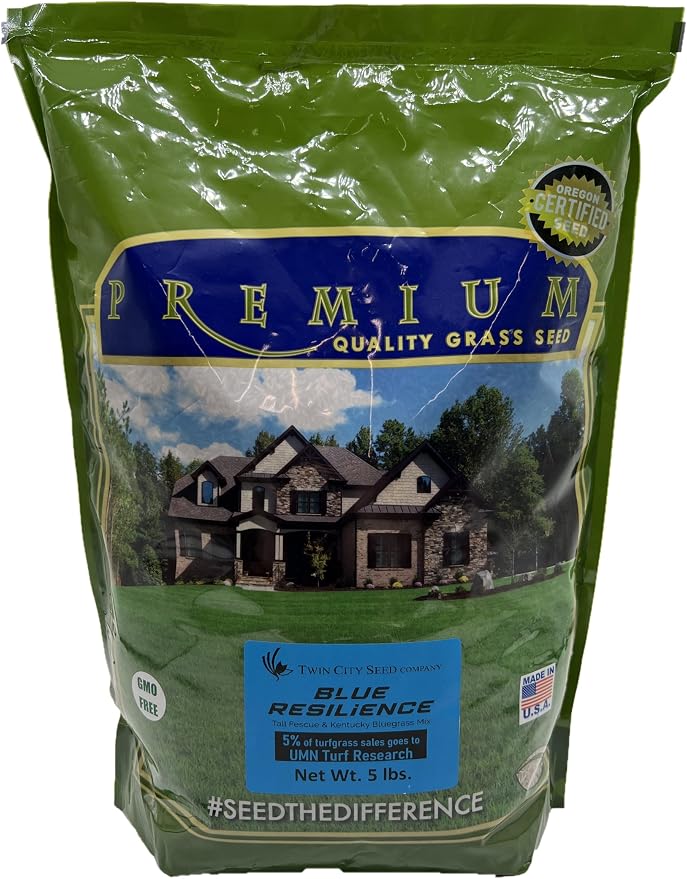
Dark color and fine leaf texture stand out as soon as you lay down this seed mix. Designed for lawns in Maryland that face a mix of sun and shade, it excels at recovering fast from wear and drought, making it great for yards with kids or pets.
Getting started involves watering regularly until seedlings establish, which usually germinate between 5 and 10 days. The recommended mowing height of 2 to 4 inches keeps the lawn looking its best while promoting healthy growth.
It can handle various soil types, so it adapts well around most Maryland homes without much fuss.
The blend’s rhizomes allow the grass to self-repair quickly, which means bare spots get filled in sooner than with other varieties. Most find it tough against foot traffic and drought, maintaining its lush look over time. Complaints mostly mention the need for consistent watering at the start, or slower germination in less-than-ideal conditions.
Many appreciate how fast this seed mixture self-repairs and withstands heavy use without thinning out. However, the need for consistent watering during early growth can be a drawback, especially in drier periods or if you miss those first weeks of care.
Lawns that see regular activity and require drought resistance will find a lot to like here. Those looking for a seed option with faster germination or less initial care might want to explore alternatives suited to more controlled watering conditions.
Pros
- Self-repairing with rhizomes
- Strong drought tolerance
- Dark color and fine leaf texture
- Good for traffic-heavy lawns
Cons
- Needs watering until seedlings are established
- Germination can be slower without ideal conditions
| Specification | Details |
|---|---|
| USDA Hardiness Zone | 3-8 |
| Seed Coverage for New Lawn | 7-9 lbs per 1000 sq ft |
| Germination Time | 5-10 days |
| Sunlight Exposure | Full sun to shade |
| Maintenance Mown Height | 2-4 inches |
Best Grass Seed for Maryland Comparison Table
| Product | Usage | Sunlight Exposure | Planting Period | USDA Hardiness Zone |
|---|---|---|---|---|
| Pennington Annual Ryegrass | Outdoor | Full Sun to Light Shade | Spring | 1-12 |
| Scotts Sun & Shade Seed | Outdoor | Full Sun | Spring | – |
| Scotts Thick’r Lawn Seed | – | Full Sun | – | – |
| Pennington Contractors Mix | Outdoor | 4-6 Hours Sun | Spring | 1-5 |
| Jonathan Green Black Beauty | Outdoor | Full Sun | – | – |
| Scotts EZ Seed Repair | – | – | – | – |
| Pennington Kentucky 31 | Outdoor | 4-8 Hours Sun | Spring | 1-8 |
| Jonathan Green Ultra Seed | Outdoor | Partial Shade | Spring or Fall | – |
| Pennington Smart Seed | Outdoor | 4-6 Hours | Spring | 1-12 |
| O.M. Scott Tall Fescue | Outdoor | Full Sun | Spring or Fall | – |
| Scotts Drought Mix | – | Full Sun | – | – |
| Scotts Fall Grass Mix | Outdoor | Full Sun | Fall | – |
| Scotts Tall Fescue Seed | – | Full Sun | Spring | – |
| X-Seed Lawn Mixture | Outdoor | Full Sun | Spring to Summer | – |
| Blue Resilience Seed | – | Full sun to shade | Fall, Late fall, Spring | 3-8 |
- UsageOutdoor
- Sunlight ExposureFull Sun to Light Shade
- Planting PeriodSpring
- USDA Hardiness Zone1-12
- UsageOutdoor
- Sunlight ExposureFull Sun
- Planting PeriodSpring
- USDA Hardiness Zone–
- Usage–
- Sunlight ExposureFull Sun
- Planting Period–
- USDA Hardiness Zone–
- UsageOutdoor
- Sunlight Exposure4-6 Hours Sun
- Planting PeriodSpring
- USDA Hardiness Zone1-5
- UsageOutdoor
- Sunlight ExposureFull Sun
- Planting Period–
- USDA Hardiness Zone–
- Usage–
- Sunlight Exposure–
- Planting Period–
- USDA Hardiness Zone–
- UsageOutdoor
- Sunlight Exposure4-8 Hours Sun
- Planting PeriodSpring
- USDA Hardiness Zone1-8
- UsageOutdoor
- Sunlight ExposurePartial Shade
- Planting PeriodSpring or Fall
- USDA Hardiness Zone–
- UsageOutdoor
- Sunlight Exposure4-6 Hours
- Planting PeriodSpring
- USDA Hardiness Zone1-12
- UsageOutdoor
- Sunlight ExposureFull Sun
- Planting PeriodSpring or Fall
- USDA Hardiness Zone–
- Usage–
- Sunlight ExposureFull Sun
- Planting Period–
- USDA Hardiness Zone–
- UsageOutdoor
- Sunlight ExposureFull Sun
- Planting PeriodFall
- USDA Hardiness Zone–
- Usage–
- Sunlight ExposureFull Sun
- Planting PeriodSpring
- USDA Hardiness Zone–
- UsageOutdoor
- Sunlight ExposureFull Sun
- Planting PeriodSpring to Summer
- USDA Hardiness Zone–
- Usage–
- Sunlight ExposureFull sun to shade
- Planting PeriodFall, Late fall, Spring
- USDA Hardiness Zone3-8
How to Choose the Best Grass Seed for Maryland
Choosing the right grass seed for Maryland depends on factors like climate suitability, soil type, and sun exposure to ensure healthy growth. Getting these right helps avoid poor germination and reduces the need for extra care, saving time and money in the long run.
Seed Type and Grass Variety
Maryland’s climate swings from cold winters to hot, humid summers, favoring certain cool-season grasses over others. Most lawns here thrive with fescue, bluegrass, or ryegrass, each adapting differently to shade, drought, and foot traffic. Choosing a seed type that handles Maryland’s typical weather and soil ensures your lawn not only grows but withstands common challenges like heat stress or uneven shade.
Lawns meant for heavily used areas need varieties with strong wear resistance, while shaded spots demand seed that tolerates low sunlight, such as fine fescues. Knowing the intended use helps prevent normal lawn problems like thinning or patchiness.
Kentucky bluegrass offers dense growth but may struggle in deep shade; tall fescues handle heat and drought better. Mixing these varieties in blends can balance strengths for a healthier lawn.
Germination Rate and Purity
Starting with seed that has a high germination rate directly impacts how thick and even your lawn will be. Lots of low-quality seeds end up never sprouting, leaving thin patches to fill later. Purity also matters since seeds mixed with weed seeds or fillers lead to more weeding and poor lawn quality long-term.
Expect germination rates above 80 percent for good results. Purity should ideally be 90 percent or higher, indicating minimal unwanted plants in the mix. Labels often show this information.
Choosing blends with low weed seed content avoids common headaches like crabgrass or clover popping up unexpectedly during lawn establishment.
Adaptability to Soil and Weather
Maryland soils range from heavy clay to sandy, making seed adaptability key. Seeds that can grow well across these types reduce the need for soil amendments and careful management.
In summer, temperatures rise and drought stress hits, so disease and drought tolerance are necessary features for a sustainable lawn.
Fescues typically handle clay and drought better than bluegrass, which prefers loamy soil but can be susceptible to diseases in humid conditions. Checking seed labels for tolerance to drought, pests, and common diseases ensures the grass will survive typical Maryland weather swings without disappearing or requiring excessive treatment.
Seeding Rate and Coverage Area
The seeding rate influences how thick the lawn becomes and how much seed you need per square foot. Too little seed results in patchy growth, whereas too much is a waste of money and may invite fungal issues. Knowing your lawn’s size and planned use (overseeding versus full new installation) helps adjust this rate accurately.
Coverage per bag can vary widely. For example, some seed bags cover as little as 1,000 square feet, while others cover up to 5,000.
Overseeding usually requires about half the seed rate of new lawn installations. Reading the packaging to confirm coverage and recommended seeding rate (often expressed in pounds per 1,000 square feet) ensures you buy the right amount.
Ease of Maintenance and Care Requirements
Grass seed varieties differ greatly in the care they need once planted. Some require frequent watering and mowing during establishment, while others are more forgiving. Seeds resistant to insects, weeds, and diseases reduce ongoing maintenance, saving time and money.
Quick-establishing blends allow for less attentive care early on, reducing water and fertilizer needs. Tall fescues, for example, tend to manage pests and drought better than bluegrass but might need more mowing.
Understanding these trade-offs beforehand makes daily lawn care more manageable and prevents frustration from neglected patches or frequent treatments.
Optimal Planting Times and Soil Preparation for Maryland Lawns
In Maryland, the best time to plant cool-season grasses such as tall fescue or Kentucky bluegrass is early fall, between mid-September and mid-October. During this period, soil temperatures remain warm enough to encourage seed germination while cooler air temperatures reduce heat stress on young grass.
Spring planting is possible but less ideal due to hotter weather and increased weed competition.
Preparing the soil properly improves seed-to-soil contact and root development. Start by removing debris and existing vegetation, then loosen the soil to at least 4 inches using a tiller or garden fork. Running a rake over the area helps create a smooth, firm seedbed.
Testing soil pH is important; Maryland soils generally prefer a pH between 6.0 and 7.0, so applying lime or sulfur might be necessary to reach this range. Finally, adding a starter fertilizer rich in phosphorus supports root growth during germination.
Common Mistakes to Avoid When Growing Grass in Maryland
Skipping proper soil preparation is a frequent mistake that leads to poor grass establishment. Without loosening compacted soil or removing thatch, grass seeds have difficulty rooting deeply and absorbing nutrients. Overwatering during the germination phase also causes problems, as consistently soggy soil can drown seeds or encourage disease.
Another common issue is planting the wrong grass type for Maryland’s climate. Choosing warm-season grasses like Bermuda or Zoysia for cooler areas results in patchy growth and winterkill.
Ignoring weed control gives weeds a head start to outcompete young grass. Finally, applying too much nitrogen fertilizer early on can promote leaf growth but weak root systems, leaving grass vulnerable to drought and pests.
- Prepare soil thoroughly to improve seed contact
- Water consistently but avoid waterlogged conditions
- Choose cool-season grass varieties suited to Maryland
- Control weeds before and during germination
- Use balanced fertilization based on soil test results
People Also Asked
How Do I Properly Prepare Soil for Grass Seed in Maryland?
Prepare soil by removing debris, loosening the top 2-3 inches with a rake or tiller, and leveling the area. Adding compost can improve soil quality. Water the soil a day before planting to help seeds settle in.
What Is the Ideal Grass Seed Amount per Square Foot in Maryland?
Use about 2 to 4 pounds of grass seed per 1,000 square feet for most Maryland lawns. Check the seed bag instructions as rates vary by seed type. Spreading seed evenly helps avoid patchy growth.
Are There Any Safety Concerns When Using Grass Seed Near Pets?
Most grass seed is safe around pets, but fertilizing or using herbicides with the seed can be harmful. Keep pets off the lawn until it’s established and products dry. Read labels carefully to prevent any risks.
How Long Does Grass Seed Typically Take to Fully Grow in Maryland?
Grass seed usually takes 7 to 21 days to germinate in Maryland, depending on the variety and weather. It can take 6 to 8 weeks for a full lawn. Keep the soil moist but not soggy during this time for best results.
What Common Problems Should I Watch for After Planting Grass Seed?
Watch for issues like poor germination caused by dry soil, excessive weeds crowding the seedlings, or disease during wet conditions. Mowing too soon can also stress new grass. Patience and proper watering are key.
Conclusion
Choosing the right grass seed for Maryland mostly depends on your soil type, the amount of sunlight your lawn receives, and how much foot traffic the area gets. Cool-season grasses usually handle Maryland’s climate well, but the exact blend can make a difference in durability and appearance.
Checking seed mixes for resistance to common regional pests and diseases is also a good idea.
Consider your lawn’s size and how much effort you want to put into maintenance when picking a seed. Spending a bit more on a seed mix suited to your specific conditions can save time and money later. Take another look at the comparison table and the details above to find a seed that fits your needs and budget best.