Top 15 Best Flowering Vine for Hummingbirds You Need Now
Choosing the best flowering vine for hummingbirds often comes down to avoiding ones that fail to attract these tiny visitors. Many vines look pretty but produce sparse or unattractive flowers that hummingbirds ignore.
Others may spread aggressively, taking over garden beds and becoming a hassle. The right flowering vine strikes a balance by offering consistent blooms that provide nectar without overtaking surrounding plants.
Good hummingbird vines usually feature tubular flowers between 1 and 2 inches long, ideal for the birds’ beaks. These vines should also have a manageable growth rate, so regular pruning keeps them from becoming invasive. Drought tolerance matters too, as long-lasting blooms during dry spells keep hummingbirds returning.
A vine that climbs well on trellises or fences adds both height and color, making it easier for hummingbirds to spot the flowers.
Need a Quick Check?
| Image | Product | Price |
|---|---|---|
Our Top Picks 1  | Hummingbird Trumpet Vine | Check Price |
Our Top Picks 2  | Red Trumpet Vine Seeds | Check Price |
Our Top Picks 3  | Blue Moon Wisteria | Check Price |
Our Selected Top 15 Flowering Vine for Hummingbirds Worth Buying
This list features carefully chosen flowering vines that attract hummingbirds, offering a variety of options for different garden needs and climates. Each review explains the plant’s growth habits, appeal to hummingbirds, and suitability for various environments, highlighting strengths and potential limitations to help you decide.
1. Hummingbird Trumpet Vine Seeds
Bright orange-red tubular flowers are the heart of these hummingbird trumpet vine seeds, attracting hummingbirds and butterflies beautifully. Suited for gardeners wanting a fast-growing climbing vine, it’s perfect for covering fences and walls while adding vibrant color and natural wildlife interest.
Starting your planting in spring to early summer, these seeds grow quickly and need medium water during establishment. Once mature, they handle drought well, making daily upkeep easier. Full sun to partial shade suits the vine best, and they thrive in well-drained, rich organic soil.
Using them to cover vertical spaces like trellises or pergolas gives your garden quick natural screening.
The fast-growing climber reaches up to 30 feet, delivering a strong performance in attracting hummingbirds through summer to fall blooms. Being hardy in zones 4 to 9 means they fit a wide range of climates. Most praise focuses on how quickly and fully it covers spaces.
Common complaints mention the vine’s vigorous growth needing control to avoid overextending.
These seeds produce a vigorous vine that quickly covers large areas with bright blooms, drawing ample hummingbird activity. Growth can get out of hand without pruning, which some find challenging to manage in a small garden.
Gardeners seeking vibrant hummingbird-friendly vines that grow fast and tall will be happy with this. Those wanting low-maintenance or slower growth might look for alternatives better suited to small spaces or less frequent care.
Pros
- Large seed count for extensive coverage
- Attracts hummingbirds and butterflies
- Fast-growing and hardy perennial
- Suitable for various outdoor vertical spaces
Cons
- Requires occasional pruning to control growth
- Needs regular watering during early stages
| Specification | Details |
|---|---|
| Expected Plant Height | 30 feet |
| Blooming Period | June through September |
| Sunlight Exposure | Full Sun To Partial Shade |
| USDA Hardiness Zone | 4-9 |
| Soil Type | Well-drained, Loamy, Rich Organic Soil |
| Moisture Needs | Medium – Regular Watering During Establishment, Drought Tolerant Once Mature |
2. Red Trumpet Vine Seeds (Campsis Radicans)
Bright red blooms attract hummingbirds easily, making it perfect for gardeners wanting vibrant, living décor. Its rapid growth suits those with space for a vigorous climber, offering both eye-catching flowers and natural erosion control in full sun conditions.
Starting these seeds requires soaking for 24 hours and planting shallow in warm soil over 70°F. Once set, daily care is low since it thrives outdoors across USDA zones 4–10. Watching it climb toward 30 feet adds vertical interest, and it’s tough enough to defend against soil washouts with strong roots.
Blooming from spring through summer, the vine delights with bright red trumpet-shaped flowers that hummingbirds love. It grows quickly and reliably, with up to 90% germination from non-GMO seeds.
The most common downside is its size, as without pruning it can become overwhelmingly large in smaller areas.
This vine grows rapidly and reliably with a high germination rate, producing bright red flowers that are a favorite of hummingbirds. The most frequent challenge mentioned is controlling its size, as it can become quite large without pruning.
Gardeners with ample space and full sun will find this plant rewarding, especially those looking for natural erosion control and wildlife attraction. Smaller gardens or shady spots might require a less aggressive flowering vine.
Pros
- Attracts hummingbirds with bright red flowers
- Rapid and vigorous climbing growth
- High germination success rate
- Strong root system prevents soil erosion
Cons
- Can become too large if left unchecked
- Needs warm soil (70°F+) to germinate well
| Specification | Details |
|---|---|
| Sunlight Exposure | Full Sun |
| Blooming Period | Spring to Summer |
| Germination Rate | Up to 90% |
| Growth Height | Up to 30 feet tall |
| USDA Zones | 4–10 |
3. Blue Moon Wisteria Vine
Blue Moon Wisteria Vine fits anyone wanting an impressive flowering vine that attracts hummingbirds and butterflies three times a year. Its biggest strength is the stunning lilac-blue flowers that appear in huge clusters, offering a unique and vibrant look unlike many other vines.
Preparing the vine for a trellis or training it into a tree is straightforward since it grows vigorously up to 25 feet tall. It requires partial sun and moderate watering, thriving best in loam soil.
Planting in the fall helps it settle before summer blooms, which are also fragrant, adding another sensory layer to your garden experience.
The vine lives up to its promise with three blooming periods a year, drawing hummingbirds consistently. Its structure supports heavy flower clusters well, though some note that its vigorous growth can require careful pruning to keep it manageable.
The fragrance is a favorite, but the size might be too much for smaller garden spaces.
Flowering happens consistently throughout the seasons, creating vibrant, fragrant clusters that draw hummingbirds daily. The vine’s rapid growth leads to frequent pruning needs to prevent it from overtaking smaller spaces.
Those with ample outdoor space wanting repeated blooms and wildlife attraction will find it rewarding. Gardeners with limited space or who prefer low-maintenance plants should consider other options.
Pros
- Blooms three times a year
- Attracts hummingbirds and butterflies
- Can be trained on trellis or tree
- Fragrant lilac-blue flower clusters
Cons
- Requires regular pruning due to vigorous growth
- Can become too large for small gardens
| Specification | Details |
|---|---|
| Expected Blooming Period | Summer |
| Sunlight Exposure | Partial Sun |
| Expected Plant Height | 25 feet |
| Moisture Needs | Moderate Watering |
| USDA Hardiness Zone | 4-9 |
4. Tangerine Beauty Crossvine Live Plants

Brightening up a yard with hummingbird-friendly flowers can be tricky in colder climates, but these Tangerine Beauty Crossvine plants offer a splash of tropical color even in harsh winters. Perfect for gardeners wanting a vibrant vine that thrives in cold zones and attracts pollinators with its striking orange-red trumpet blooms.
Setup is straightforward, as the plants arrive healthy and ready for planting on a trellis or fence. They prefer full sun and moderate watering, making daily care simple. The drought tolerance and low maintenance nature mean they won’t demand constant attention, letting you enjoy the flowers without extra fuss during spring to summer.
These vines grow up to 30 feet high and deliver impressive blooms from spring into summer. Hardiness to Zone 5 makes them exceptional for northern gardens where similar vines wouldn’t survive winter. The most praised aspect is the dramatic, colorful flower display, while some note the initial plant size can feel small compared to the mature height potential.
The plants consistently impress with their vivid blooms that bring a tropical look to colder gardens. Some find the initial size small and wish for a quicker jump to full coverage or height. This may influence expectations during the first planting season.
Great for gardeners in northern zones who want dramatic flowers with minimal upkeep. Those lacking full sun or seeking faster immediate growth might consider faster-spreading or larger starter plants instead.
Pros
- Vibrant orange-red trumpet blooms attract hummingbirds
- Hardy to cold climates up to Zone 5
- Low maintenance and drought tolerant
- Grows well on trellises or fences
Cons
- Plants arrive relatively small compared to mature size
- Requires full sun exposure to thrive
| Specification | Details |
|---|---|
| Expected Blooming Period | Spring to Summer |
| Sunlight Exposure | Full Sun |
| Expected Plant Height | 30 feet |
| Soil Type | Loam Soil |
| Moisture Needs | Moderate Watering |
| Cold Hardiness | Zone 5 |
5. Hummingbird Trumpet Vine Seeds Non-GMO

Madame Galen trumpet vine stands out for attracting hummingbirds with its vibrant deep orange to salmon-red flowers. Ideal for outdoor gardeners aiming to invite these birds into their space, it excels by offering a long blooming period from mid-summer to fall.
Its main appeal lies in consistently drawing hummingbirds while brightening up sunny spots.
Setting it up requires planting in sandy soil during summer, and it thrives best with moderate watering. Planted outdoors in full sun, the vine grows steadily and brings fragrant trumpet-shaped blooms that keep coming well into the fall season. The long bloom time means the daily garden view stays lively and colorful for months.
The trumpet vine performs as expected, successfully attracting hummingbirds throughout the blooming season. Its sturdy growth and fragrant flowers add visual and sensory appeal to any garden space.
Most frequently mentioned praise highlights how abundant and vibrant the flowers are, while some remarks note the need for consistent watering to keep the plant thriving.
Bright and prolific flowers consistently attract hummingbirds, creating a lively garden atmosphere. Keeping the plant adequately watered can demand attention, especially in hotter climates.
Gardeners looking to enjoy hummingbirds all summer long in sunny, sandy soil environments will find this vine rewarding. Those unable to tend regular watering or plant outside the summer window might prefer other options.
Pros
- Long blooming from mid-summer through fall
- Highly attractive to hummingbirds
- Fragrant, eye-catching trumpet-shaped flowers
- Thrives in full sun and sandy soil
Cons
- Requires monitoring for consistent moderate watering
- Planting limited to summer season
| Specification | Details |
|---|---|
| Indoor Outdoor Usage | Outdoor |
| Expected Blooming Period | Summer |
| Sunlight Exposure | Full Sun |
| Expected Planting Period | Summer |
| Soil Type | Sandy Soil |
| Moisture Needs | Moderate Watering |
6. Mixed Hummingbird Trumpet Vine Seeds Non-GMO

Gardeners in warm climates looking to attract hummingbirds with vibrant, climbing blooms will appreciate the Mixed Hummingbird Trumpet Vine Seeds Non-GMO. Its biggest strength is producing bold, trumpet-shaped flowers that stand out and bring pollinators right to your fence or trellis.
Planting these seeds requires some patience: sow 1/4 inch deep in loose, well-draining soil after the last frost. They demand full sun, about 6-8 hours daily, to thrive best in zones 7-10.
Their natural climbing style transforms vertical spaces, making them a great choice for adding height and color to outdoor gardens with minimal upkeep required.
Once established, the vine attracts hummingbirds year-round with its colorful flowers. The plant’s climbing habit works really well for covering fences and arbors as intended.
Most praise highlights the striking blooms and ability to draw pollinators consistently. Some find the growth a bit slower than expected, requiring patience before seeing full coverage on structures.
Strong praise centers on the vivid, trumpet-like blooms that actively attract hummingbirds throughout the year. The main complaint involves the slower growth rate of the vine, meaning it takes time before your trellis or fence is fully covered in flowers.
Those living in warm zones who want a colorful, pollinator-friendly vine will find this a rewarding choice. Gardeners needing quick coverage or located in cooler regions should look for alternatives better suited to their climate or speed needs.
Pros
- Bold trumpet-shaped flowers in bright colors
- Attracts hummingbirds and other pollinators
- Perfect for vertical gardening on fences or trellises
- Low maintenance once established
Cons
- Requires patience for full growth coverage
- Best suited only for warmer climate zones
| Specification | Details |
|---|---|
| Zones | 7-10 |
| Planting Depth | 1/4 inch |
| Sunlight Exposure | Full Sun (6-8 hours daily) |
| Blooming Period | Year Round |
| Usage | Outdoor |
7. Red Hummingbird Vine Seeds (Campsis Radicans)

A vigorous flowering vine that draws hummingbirds with its bright red trumpet-shaped blooms, perfect for gardeners looking to attract wildlife and add summer color. Its biggest strength is the height it can reach, creating a stunning vertical display with minimal fuss once established.
Planting requires choosing a spot with full sun to partial shade and ensuring soil drains well. Regular watering is important for young plants, especially to encourage flowering.
Once mature, it climbs up to 40 feet with strong support and handles different soil types. Watching hummingbirds visit during bloom time adds real enjoyment in the garden.
The vine produces abundant red to orange-red flowers that hummingbirds love, making it excellent for attracting these birds. Built as a woody perennial, it grows reliably over seasons. Most praise focuses on its vigorous growth and showy blooms; a common drawback mentioned is the need for regular watering early on to keep it healthy.
The vine is praised for its vigorous growth and ability to attract hummingbirds with vibrant flowers. The most frequent complaint is the extra care needed to water young plants until they establish well.
Gardeners who want a tall, long-lasting climber to bring hummingbirds will appreciate this vine. Those looking for lower maintenance or indoor plants might consider alternatives better suited to those needs.
Pros
- Bright red trumpet flowers attract hummingbirds
- Grows up to 40 feet with support
- Tolerates a variety of soil conditions
- Woody perennial for lasting garden interest
Cons
- Requires regular watering when young
- Needs strong support for climbing
| Specification | Details |
|---|---|
| Sunlight Exposure | Full Sun |
| Moisture Needs | Moderate Watering |
| Mature Climbing Growth | 30–40 feet |
| Expected Blooming Period | Winter |
| Indoor/Outdoor Usage | Outdoor |
8. Mixed Trumpet Vine Seeds Non-GMO

Mixed Trumpet Vine Seeds Non-GMO delivers bright scarlet trumpet-shaped flowers that hummingbirds love. Ideal for outdoor gardeners in zones 4-9, it’s perfect for those wanting a flowering vine that attracts birds and grows vigorously with minimal fuss.
Its biggest strength is the impressive length it can reach, creating tall, dense coverage.
Setting up these seeds involves planting in full sun with regular watering, especially in poor to moderate soil. Though its leaves tolerate some shade, blooming only happens with good sun exposure.
The vine thrives over time, requiring little attention beyond moisture and space to climb. It grows tall and wide, making a natural privacy screen or bright garden accent.
As a perennial, it performs well year after year, blooming heavily throughout summer. The dense foliage also invites birds to nest.
Construction-wise, since it’s a plant it depends on growing conditions but remains hardy in USDA zone 8 and sandy soils. The main compliment focuses on its vibrant flowers and bird appeal while the common downside is that it grows very large, needing plenty of room to spread.
The abundant, vivid trumpet-shaped flowers successfully attract hummingbirds, and the dense foliage commonly invites other types of birds to nest. A frequent note is its rapid growth and need for ample space, which can be too much for smaller garden areas.
Gardens with plenty of room and full sun will benefit most, especially those wanting natural bird habitats. Smaller or shaded yards might want to consider more compact or shade-tolerant alternatives, as flowering depends heavily on sun exposure and space to spread.
Pros
- Attracts hummingbirds and nesting birds
- Deer resistant
- Produces bright scarlet flowers in summer
- Thrives in poor to moderate soil
Cons
- Grows very large, may overwhelm small gardens
- Requires full sun for blooming
| Specification | Details |
|---|---|
| USDA Hardiness Zone | 8 |
| Sunlight Exposure | Full Sun |
| Soil Type | Sandy Soil |
| Moisture Needs | Regular Watering |
| Expected Blooming Period | Year Round |
9. Mixed Colors Cypress Vine Seeds

Growing vibrant vines with eye-catching trumpet-shaped flowers feels rewarding in any garden space. Great for anyone wanting to attract hummingbirds with minimal fuss, these seeds offer a lively mix of colors that brighten up trellises, fences, or arbors. Their biggest strength lies in continuous blooms that keep hummingbirds coming all summer and fall.
Starting these vines is straightforward, a quick sow in a sunny spot encourages fast growth. Their climbing habit means you can watch them twist upward on supports, creating a colorful wall of flowers in reds, pinks, and whites.
Day-to-day maintenance requires little effort, perfect for gardeners who want flair without a complex routine.
These vines really deliver on attracting hummingbirds and filling garden spaces with rich, long-lasting color. The seeds come in a generous quantity, ensuring plenty of plants. Most noted praise celebrates how easy they are to grow and maintain.
On the flip side, occasional disappointment arises from slower establishment in less than ideal sunlight or conditions.
The seeds produce a vibrant show of mixed trumpet flowers that easily attract hummingbirds and bloom continuously through summer and fall. Some experienced delays in vine growth where sunlight wasn’t sufficient, slowing the display’s impact.
Those seeking a lively, colorful hummingbird-friendly vine with simple care will appreciate this seed mix. Gardeners with shaded areas or wanting a slow-growing plant might want to consider alternatives better suited to those conditions.
Pros
- Vibrant mixed colors brighten garden areas
- Attracts hummingbirds consistently during bloom
- Fast-growing for quick coverage
- Easy to grow with low maintenance
Cons
- Slower growth without ample sunlight
- Requires climbing structure to display well
| Specification | Details |
|---|---|
| Unit Count | 200 Count |
| Number of Pieces | 200 |
| Flower Colors | Red, Pink, White mix |
| Bloom Duration | Summer and Fall |
| Growth Type | Fast-growing vine |
10. Cardinal Climber Seeds Red Flowering Vines

Cardinal Climber Seeds Red Flowering Vines are ideal for gardeners looking to attract hummingbirds with vivid red trumpet-shaped flowers. Best suited for sunny spots, these vines offer fast growth and a lush green privacy screen alongside striking blooms during summer and fall.
Starting these vines is straightforward by planting fresh seeds in spring. They thrive in average to sandy soil that’s not overly nitrogen-rich and need regular watering to stay healthy.
The vigorous growth means installing a trellis or fence early is essential, as they can reach up to 15 feet quickly, creating an inviting vertical display for hummingbirds.
Once established, the vines reliably produce 1.5-inch trumpet blooms that hummingbirds favor. The combination of flowers and dense green foliage makes it useful for natural privacy. While praised for rapid growth and colorful flowers, some mention that the plants wilt as cooler weather arrives since they are annuals and don’t survive frost.
Gardeners appreciate how quickly the vines grow and produce vivid red flowers that attract hummingbirds, creating a lovely natural privacy screen. The main downside is their annual nature, as the flowers and leaves wilt with cooler temperatures, requiring replanting each year.
Those wanting seasonal color and fast coverage will find these vines rewarding, especially in sunny locations. Choosing a perennial alternative may be better for anyone seeking year-round greenery and flowers that survive winter frost.
Pros
- Bright red flowers attract hummingbirds
- Fast growing vines reach 15 feet
- Provides natural privacy with dense foliage
- Flowers last from summer through fall
Cons
- Annual vine, wilts in cooler weather
- Requires full sun and regular watering
| Specification | Details |
|---|---|
| Expected Blooming Period | Summer to Fall |
| Sunlight Exposure | Full Sun |
| Expected Planting Period | Spring |
| USDA Hardiness Zone | 3,4,5,6,7 |
| Expected Plant Height | 15 feet |
| Soil Type | Average to Sandy / Not too Nitrogen Rich |
11. Gold Flame Honeysuckle Vine

Climbing up to 15 feet, Gold Flame Honeysuckle Vine is perfect for gardeners looking to attract hummingbirds with vibrant colors. Suited for zones 5-9, it thrives in partial shade and delivers the best blooms during summer, making it an excellent choice for garden and patio spaces that want a lively floral display.
Planting is best done in summer, and the vine quickly adapts to partial shade conditions, requiring moderate care. Its climbing nature means it needs something to grow on, like a trellis or fence.
Watching hummingbirds visit the pink flowers with yellow interiors from June through August adds a delightful charm to any garden setting.
The vine attracts hummingbirds consistently within its hardiness zones. The flowers maintain their bright colors through the blooming months, drawing in birds consistently. Most appreciate its ability to grow tall and cover structures well, while a few mention that it needs regular pruning to keep growth under control.
The vine reliably produces colorful blooms that attract hummingbirds well during summer. Some find the growth vigorous enough to demand consistent pruning to prevent it from becoming unruly. Gardeners enjoy the visual appeal and hummingbird visits but should plan for upkeep.
Anyone with space for a tall vine in a garden with partial shade will appreciate its charm and bird-friendly blooms. Those seeking a low-maintenance or sun-loving option may want to explore other flowering vines better suited for those conditions.
Pros
- Long bloom period from June to August
- Attractive pink and yellow flowers
- Grows tall, ideal for trellises and fences
- Hardy in zones 5 through 9
Cons
- Requires regular pruning to manage growth
- Prefers partial shade, not full sun resistant
| Specification | Details |
|---|---|
| Hardy Zones | 5-9 |
| Color of Bloom | Pink with yellow interior |
| Months of Bloom | June-August |
| Mature Height | 10-15′ |
| Sunlight Exposure | Partial Shade |
| Expected Planting Period | Summer |
12. Mixed Morning Glory Seeds

Vivid trumpet-shaped flowers in blue, pink, purple, and white make these seeds great for anyone wanting a fast-growing vine that attracts hummingbirds. Perfect for covering fences, trellises, or arbors, their striking colors and quick growth are the biggest selling points for outdoor gardeners in zones 3-11.
Planting starts with sowing seeds outdoors in warm, sunny spots during spring through fall. Germination happens within 7 to 14 days, so you won’t have long to wait.
The vine can climb rapidly, reaching 8 to 12 feet if given moderate water and well-drained soil, making it easy to fill spaces and add color quickly. Handling about 160 seeds means plenty to work with.
These vines are excellent at attracting pollinators and creating thick green foliage to brighten garden structures. Build quality here means growing from seed to towering vine in one season, holding up in different soil types and weather across multiple hardiness zones. The most frequent tip is patience for initial germination, with the strongest feedback praising its fast climb and colorful blooms.
Morning glory seeds reliably produce vibrant flowers that quickly climb, but some seeds can take up to two weeks to germinate. The dense foliage and colorful blooms make it popular for adding immediate garden interest and bringing in hummingbirds during summer.
Gardeners looking for an easy-to-grow, fast-covering flowering vine in sunny areas will appreciate these seeds. Those wanting faster germination or shade-tolerant vines might want to explore other options better suited for low light or indoor growing.
Pros
- Rapid climbing habit reaches up to 12 feet
- Attracts lots of hummingbirds and pollinators
- Flowers come in varied, eye-catching colors
- Works well in all soil types with moderate water
Cons
- Needs full sun for best growth and blooms
- Some delay in germination for certain seeds
| Specification | Details |
|---|---|
| Sunlight Exposure | Full Sun |
| Expected Plant Height | 5 feet |
| Expected Blooming Period | Summer |
| Moisture Needs | Moderate Watering |
| Expected Planting Period | Spring to Fall |
| Hardiness Zones | 3-11 |
13. American Beauties Honeysuckle Vine

American Beauties Honeysuckle Vine is a vibrant flowering vine perfect for anyone wanting to attract hummingbirds and pollinators to a garden space. Its deep red, tubular blooms and fragrant scent make it stand out, especially for gardeners in USDA Zones 4-8 looking for a reliable, deer-resistant plant that fits well on fences or trellises.
Delivered fully rooted and ready to plant in a #2 container, it gets established easily with moderate watering and full sun exposure. The plant grows quite large, reaching up to 30 feet in height and width, so it requires adequate space. A simple light trim in early summer encourages stronger rebloom, making maintenance manageable while keeping the vine lush and colorful throughout spring and summer.
The vine performs admirably as a magnet for hummingbirds and butterflies, and native songbirds benefit from the berries and shelter it provides. It is built to thrive in sandy soil with moderate watering needs and is known for its resilience against deer.
The most frequent praise involves its abundant and fragrant flower show, while occasional notes mention the size can be overwhelming if space is limited.
Many appreciate the rich, colorful blooms and consistent attraction for hummingbirds, but some feel the vine’s mature size can be too overwhelming for small garden spaces. Its vigorous growth means it can take over an area without regular pruning.
Gardeners with enough room and who seek a lively habitat for pollinators will enjoy its presence, while those with compact spaces or limited watering ability may want to consider more compact or drought-tolerant options.
Pros
- Attracts hummingbirds and butterflies effectively
- Deer resistant for less damage
- Fragrant deep red tubular flowers
- Provides berries and shelter for native songbirds
Cons
- Grows very large, requiring ample space
- Needs moderate watering during dry periods
| Specification | Details |
|---|---|
| USDA Hardiness Zone | 4 |
| Mature Size | 20-30ft H x 20-30ft W |
| Expected Blooming Period | spring, summer |
| Sunlight Exposure | Full Sun |
| Soil Type | Sandy Soil |
| Moisture Needs | Moderate Watering |
14. Red Honeysuckle Vine (Lonicera Sempervirens)

Finding a flowering vine that attracts hummingbirds while staying visually appealing year-round is not easy. A great choice for gardeners living in USDA zones 4 through 9, this vine stands out with lush, semi-evergreen foliage that keeps your garden looking lively even when blooms fade. Its biggest strength lies in creating a vibrant, hummingbird-friendly space from spring through summer.
Planting during spring or fall works best, with a preference for well-drained soil and moderate watering. The vine thrives in full sun or partial shade, growing up to 20 feet tall, perfect for covering trellises or fences.
Expect compact care during the growing season, just watch the moisture levels and sun exposure to keep those fragrant, bright red blooms flourishing and welcoming hummingbirds.
Nectar-rich flowers attract hummingbirds impressively throughout their blooming season, which lasts during spring and summer. The vine’s semi-evergreen nature ensures your garden keeps greenery most of the year, which adds continuous appeal. Some have noted that it requires moderate watering and can grow quite tall, so pruning might be needed.
The build quality from nature’s side is simply hardy, surviving various climate zones.
The vine consistently attracts hummingbirds with its nectar-rich flowers during spring and summer, while the semi-evergreen leaves keep the garden visually appealing off-season. Some find the growth height demanding on space and care due to the need for regular pruning and moisture monitoring.
Gardeners wanting a hummingbird magnet with a long bloom period and year-round greenery will appreciate this vine. Those lacking time for moderate watering or wanting a smaller, low-maintenance plant might consider alternatives.
Pros
- Semi-evergreen foliage for year-round color
- Highly attractive to hummingbirds and butterflies
- Fragrant blooms add to garden ambience
- Adaptable to various sunlight conditions
Cons
- Requires moderate watering care
- Growth up to 20 feet needs pruning
| Specification | Details |
|---|---|
| Expected Blooming Period | Spring to Summer |
| Sunlight Exposure | Full Sun, Partial Shade |
| Expected Planting Period | Spring or Fall |
| USDA Hardiness Zone | 4, 5, 6, 7, 8, and 9 |
| Expected Plant Height | 20 feet |
| Soil Type | Well-drained |
| Moisture Needs | Moderate Watering |
15. Cardinal Climber Vine Seeds
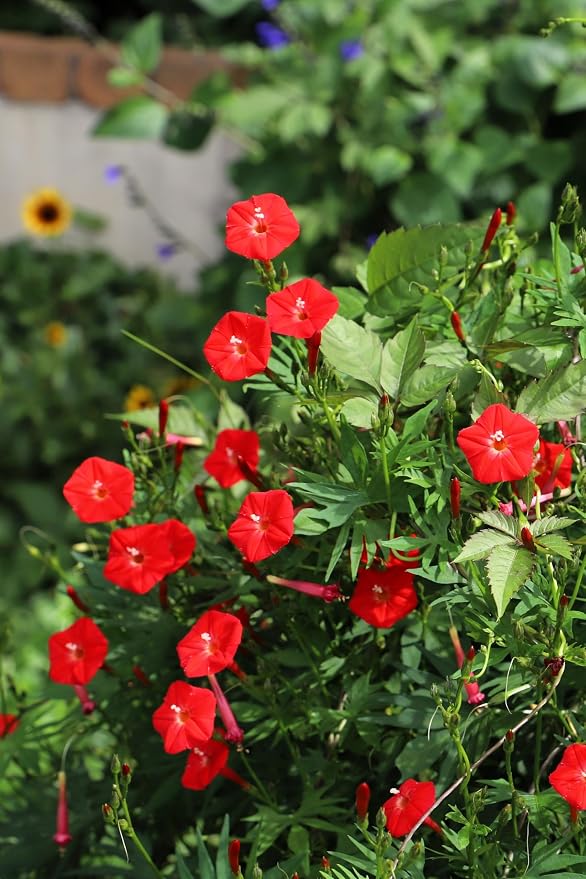
Offering a towering growth of 182 to 240 inches, Cardinal Climber Vine seeds are perfect for anyone who wants to create a vertical splash of color in their garden. Red trumpet-shaped flowers attract hummingbirds, making it a brilliant choice for wildlife enthusiasts looking to add movement and life to their outdoor space.
Starting these seeds is straightforward, either by planting them outdoors after the last frost or starting indoors 6 to 8 weeks prior. They need full sun and average soil, so you don’t need special soil amendments or constant watering.
Spacing them 24 inches apart helps the vines climb fences or trellises well, while the palm-like foliage adds extra texture alongside the bright blooms.
The real strength lies in its fast and vigorous growing habit combined with vibrant, hummingbird-attracting flowers blooming from summer through fall. It is tough once established and can cover large vertical areas.
The strongest praise highlights how well it attracts wildlife. Some find the height and spread hard to manage without good support, which is the most common complaint.
The most frequent praise highlights how well the trumpet-shaped flowers attract hummingbirds, adding lively activity to gardens. The main drawback is that its rapid growth can become difficult to control without solid structures in place to support the vine.
Gardens aiming for vibrant vertical coverage with wildlife interaction will find this an excellent option. Those seeking a low-maintenance vine or something that doesn’t need yearly reseeding might want to explore other choices better suited for perennial growth.
Pros
- Attracts hummingbirds with bright red trumpet flowers
- Vigorous climber grows up to 20 feet tall
- Thrives under full sun with average watering
- Long blooming period from summer through fall
Cons
- Requires sturdy support to manage height and spread
- Annual growth means replanting each year
| Specification | Details |
|---|---|
| Expected Plant Height | 182 inches |
| Blooming Period | Summer – Fall |
| Sunlight Exposure | Full Sun |
| Moisture Needs | Average |
| Planting Period | Spring After Last Frost Or Start Indoors 6-8 Weeks Before Last Frost |
Best Flowering Vines for Hummingbirds Comparison Table
| Product | Blooming Period | Sunlight Exposure | Hummingbird Attraction | Plant Height |
|---|---|---|---|---|
| Hummingbird Trumpet Vine | Summer to Fall | Full Sun to Partial Shade | Yes | – |
| Red Trumpet Vine Seeds | Spring to Summer | Full Sun | – | – |
| Blue Moon Wisteria | Summer | Partial Sun | – | 25 feet |
| Tangerine Beauty Crossvine | Spring to Summer | Full Sun | Yes | 30 feet |
| Hummingbird Trumpet Non-GMO | Summer | Full Sun | – | – |
| Mixed Hummingbird Trumpet | Year Round | Full Sun | Yes | – |
| Red Hummingbird Vine | Winter | Full Sun | Yes | – |
| Mixed Trumpet Vine Non-GMO | Year Round | Full Sun | – | – |
| Mixed Cypress Vine | – | – | – | – |
| Cardinal Climber Red | Summer to Fall | Full Sun | – | 15 feet |
| Gold Flame Honeysuckle | June-August | Partial Shade | – | – |
| Mixed Morning Glory | Summer | Full Sun | Yes | 5 feet |
| American Beauties Honeysuckle | Spring, Summer | Full Sun | – | – |
| Red Honeysuckle Vine | Spring to Summer | Full Sun, Partial Shade | – | 20 feet |
| Cardinal Climber Seeds | Summer to Fall | Full Sun | Yes | – |
- Blooming PeriodSummer to Fall
- Sunlight ExposureFull Sun to Partial Shade
- Hummingbird AttractionYes
- Plant Height–
- Blooming PeriodSpring to Summer
- Sunlight ExposureFull Sun
- Hummingbird Attraction–
- Plant Height–
- Blooming PeriodSummer
- Sunlight ExposurePartial Sun
- Hummingbird Attraction–
- Plant Height25 feet
- Blooming PeriodSpring to Summer
- Sunlight ExposureFull Sun
- Hummingbird AttractionYes
- Plant Height30 feet
- Blooming PeriodSummer
- Sunlight ExposureFull Sun
- Hummingbird Attraction–
- Plant Height–
- Blooming PeriodYear Round
- Sunlight ExposureFull Sun
- Hummingbird AttractionYes
- Plant Height–
- Blooming PeriodWinter
- Sunlight ExposureFull Sun
- Hummingbird AttractionYes
- Plant Height–
- Blooming PeriodYear Round
- Sunlight ExposureFull Sun
- Hummingbird Attraction–
- Plant Height–
- Blooming Period–
- Sunlight Exposure–
- Hummingbird Attraction–
- Plant Height–
- Blooming PeriodSummer to Fall
- Sunlight ExposureFull Sun
- Hummingbird Attraction–
- Plant Height15 feet
- Blooming PeriodJune-August
- Sunlight ExposurePartial Shade
- Hummingbird Attraction–
- Plant Height–
- Blooming PeriodSummer
- Sunlight ExposureFull Sun
- Hummingbird AttractionYes
- Plant Height5 feet
- Blooming PeriodSpring, Summer
- Sunlight ExposureFull Sun
- Hummingbird Attraction–
- Plant Height–
- Blooming PeriodSpring to Summer
- Sunlight ExposureFull Sun, Partial Shade
- Hummingbird Attraction–
- Plant Height20 feet
- Blooming PeriodSummer to Fall
- Sunlight ExposureFull Sun
- Hummingbird AttractionYes
- Plant Height–
How to Choose the Best Flowering Vine for Hummingbirds
Selecting a flowering vine that thrives in your local climate and attracts hummingbirds with bright, tubular blooms ensures healthy growth and frequent visits. Choosing the right vine reduces maintenance needs and prevents wasted effort on plants that won’t flourish or appeal to hummingbirds.
Flower Type and Nectar Production
Some flowering vines produce flowers that hummingbirds simply ignore. Tubular shapes and bright reds or oranges are favored by these birds, while flat, open blossoms usually fail to attract them. A vine that blooms only briefly or sporadically also leaves hummingbirds with limited feeding options, so frequent and extended blooming periods matter.
Choosing a vine that consistently produces nectar throughout the growing season keeps the birds coming back. Look out for plants known for producing a strong nectar flow with high sugar content.
This means a dense supply of food and less competition, since intense nectar production translates into more visits. Bright colors combined with long-lasting tubular flowers are the best signs to watch for.
Growth Habit and Size
Some vines grow quickly and take over garden space within a season, turning manageable beds into tangled thickets. A slower, steady growth rate fits better if you want less maintenance and control. Checking the mature height and spread on the label helps avoid overcrowding or unexpected shading of nearby plants.
Knowing whether a vine climbs or sprawls is practical too. Climbers need sturdy trellises or arbors, while trailers can add ground cover or spill over containers.
Matching the support needs to your garden setup saves time and effort. The strongest vines can grow 10 feet or more, so plan accordingly.
Hardiness and Climate Adaptability
Many hummingbird-friendly vines struggle outside their preferred hardiness zones. When a plant is hardy to a certain USDA zone or equivalent, it means it can survive typical temperatures and seasonal weather.
Choosing a vine suitable for your zone prevents winter die-back and disappointing growth in extreme heat.
Drought tolerance is another factor since overwatering in dry regions can cause root rot or fungal issues. Selecting vines with natural resistance to local pests and diseases leads to healthier plants with fewer chemicals. Research common garden pests and match the vine’s resistance profile for sustainable success.
Maintenance and Care Requirements
Vines that require frequent pruning become a daily chore. Some bloom only on new growth and need trimming to avoid becoming woody, while others self-maintain.
Knowing the pruning schedule upfront reduces surprises and keeps flowering consistent.
Soil preferences also matter, some vines thrive in rich, well-drained soil while others tolerate poor or sandy types. Fertilizer use varies widely; some vigorous growers demand regular feeding, whereas hardier types do fine without. Resistance to pests and diseases often means fewer chemical treatments, making the plant easier to grow and maintain overall.
Attractiveness to Hummingbirds
Hummingbirds are drawn to specific flower features beyond color and shape. Nectar quality influences how often they visit; thin or watery nectar will be ignored. Vines with flower clusters can provide multiple feeding spots close together, reducing the energy hummingbirds expend flying between flowers.
Supporting other wildlife, like bees or butterflies, is a bonus, but too much competition with aggressive insects might scare hummingbirds off. Plants offering small leaves or dense growth create resting spots where these birds can perch and feel safe between feedings.
This combination encourages repeated visits and adds life to a garden.
Optimal Placement and Care Techniques to Attract Hummingbirds
Placement in sunlight plays a critical role in attracting hummingbirds. Flowering vines that receive at least six hours of direct sun each day tend to produce more blooms and nectar, which hummingbirds rely on. Position vines near windows or outdoor seating areas to increase chances of sightings while enjoying your garden.
Proper watering is essential but avoid overwatering, which can harm vine roots and reduce flowering. A deep soak once or twice a week is better than frequent shallow watering.
Support your vines with a sturdy trellis or fence to encourage upward growth, making the flowers more accessible to hummingbirds in flight.
- Prune regularly to remove old growth and promote new flower production.
- Use organic mulch around the base to retain moisture and regulate temperature.
- Plant in groups to create a concentrated food source.
These care methods help maintain healthy vines that consistently provide nectar throughout the hummingbird season.
Comparing Native and Non-Native Flowering Vines for Hummingbird Gardens
Native flowering vines generally integrate better into local ecosystems. They tend to require less maintenance since they are suited to local soil, climate, and pollinators. Many native species produce nectar compositions that specifically attract regional hummingbirds, which can lead to increased visits.
Non-native vines might offer vibrant colors and abundant flowers, but they often need more water, fertilizers, and pest control. In some cases, aggressive non-native vines can outcompete native plants, reducing habitat diversity and food sources.
- Native vines like trumpet creeper or coral honeysuckle are reliable options that support hummingbirds naturally.
- Non-native vines such as mandevilla or passionflower provide variety but watch for invasive tendencies.
Choosing native vines limits environmental impact and encourages a balanced hummingbird garden, while non-native vines can be used strategically for color or bloom timing.
People Also Asked
How Do I Care for Flowering Vines That Attract Hummingbirds?
Water flowering vines regularly, especially during dry periods, to keep soil moist but not soggy. Pruning dead or weak growth helps produce more flowers, which attract hummingbirds. A good routine includes fertilizing in early spring and mid-summer to encourage blooms.
What Size Flowering Vine Is Ideal for Hummingbird-Friendly Gardens?
A flowering vine about 6 to 10 feet tall is suitable for hummingbird gardens, as it provides enough vertical space for birds to perch. Choose a species that grows at a steady pace to avoid overwhelming smaller garden spaces.
Are Flowering Vines Safe for Pets and Children Around Hummingbirds?
Many flowering vines like trumpet creeper and honeysuckle are generally safe around pets and children, but some species can be mildly toxic if ingested. Monitor any pets or kids for chewing on leaves or flowers to avoid potential issues.
How Long Does a Flowering Vine Last When Attracting Hummingbirds?
Flowering vines attracting hummingbirds typically last several years with proper care since they are perennials. Maintaining the vine through regular pruning and nutrient feeding helps ensure it produces flowers each season.
What Common Problems Occur with Flowering Vines for Hummingbird Gardens?
Common problems include fungal diseases, pests like aphids, and poor flowering due to inadequate sunlight or overwatering. Regular pest checks and placing vines where they get at least six hours of sun can keep them healthy.
Conclusion
Choosing a flowering vine for hummingbirds mainly comes down to the type of flowers it produces and whether those flowers attract hummingbirds reliably. Consider also the vine’s growth pattern and how fast it grows, so it fits your garden space without needing constant pruning.
Durability for your local climate is important, since some vines handle heat or cold better than others.
Think about your available space and how much time you want to spend maintaining the vine. Some options work better in small areas or pots, while others need room to spread out. Check the comparison table and detailed descriptions above to find a vine that fits your garden’s conditions and your budget.