Why Do Black Birds Gather: Behavior, Flocking, and Survival Explained
Black birds often create striking displays as they gather in large groups, drawing the attention of anyone observing the sky or trees. He or she can notice that these gatherings are not random but are driven by specific behaviors related to survival, feeding, and social interaction. Such congregations can involve hundreds or even thousands of birds, moving in unison and creating mesmerizing patterns.
Understanding why black birds gather provides insight into their communication methods, seasonal habits, and strategies for avoiding predators. He or she can see that these gatherings serve multiple purposes, from sharing information about food sources to enhancing safety in numbers. Studying these behaviors highlights the intelligence and social complexity of black birds, revealing how their collective actions are essential for thriving in diverse environments while also offering observers a fascinating natural spectacle.
Common Black Bird Species
Black birds are some of the most intriguing and widely observed avian species, known for their glossy plumage, intelligence, and social behaviors. He or she can notice that these birds are not only visually striking but also exhibit unique adaptations that allow them to thrive in diverse habitats. Identifying common black bird species helps birdwatchers, researchers, and nature enthusiasts understand their behaviors, feeding patterns, and ecological roles. From urban areas to forests and wetlands, black birds are often seen gathering, foraging, and communicating, making them a fascinating group for study and observation.
American Crow
The American Crow is one of the most recognizable black birds in North America. He or she can observe that these birds have entirely black feathers, strong bills, and a distinctive cawing call. They are highly intelligent, often using tools and displaying problem-solving skills in urban and rural environments.
American Crows are social birds, frequently seen in flocks known as “murders.” He or she can notice that these gatherings serve multiple purposes, including roosting for safety, exchanging information about food sources, and defending territory. Their adaptability allows them to thrive near humans, where they scavenge for food, but they also play an important ecological role by controlling insect populations. Studying American Crows reveals a complex mix of social behavior, intelligence, and survival strategies that make them one of the most fascinating black bird species.
Common Grackle
Common Grackles are another prominent black bird species, easily identified by their iridescent feathers and long tails. He or she can notice that their plumage often reflects hints of blue, green, or purple in sunlight, making them visually striking. These birds are highly adaptable, thriving in urban areas, farmland, and wetlands.
Grackles are opportunistic feeders, consuming seeds, insects, small vertebrates, and even human food scraps. He or she can observe that they often form large flocks, especially in winter, which provides protection against predators and enhances foraging efficiency. Their social behavior and adaptability make them a key part of local ecosystems, helping to control pest populations and disperse seeds. Understanding Common Grackles highlights how black birds balance survival, social interaction, and environmental adaptation.
European Starling
The European Starling, though introduced to North America, has become one of the most common black-feathered birds. He or she can see that these birds have sleek, glossy black feathers speckled with white during certain seasons. They are highly social and form massive flocks known as murmurations, creating dramatic aerial displays.
These murmurations serve several purposes, including predator avoidance, information sharing, and coordination during migration. He or she can notice that European Starlings are also versatile feeders, consuming insects, fruits, seeds, and human-provided food. Their ability to thrive in urban and rural areas demonstrates remarkable adaptability. Studying these birds provides insight into flocking behavior, migration strategies, and the ecological impact of an introduced species on native black bird populations.
Common Raven
The Common Raven is one of the largest black birds, known for its intelligence, problem-solving skills, and deep, croaking calls. He or she can notice that ravens are highly adaptable, inhabiting forests, mountains, deserts, and urban areas. Their glossy black plumage and large size make them distinctive among black birds.
Ravens are omnivorous, feeding on carrion, insects, grains, small animals, and even human food scraps. He or she can observe that they are often seen in pairs or small family groups, though they may gather in larger numbers at abundant food sources. Their intelligence enables them to use tools, mimic sounds, and navigate complex social interactions, making them a fascinating species for both scientific study and casual observation.
Red-winged Blackbird
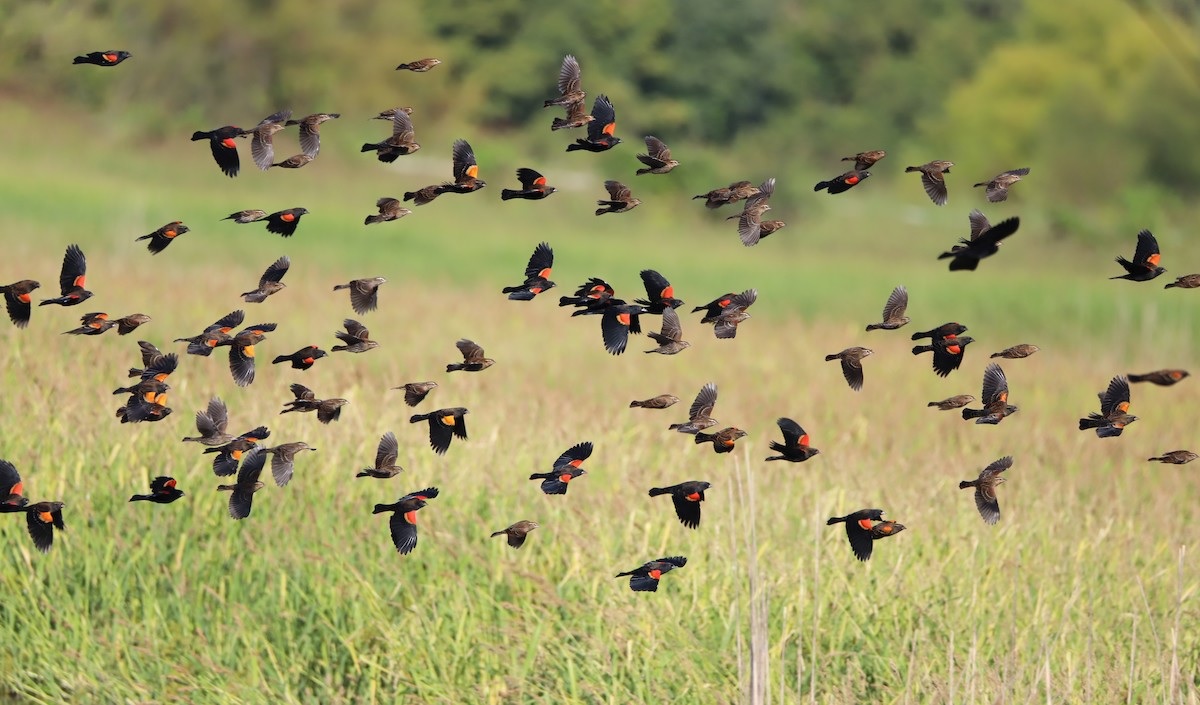
The Red-winged Blackbird is easily recognized by its black body and bright red shoulder patches, particularly in males. He or she can notice that these birds are common in marshes, wetlands, and agricultural fields throughout North America. They are territorial during the breeding season, with males displaying their red epaulets to ward off rivals.
These blackbirds are also highly social outside the breeding season, often forming large flocks that feed on grains, seeds, and insects. He or she can see that their flocking behavior provides safety in numbers and helps locate food efficiently. Studying Red-winged Blackbirds highlights the balance between territoriality, social behavior, and ecological adaptation in black bird species.
European Blackbird
The European Blackbird, native to Europe and introduced to other regions, is known for its glossy black plumage and melodious song. He or she can notice that males are entirely black with bright yellow beaks, while females have darker brown feathers. These birds are common in forests, gardens, and parks, making them familiar to many birdwatchers.
European Blackbirds are omnivorous, feeding on insects, berries, and earthworms. He or she can see that they are primarily solitary or found in small groups but may join larger gatherings during non-breeding seasons. Their adaptability to diverse habitats and appealing vocalizations make them a beloved black bird species, demonstrating how black birds thrive across a variety of environments while maintaining distinctive behaviors and ecological roles.
Seasonal Gathering Patterns
Black birds exhibit fascinating seasonal gathering patterns that are closely tied to food availability, migration, and survival strategies. He or she can notice that these gatherings often occur in large flocks during certain times of the year, creating impressive displays in the sky or at communal roosting sites. Seasonal behavior provides insight into how black birds adapt to changing environments, coordinate social interactions, and optimize energy use. Studying these patterns reveals the ecological and evolutionary significance of flocking behavior in black bird populations.
Winter Roosting Behavior
During the winter months, many black bird species gather in large communal roosts to stay warm and protect themselves from predators. He or she can observe that roosting sites often include trees, reeds, or urban structures that provide shelter and security. The formation of these roosts reduces heat loss, conserves energy, and allows birds to maintain social bonds.
Winter gatherings also serve as a strategy for predator avoidance. He or she can notice that being part of a large group makes it more difficult for predators to target individual birds. Communal roosting also enables information sharing about food sources, ensuring that the flock can locate sustenance efficiently in cold and challenging conditions. These patterns demonstrate how black birds use social cooperation and environmental adaptation to enhance survival during harsh seasons, highlighting the importance of timing and location in their seasonal behaviors.
Spring and Breeding Season Assemblies
In spring, black birds often gather in preparation for the breeding season. He or she can see that these assemblies help establish territories, locate mates, and synchronize reproductive behaviors. Males may display visually striking plumage or perform vocalizations to attract females and ward off rivals.
He or she can observe that group gatherings in early spring also allow young or inexperienced birds to learn from older members about nesting sites and optimal feeding areas. This social interaction is critical for reproductive success and enhances the survival of offspring. Seasonal assemblies during spring illustrate the connection between social behavior, reproductive strategies, and ecological adaptation, showing how black birds coordinate complex life cycle events in response to environmental cues.
Autumn Flocking and Migration
During autumn, many black birds form large flocks as they prepare for migration or adjust to changing food availability. He or she can notice that these flocks provide safety in numbers while facilitating the discovery of abundant feeding sites before winter arrives. Migration-specific gatherings allow birds to conserve energy, maintain aerodynamic efficiency during flight, and share navigational knowledge within the group.
He or she can see that the timing and size of autumn gatherings are influenced by environmental factors such as temperature, daylight, and food scarcity. These flocks often include multiple species, creating dynamic interspecies interactions that optimize foraging efficiency and predator avoidance. Autumn flocking behavior underscores the adaptive nature of seasonal gatherings, highlighting how black birds respond to ecological pressures while preparing for energy-intensive periods like migration and winter survival.
Influence of Habitat and Food Availability
Seasonal gathering patterns are closely tied to the availability of suitable habitats and food resources. He or she can observe that black birds often congregate in areas where food is abundant, such as agricultural fields, wetlands, or urban feeding sites. This behavior ensures efficient foraging and reduces energy expenditure by allowing multiple birds to locate resources collectively.
He or she can also notice that habitat selection during seasonal gatherings is influenced by shelter, predator presence, and climatic conditions. Birds may shift between roosting and feeding sites to optimize survival and reproductive success. Understanding how habitat and food availability influence seasonal gathering patterns reveals the intricate relationship between behavior, environmental conditions, and ecological adaptation in black bird species.
Social and Communication Benefits
Seasonal gatherings provide significant social and communication benefits. He or she can see that flocks allow black birds to exchange information about food sources, predators, and suitable nesting sites. Vocalizations and visual signals within the flock help coordinate movements and maintain group cohesion.
He or she can notice that younger birds often learn critical survival skills by observing older or more experienced individuals during these seasonal assemblies. Social learning enhances foraging efficiency, predator awareness, and flight coordination. Seasonal gatherings thus serve multiple purposes beyond survival, including education, coordination, and social bonding, demonstrating the complex interplay between behavior and ecological adaptation in black bird populations.
Feeding and Foraging Advantages
Black birds often exhibit remarkable strategies for feeding and foraging, which are enhanced by their social behavior and adaptability. He or she can notice that feeding in groups offers numerous advantages, including improved food detection, protection from predators, and energy efficiency. These behaviors allow black birds to exploit diverse habitats, from urban areas to wetlands and forests, while maintaining optimal nutrition. Understanding the feeding and foraging advantages of black birds provides insight into their ecological roles, survival strategies, and the evolutionary benefits of social cooperation in avian species.
Group Foraging Efficiency
One significant advantage of feeding in groups is increased efficiency in locating food. He or she can observe that black birds often forage in flocks, scanning larger areas collectively to find insects, seeds, or human-provided food. This cooperative behavior reduces the time each bird spends searching, increasing overall feeding success.
He or she can also notice that group foraging allows birds to exploit food sources that may be too difficult or risky for solitary individuals. By working together, birds can access higher-quality resources, such as areas with abundant insects or ripe fruits. Additionally, feeding in groups reduces energy expenditure by sharing vigilance duties. While some birds search for food, others monitor for predators, ensuring that the flock remains safe while feeding. This combination of cooperation, vigilance, and shared knowledge exemplifies how black birds maximize efficiency and survival during foraging activities.
Predator Avoidance During Feeding
Feeding in groups also offers protection from predators. He or she can see that a larger number of birds reduces the likelihood of any single individual being targeted. Collective vigilance means that birds are more likely to detect threats early and respond with coordinated escape behaviors, such as flocking into the air.
He or she can notice that this protective advantage allows black birds to exploit open habitats or urban areas where predation risk might be higher. Birds in larger flocks can feed more confidently and for longer periods because they share the responsibility of scanning for danger. This adaptive behavior enhances survival rates, particularly during critical periods such as migration, winter feeding, or the breeding season when energy demands are high.
Exploiting Diverse Food Sources
Black birds are highly adaptable foragers, capable of exploiting a wide range of food sources. He or she can observe that these birds feed on insects, seeds, fruits, small animals, and even human-provided scraps. Feeding in groups helps them identify new food patches and share information about abundant resources.
He or she can notice that adaptability and opportunistic feeding behavior allow black birds to thrive in various environments, including urban landscapes, wetlands, and agricultural areas. Group foraging increases access to diverse food types, improving nutritional intake and overall fitness. This flexibility in diet, combined with social coordination, demonstrates the evolutionary advantages of cooperative foraging and the role of black birds in maintaining ecosystem balance.
Seasonal and Migratory Foraging Patterns
Seasonal changes and migration influence the feeding behavior of black birds. He or she can see that during migration, flocks often stop at rich feeding sites to replenish energy reserves, with collective searching enhancing efficiency. Seasonal abundance, such as insect hatches or fruiting periods, also dictates group foraging behavior.
He or she can notice that cooperative foraging ensures that individuals find sufficient food even when resources are scattered or unpredictable. By adjusting feeding strategies according to seasonal availability, black birds optimize energy intake and prepare for the demands of long-distance flight or harsh winter conditions. These adaptive behaviors highlight the interplay between ecological pressures, social cooperation, and survival strategies in black bird species.
Learning and Social Benefits
Feeding in groups provides opportunities for social learning. He or she can observe that younger or inexperienced birds learn from older, more experienced individuals about where and how to find food efficiently. This knowledge transfer improves individual survival and enhances the flock’s overall success.
He or she can also notice that social foraging strengthens group cohesion and communication. Birds use vocal signals, visual cues, and movement patterns to coordinate feeding activities and avoid competition. By combining intelligence, cooperation, and environmental awareness, black birds maximize feeding efficiency, reduce risk, and improve energy conservation. This interconnected system of behavior and learning underscores the evolutionary benefits of social foraging strategies.
FAQs
Why Do Black Birds Gather In Large Flocks?
He or she can notice that black birds gather in large flocks primarily for protection and survival. By grouping together, individual birds reduce their risk of predation, as it becomes harder for predators to target a single bird. Large flocks also enhance vigilance, allowing birds to spot danger early and respond collectively. Additionally, these gatherings make foraging more efficient, as birds can locate food sources together. Observing these flocks provides insight into the social intelligence of black birds and how cooperative behaviors increase their chances of survival in various environments.
Do Black Birds Gather For Feeding Purposes?
Yes, he or she can see that black birds often assemble around abundant food sources to improve foraging efficiency. When birds feed in groups, they can quickly locate and exploit patches of food, such as insects, seeds, or human-provided scraps. Group feeding also allows individuals to conserve energy, as they spend less time searching for food alone. He or she can notice that this cooperative behavior not only increases access to resources but also provides opportunities for learning and sharing information about new food sources within the flock.
Are Seasonal Changes Responsible For Black Bird Gatherings?
He or she can observe that seasonal changes play a major role in black bird gatherings. During winter or migration periods, birds form large roosts to stay warm, conserve energy, and coordinate movement across long distances. Seasonal food scarcity or abundance also influences flocking behavior, as birds move collectively to exploit available resources efficiently. He or she can notice that these gatherings are part of an adaptive strategy, ensuring survival through challenging weather conditions, energy conservation, and social cooperation during critical periods of the year.
Do Black Birds Gather To Protect Against Predators?
He or she can see that predator avoidance is a key reason black birds gather. Large flocks provide safety in numbers, making it difficult for predators to single out an individual. Birds also benefit from collective vigilance, where some members of the flock remain alert while others feed. He or she can notice that this cooperative behavior allows black birds to forage or rest more safely while minimizing individual risk. Predator deterrence is therefore a primary factor behind flocking, highlighting the evolutionary advantage of social behavior in black bird species.
Is Social Interaction A Reason For Black Bird Flocks?
Yes, he or she can notice that social interaction plays an important role in flocking behavior. Black birds use gatherings to communicate, share information about food sources, and strengthen social bonds within the group. Younger birds often learn survival techniques from experienced members, improving their foraging efficiency and predator awareness. He or she can see that social learning during these gatherings enhances both individual and collective survival, demonstrating the importance of communication, cooperation, and behavioral adaptation in black bird populations.
How Do Environmental Factors Influence Black Bird Gatherings?
He or she can observe that environmental factors like food availability, habitat structure, and weather conditions significantly influence black bird gatherings. Birds are more likely to form flocks in areas with abundant resources or during harsh weather when shelter and warmth are necessary. He or she can see that these environmental cues trigger coordinated movement and group formation, allowing black birds to maximize survival and resource utilization. Studying these patterns highlights how black birds respond intelligently to their surroundings while leveraging group dynamics for protection and efficiency.
Conclusion
Observing black birds in large groups reveals fascinating insights into their behavior and survival strategies. Flocking provides numerous benefits, from increased protection against predators to more efficient foraging and shared information about food sources. Social interactions within these gatherings also strengthen bonds and help establish hierarchies, ensuring coordination during movement and roosting.
Seasonal and daily patterns of gathering reflect how black birds adapt to environmental changes, maximizing their chances of survival. By understanding why do black birds gather, bird enthusiasts and researchers can better appreciate their complex social structures and the ecological roles they play. Recognizing these behaviors also highlights the importance of conserving habitats that support large communal gatherings, ensuring that these intelligent and adaptable birds continue to thrive. Studying these patterns offers both educational value and a deeper connection to the natural world.