What Are Bird Legs Called: Anatomy and Function Explained
Bird anatomy is fascinating, and one of the most noticeable features is their legs, which vary widely depending on their lifestyle and habitat. These limbs are essential for movement, perching, hunting, and even mating displays. Understanding what are bird legs called helps you identify the different parts, such as the tibiotarsus, tarsometatarsus, and toes, each specialized for specific functions.
From the long, powerful legs of ostriches designed for running to the delicate, gripping toes of songbirds, the structure of a bird’s legs reflects its survival strategies. Studying bird legs provides insight into how birds interact with their environment, whether walking, wading, climbing, or capturing prey. Recognizing the terminology and functions allows bird enthusiasts and researchers to appreciate the intricate adaptations that make birds such versatile and efficient creatures across diverse ecosystems.
Anatomical Structure of Bird Legs
Bird legs are complex structures designed to support various modes of movement, balance, and survival in diverse environments. Understanding the anatomical structure of bird legs reveals how their bones, joints, muscles, and tendons work together to enable walking, perching, swimming, or running. Different species have evolved specialized leg structures suited to their habitats, such as long, sturdy legs in wading birds or short, powerful legs in perching birds. Examining these features highlights the remarkable adaptations that allow birds to thrive in ecosystems ranging from forests to wetlands and open plains.
Bones and Joints
The skeletal structure of bird legs is highly specialized to combine strength with lightweight efficiency. The primary bones include the femur, tibiotarsus, and tarsometatarsus, which correspond to the thigh, shin, and lower leg in mammals. The femur connects to the hip joint, allowing rotational movement, while the tibiotarsus and tarsometatarsus provide leverage for walking, running, or grasping perches. Toes, or digits, extend from the tarsometatarsus and vary in number and orientation depending on species, with three forward and one backward toe common in perching birds.
Bird joints are reinforced with tendons and ligaments to prevent overextension and support landing or takeoff forces. For example, perching birds have a tendon-locking mechanism in their toes that allows them to grip branches securely without constant muscular effort. In wading birds like herons, elongated tarsometatarsus bones increase stride length for efficient walking through water. Birds of prey often have powerful ankle joints for capturing and holding prey. The combination of bone length, density, and joint flexibility demonstrates how evolution tailors leg anatomy to ecological requirements.
Muscles and Tendons
Bird leg movement is powered by a system of muscles and tendons optimized for efficiency and strength. Major muscle groups in the thigh, including the quadriceps and gastrocnemius, control extension and flexion of the leg for walking, running, or jumping. Tendons transmit force from these muscles to the foot, allowing precise movements such as gripping, hopping, or striking prey. In some species, long tendons act as energy-storing springs, reducing fatigue during prolonged activity like flight landings or running.
Tendon adaptations also support specialized behaviors. In perching birds, flexor tendons automatically tighten when the bird bends its legs, locking toes around branches without conscious effort. Wading birds have tendons that enable delicate adjustments to balance on uneven surfaces, while ostriches and other terrestrial birds use large, powerful muscles and stiff tendons for rapid sprinting. These muscular and tendon systems illustrate how birds achieve diverse locomotion patterns, from stealthy stalking to explosive running, while maintaining energy efficiency and stability.
Foot Morphology and Adaptation
The structure of a bird’s foot is highly variable, reflecting its lifestyle and environment. Anisodactyl feet, with three toes forward and one backward, are common in perching birds, providing a secure grip on branches. Zygodactyl feet, with two toes forward and two backward, appear in woodpeckers and parrots, aiding climbing and grasping. Birds adapted to swimming, such as ducks, have webbed feet, while raptors possess strong talons for capturing prey. Wading birds have long toes that distribute weight on soft substrates, preventing sinking.
Foot morphology also influences feeding and locomotion. Birds with long toes, like herons and stilts, can navigate mud or shallow water efficiently, while birds with short, robust toes excel at running or digging. Claw curvature varies depending on perch-grasping needs, climbing, or prey handling. Observing these adaptations highlights the intricate relationship between anatomical structure and ecological function. Each variation demonstrates evolutionary solutions to specific environmental challenges, emphasizing the versatility of bird leg and foot anatomy across species.
Circulation and Nerve Supply
Bird legs are equipped with a specialized circulatory system to maintain proper temperature and supply energy to muscles. Large arteries and veins ensure rapid blood flow during running or perching, while countercurrent heat exchange in many species prevents heat loss in cold environments. This system is especially important in wading birds, where prolonged leg immersion in water could otherwise cause hypothermia.
Nerve distribution in bird legs allows precise control of muscle contractions and toe movements. Sensory nerves detect pressure, balance, and environmental stimuli, enabling birds to respond quickly to changes in terrain or threats. Raptors and perching birds rely heavily on these sensory inputs for gripping branches, capturing prey, or landing safely. This integration of nerves and circulation demonstrates how anatomy supports both functional performance and survival in diverse habitats.
Types of Bird Legs Based on Function
Bird legs have evolved in remarkable ways to support diverse lifestyles, from perching and walking to swimming and hunting. Understanding the types of bird legs based on function reveals how anatomy adapts to ecological needs, enabling birds to thrive in various habitats. Each leg type reflects specialized movement patterns, feeding strategies, and survival tactics. Studying these functional adaptations helps you appreciate the diversity of avian life and how leg morphology directly influences behavior, mobility, and interaction with the environment, whether on land, in water, or in trees.
Perching Legs
Perching birds, such as songbirds and passerines, have legs adapted for gripping branches and navigating complex arboreal environments. Their feet usually have an anisodactyl arrangement, with three toes pointing forward and one backward, providing a strong and stable grip on narrow surfaces. Tendons in the legs automatically tighten when the bird bends its legs, allowing the toes to clamp securely around a branch without conscious effort. This mechanism ensures stability during sleep or rest, preventing accidental falls.
Muscles and tendons in perching legs are relatively lightweight but highly efficient, allowing birds to hop, climb, or change position quickly while conserving energy. Claws are curved and sharp, improving grip on various branch diameters and textures. Birds with perching legs often display remarkable agility, moving quickly between twigs and branches to forage, escape predators, or court mates. These adaptations illustrate the close relationship between anatomy and ecological demands, highlighting how specialized perching legs enable birds to exploit arboreal niches effectively.
Walking and Running Legs
Terrestrial birds, including ostriches, chickens, and pheasants, have legs built for walking or running. These legs are long, strong, and muscular, with a tarsometatarsus that provides leverage for stride extension. Toes are often reduced in number or size to minimize contact with the ground, improving speed and endurance. Birds like ostriches have two toes per foot, one significantly larger for balance and propulsion, allowing them to run at high speeds across open plains.
Running and walking legs are adapted for stability and shock absorption. Large muscles in the thighs and calves power swift forward motion, while tendons store energy and release it efficiently with each step. Claws are short and blunt, prioritizing traction and durability over grasping. These adaptations enable birds to cover long distances in search of food, escape predators, or migrate within terrestrial environments. The structural design of walking and running legs highlights the link between leg function and survival in ground-dwelling species.
Swimming and Wading Legs
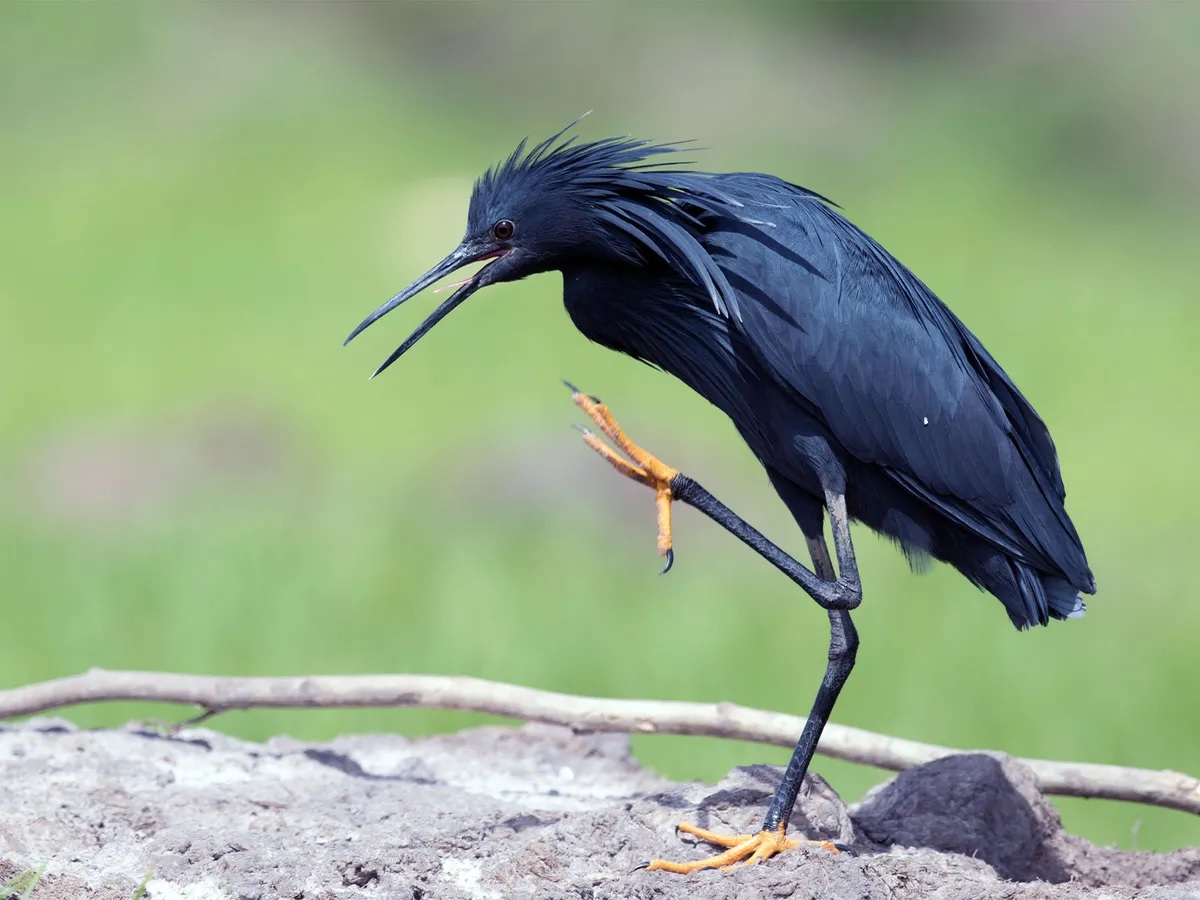
Birds adapted to aquatic environments, such as ducks, swans, and herons, possess legs specialized for swimming or wading. Swimming birds often have webbed feet that act like paddles, allowing efficient propulsion through water. Legs are positioned farther back on the body, enhancing swimming efficiency but sometimes reducing terrestrial mobility. Wading birds, like herons and stilts, have long, slender legs with spread toes to distribute weight on mud or shallow water, preventing sinking and enabling access to aquatic prey.
The muscles and joints of swimming and wading legs are highly flexible, facilitating precise movements in water. Tendons control toe splay and retraction for balance and stability. In addition to locomotion, these legs help birds maintain posture while hunting, allowing them to stand motionless for long periods and strike rapidly at prey. Adaptations in swimming and wading legs demonstrate the close connection between function, habitat, and survival, enabling birds to exploit aquatic resources successfully.
Grasping and Hunting Legs
Birds of prey, including eagles, hawks, and owls, have legs adapted for grasping and hunting. Their legs are robust, with strong tendons and powerful muscles that close the toes rapidly around prey. Feet are equipped with sharp talons, curved for piercing and holding, while the anisodactyl or zygodactyl toe arrangements enhance grip and control. These adaptations allow raptors to capture and subdue animals ranging from insects to mammals.
The strength of grasping legs also supports feeding behavior, enabling birds to carry prey to perches or nests. Tendons lock in place to maintain grip without continuous muscular effort. Raptors’ legs are also highly responsive, allowing quick adjustments during strikes. This specialized function illustrates the relationship between leg morphology, predatory behavior, and ecological niche, demonstrating how anatomical adaptations enhance hunting efficiency and survival.
Climbing and Scratching Legs
Certain birds, like woodpeckers and chickens, have legs adapted for climbing or scratching. Woodpeckers possess zygodactyl feet, with two toes forward and two backward, allowing vertical climbing and secure attachment to tree trunks. Strong claws and tendons enhance grip, while flexible joints enable maneuvering around irregular surfaces. Ground-dwelling birds, like chickens, have legs adapted for scratching soil to uncover insects, seeds, and other food items. These legs are muscular and sturdy, supporting repetitive digging motions and balance.
Climbing and scratching legs demonstrate functional specialization for both foraging and mobility. Birds with climbing legs rely on precise coordination of muscle, tendon, and claw movements to maintain balance while moving vertically. Scratching birds benefit from strong hind limbs and claw curvature to manipulate soil effectively. These adaptations show how leg function is closely linked to feeding strategies, habitat use, and behavioral ecology, allowing birds to exploit specific environmental niches efficiently.
Specialized Adaptations in Bird Legs
Bird legs exhibit a wide range of specialized adaptations that allow different species to survive and thrive in diverse environments. These adaptations are closely tied to habitat, feeding habits, and locomotion. Understanding specialized adaptations in bird legs helps you appreciate how birds have evolved features such as gripping mechanisms, elongated limbs, webbed feet, and talons to meet specific ecological challenges. Studying these adaptations reveals the intricate relationship between anatomy and behavior, demonstrating how evolution shapes bird legs for efficiency, survival, and environmental interaction.
Gripping and Perching Adaptations
Many birds have developed gripping adaptations that allow them to perch securely on branches, wires, or other narrow surfaces. Perching birds, or passerines, often have anisodactyl feet, with three toes pointing forward and one backward. This configuration, combined with a tendon-locking mechanism, enables the bird to maintain a firm grip without continuous muscular effort. Curved claws enhance traction on branches of varying diameter and texture, allowing birds to maintain balance even during sleep or strong winds.
These adaptations are crucial for survival, as they provide access to food resources, nesting sites, and safety from predators. Some species, like parrots, have zygodactyl feet with two toes forward and two backward, providing increased dexterity for manipulating objects, climbing, and feeding. This versatility allows them to handle complex tasks like cracking nuts or maneuvering through dense foliage. Gripping and perching adaptations highlight how leg structure can directly influence feeding behavior, habitat utilization, and social interactions in birds.
Running and Terrestrial Adaptations
Birds that spend significant time on the ground, such as ostriches, emus, and chickens, possess legs adapted for running and terrestrial movement. These legs are strong, muscular, and elongated, providing leverage for high-speed locomotion and endurance. Tendons act as energy-storing springs, allowing efficient stride cycles and reducing fatigue during long-distance movement. Toes are often reduced or fused for improved balance and traction on uneven terrain.
These terrestrial adaptations also enhance survival by enabling rapid escape from predators. Ostriches, for example, use long, powerful legs with two toes to generate incredible speed while maintaining stability. Ground-dwelling birds may also use their legs for scratching soil to uncover food, such as insects or seeds, further demonstrating functional versatility. Running and terrestrial adaptations illustrate the importance of leg morphology in facilitating movement, foraging efficiency, and predator avoidance in species that rely heavily on land-based habitats.
Swimming and Wading Adaptations
Birds adapted to aquatic environments display specialized leg adaptations for swimming and wading. Ducks, swans, and other swimming birds have webbed feet that function like paddles, providing propulsion through water. Legs are positioned toward the rear of the body to maximize swimming efficiency, although this may reduce terrestrial mobility. Wading birds, such as herons and stilts, have long, slender legs with spread toes that distribute weight on soft substrates, allowing access to shallow water without sinking.
Muscles and tendons in aquatic legs allow precise control for movements like treading water, striking at prey, or adjusting stance in currents. Long legs in wading birds also provide leverage for hunting, enabling birds to strike quickly while standing motionless. These adaptations allow birds to exploit aquatic food sources, balance effectively, and navigate diverse water environments. Specialized swimming and wading adaptations show how leg morphology is shaped by habitat and foraging requirements.
Grasping and Predatory Adaptations
Birds of prey, including eagles, hawks, and owls, have evolved legs specialized for grasping and hunting. Their powerful muscles, robust tendons, and sharp talons allow them to seize and hold prey securely. Toe arrangements, either anisodactyl or zygodactyl, enhance grip and control over struggling prey. The tendons can lock in place, maintaining hold without continuous muscular effort, which is crucial for transporting prey to perches or nests.
These adaptations also support feeding efficiency, as the strong legs and talons allow precise handling and manipulation of captured prey. Raptors can strike with incredible speed and accuracy, demonstrating the integration of muscular strength, tendon flexibility, and sensory coordination. Grasping and predatory adaptations highlight the intricate relationship between leg structure, ecological niche, and survival strategy, showing how specialized limbs directly influence hunting behavior and predatory success.
Climbing and Arboreal Adaptations
Certain birds, such as woodpeckers and parrots, exhibit climbing adaptations in their legs. Zygodactyl feet, with two toes forward and two backward, provide increased stability and grip on vertical surfaces. Strong claws and flexible joints allow maneuvering around tree trunks and branches, while tendons maintain grip without constant effort. These adaptations enable birds to forage for insects, fruits, and seeds in arboreal habitats, giving them access to resources unavailable to ground-dwelling species.
Arboreal adaptations also enhance mobility in complex three-dimensional environments. Birds with climbing legs can navigate trees efficiently, escape predators, and build nests in safe locations. Some species use their legs for manipulating objects, displaying intelligence and dexterity in problem-solving or feeding. Studying climbing and arboreal adaptations reveals how evolution shapes leg anatomy to meet ecological and behavioral demands, highlighting the diversity of specialized features across bird species.
Leg Variations Among Bird Species
Bird legs vary widely across species, reflecting differences in habitat, lifestyle, and feeding behavior. Understanding leg variations among bird species provides insight into how anatomy evolves to meet ecological and functional demands. From long, powerful legs of terrestrial runners to delicate, flexible legs of perching songbirds, each variation supports survival and efficiency. Observing these differences helps you identify species, predict behavior, and appreciate the diversity of adaptations that allow birds to thrive in forests, wetlands, grasslands, and urban environments.
Terrestrial and Running Birds
Birds that live primarily on land, such as ostriches, emus, and roadrunners, exhibit long, muscular legs designed for speed and endurance. These legs allow them to cover large distances efficiently while escaping predators or searching for food. Many terrestrial birds have reduced toes to minimize contact with the ground and enhance stride efficiency. Ostriches, for example, have only two toes per foot, one large for balance and propulsion, enabling remarkable running speeds.
Strong muscles in the thighs and calves provide powerful thrust during running, while tendons store and release energy with each step. Terrestrial birds often have short claws that provide traction rather than grasping ability, reflecting their limited need for perching or climbing. Leg length and joint flexibility are optimized for shock absorption and long-distance locomotion. These structural variations highlight the link between habitat, locomotion needs, and evolutionary pressures in ground-dwelling species, illustrating how anatomy shapes survival strategies in open environments.
Perching and Arboreal Birds
Perching birds, such as songbirds and parrots, have legs and feet adapted for gripping branches and navigating arboreal habitats. Their anisodactyl or zygodactyl toe arrangements allow secure clinging to narrow or vertical surfaces. Tendon-locking mechanisms in many perching birds enable them to maintain a strong grip without continuous muscular effort, crucial for resting and feeding. Curved claws improve stability on branches of varying thickness and texture.
Arboreal birds also rely on leg flexibility and joint range of motion to move efficiently among branches, forage for insects, or handle food. Parrots, with their zygodactyl feet, can manipulate objects with impressive dexterity. The leg variations in perching birds demonstrate how foot structure, claw curvature, and tendon adaptations collectively enable navigation of three-dimensional forest environments. These differences underscore the relationship between leg morphology and ecological niche, showing how evolution fine-tunes limbs for arboreal survival.
Aquatic and Wading Birds
Birds that inhabit aquatic or semi-aquatic environments, such as ducks, herons, and stilts, have leg variations suited to swimming, wading, and maintaining balance on soft substrates. Webbed feet are common among swimming birds, acting as paddles for propulsion in water. Legs are often positioned farther back on the body to improve swimming efficiency. Wading birds have elongated, slender legs with long toes that distribute weight, preventing sinking into mud or shallow water.
Muscle and tendon arrangements in aquatic legs allow precise control for movements like treading water or striking at prey. Long legs also provide leverage for hunting, enabling birds to remain still while hunting or foraging in shallow water. These adaptations illustrate how leg morphology is influenced by habitat demands and feeding strategies. Observing aquatic and wading birds shows how structural variations enable species to exploit resources in water-rich environments effectively.
Birds of Prey and Grasping Variations
Raptors, such as eagles, hawks, and owls, have legs specialized for grasping and hunting. They possess strong, muscular limbs with sharp talons and robust tendons, allowing them to seize and hold struggling prey. Anisodactyl or zygodactyl toe arrangements provide enhanced grip and control. Tendons can lock to maintain grip without continuous muscular effort, enabling transport of prey or prolonged feeding.
These variations support precise strikes, prey handling, and climbing to nests or perches. Claw size and curvature vary based on prey type, while leg strength allows raptors to subdue larger animals. Studying these adaptations highlights the interplay between leg morphology, feeding behavior, and ecological niche. Raptors’ leg variations demonstrate how evolution refines anatomy to optimize predation efficiency and survival strategies across diverse environments.
Health and Movement Considerations
Bird legs play a vital role not only in locomotion but also in overall health and survival. Understanding health and movement considerations is essential to appreciate how injuries, infections, or structural issues can impact a bird’s mobility, feeding, and behavior. Leg strength, joint flexibility, and proper circulation all contribute to effective movement, whether for perching, running, swimming, or hunting. Observing how birds maintain leg health provides insight into their adaptive strategies and highlights the importance of environmental conditions, diet, and physical activity in supporting optimal leg function.
Common Leg Injuries and Disorders
Birds are susceptible to a variety of leg injuries and disorders that can affect their mobility and survival. Fractures, sprains, and dislocations often occur from collisions, falls, or predator encounters. Infections such as bumblefoot, caused by bacteria entering small cuts or abrasions on the foot, can lead to swelling, pain, and difficulty walking. Nutritional deficiencies, particularly in calcium or vitamin D, may result in weak bones and increased susceptibility to fractures. Observing signs of limping, abnormal posture, or reduced activity can help identify leg health issues early.
Preventative measures, such as maintaining safe perching surfaces, proper diet, and regular movement opportunities, are critical in minimizing injury risks. Birds often rely on their legs for feeding, balance, and escape from predators, so even minor leg impairments can severely impact survival. Understanding these risks emphasizes the importance of environmental enrichment and careful monitoring in captive or urban bird populations. Maintaining leg health ensures birds can continue to forage, escape threats, and perform species-specific behaviors effectively.
Mobility and Exercise Needs
Leg strength and flexibility are crucial for birds to perform daily activities such as perching, hopping, running, swimming, or flying. Birds require regular movement to maintain muscle tone, joint health, and coordination. Inadequate exercise can lead to muscle atrophy, joint stiffness, or impaired balance, reducing the bird’s ability to forage, escape predators, or interact socially. Even perching birds benefit from hopping and climbing exercises, while terrestrial or aquatic birds need room for walking, running, or swimming.
Environmental enrichment plays a key role in promoting healthy movement. Providing diverse perches, open spaces, and opportunities to engage in natural behaviors helps strengthen leg muscles and maintain joint flexibility. Social interactions with conspecifics can also encourage movement, as birds often compete for perches, food, or territory. Observing birds in their natural or enriched environment demonstrates how movement supports physical health, overall fitness, and survival in diverse habitats.
Effects of Aging and Environmental Factors
Aging can affect bird leg health, leading to decreased muscle mass, joint stiffness, and slower recovery from injuries. Older birds may become less agile, reducing their ability to forage efficiently or evade predators. Environmental factors, such as extreme temperatures, wet or uneven surfaces, and exposure to pollutants, can exacerbate leg health issues, causing stress or injury. Birds in harsh environments often develop compensatory behaviors, such as reduced movement or altered perching strategies, to protect their legs.
Maintaining optimal environmental conditions, proper nutrition, and access to exercise opportunities can mitigate the effects of aging and harsh conditions. Observing how birds adapt to these challenges provides insight into their resilience and the importance of leg health for survival. Healthy, well-maintained legs ensure that birds remain active, agile, and capable of performing essential behaviors throughout their lifespan.
FAQs
What Are Bird Legs Called?
Bird legs are commonly referred to by their specific anatomical terms, including the femur, tibiotarsus, tarsometatarsus, and toes. The femur is the upper leg or thigh bone, the tibiotarsus is the main lower leg bone, and the tarsometatarsus connects to the toes. Each part is specialized for movement, balance, and survival. Understanding what bird legs are called allows you to identify functions like perching, walking, running, or swimming. These terms help bird watchers, researchers, and enthusiasts describe bird anatomy accurately.
Why Are Bird Leg Names Important?
Knowing the proper names for bird legs helps you understand their structure and function. Each bone and joint plays a role in locomotion, feeding, and survival. For example, the tarsometatarsus provides leverage for walking or perching, while the toes adapt to gripping, swimming, or hunting. Understanding these names improves your ability to study bird behavior, anatomy, and ecology. It also aids in communicating observations with researchers, veterinarians, and educators. Learning these terms allows you to better appreciate how evolution shapes birds for specific habitats and lifestyles.
How Do Bird Leg Names Reflect Their Function?
Bird leg names correspond to specific functions in movement and survival. The femur supports weight and connects to muscles for power, the tibiotarsus helps in walking and running, and the tarsometatarsus allows flexibility for grasping or perching. Toes and claws vary in arrangement to suit perching, swimming, or hunting. By knowing what bird legs are called, you can understand how anatomy influences behavior. For example, anisodactyl feet help songbirds perch efficiently, while webbed feet support swimming in ducks. Names reveal how structure and function are intricately linked.
Do Different Birds Have Different Leg Structures?
Yes, leg structures vary widely depending on the species and lifestyle. Perching birds have anisodactyl feet for gripping branches, while raptors have strong talons for grasping prey. Wading birds possess long, slender legs for shallow water, and swimming birds have webbed feet for propulsion. Knowing what bird legs are called helps you identify these variations. Observing structural differences allows you to infer behavior, habitat preferences, and feeding strategies. Bird leg anatomy reflects evolutionary adaptations that maximize survival in specific environments.
Can You Identify Birds by Their Leg Structure?
You can often identify bird species or groups by studying their legs. Perching birds, waders, swimmers, and raptors all have distinctive leg and foot structures. For example, long tibiotarsus and toes suggest a wading bird, while short, powerful legs indicate a ground-dwelling runner. Raptors’ talons are adapted for hunting, and webbed feet indicate swimming ability. By understanding what bird legs are called and their variations, you gain insight into the bird’s behavior, habitat, and ecological niche, making identification easier in the field or from photographs.
How Do Leg Names Help in Bird Care and Study?
Knowing the names of bird leg parts is essential for veterinarians, wildlife rehabilitators, and researchers. Identifying injuries, infections, or deformities requires understanding the femur, tibiotarsus, tarsometatarsus, and toes. Proper terminology allows accurate communication and treatment planning. For bird enthusiasts and ecologists, it also aids in documenting observations, analyzing locomotion, and studying evolutionary adaptations. Learning what bird legs are called enhances your ability to provide care, conduct research, and appreciate the complex anatomy that enables birds to move, hunt, perch, and thrive in their habitats.
Conclusion
Bird legs are a remarkable example of adaptation, allowing birds to thrive in a wide variety of environments. Understanding what are bird legs called provides insight into their anatomy, including the femur, tibiotarsus, tarsometatarsus, and toes, as well as specialized structures like claws, talons, and webbing. These components vary depending on a bird’s lifestyle, whether it perches, runs, swims, or hunts, and reflect how evolution has optimized mobility, balance, and survival.
Observing what are bird legs called also helps in identifying different species and understanding their behaviors, from wading in wetlands to grasping prey in forests. Proper knowledge of bird leg anatomy is crucial for researchers, birdwatchers, and conservationists to monitor health, prevent injuries, and protect habitats. The diversity in structure and function highlights how essential legs are to a bird’s overall performance and adaptability in nature.