Types of Ostrich Birds: Complete Guide to Varieties and Traits
Ostriches are among the most fascinating and unique birds in the world, known for their impressive size, speed, and distinctive appearance. Exploring types of ostrich birds provides insight into the variations within this remarkable species and how they have adapted to different environments across Africa. These birds are flightless but possess strong legs capable of reaching incredible speeds, which help them escape predators and travel across vast savannas and deserts.
By examining the different types, you can learn about variations in size, feather coloration, and habitat preferences, as well as behavioral traits such as mating rituals and social structures. Understanding these differences allows enthusiasts and researchers to appreciate the diversity and evolutionary adaptations of ostriches, highlighting their role in ecosystems and their significance in wildlife conservation. Observing the types of ostrich birds offers a unique window into one of nature’s most extraordinary avian species.
Types of Ostrich Birds
Ostriches are among the most remarkable and unique birds in the world, known for their enormous size, impressive speed, and distinctive appearance. Studying the types of ostrich birds provides insight into the diversity within this species, showing how different subspecies have adapted to varying climates and habitats across Africa.
Each type has unique physical traits, behaviors, and ecological roles, including variations in plumage, social organization, and reproductive habits. By exploring these differences, you can understand how ostriches survive, reproduce, and maintain balance within their ecosystems. Observing these types also offers a deeper appreciation for their evolutionary adaptations and the importance of protecting their habitats to ensure their continued survival in the wild.
Common Ostrich
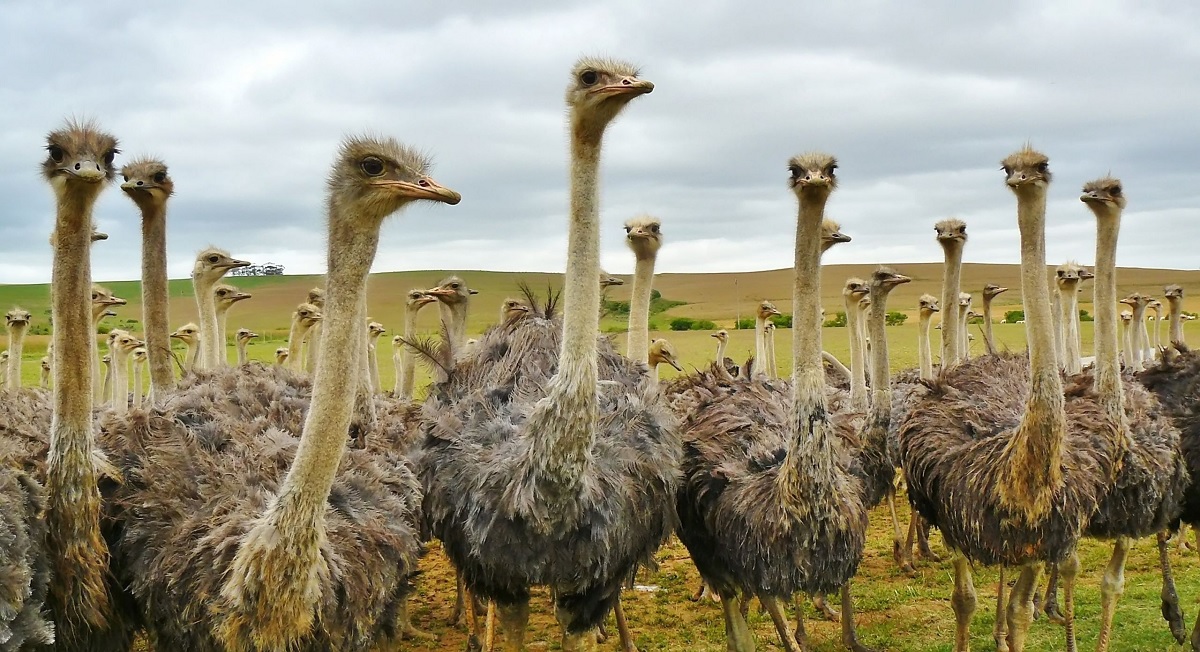
The Common Ostrich, also called Struthio camelus, is the most widely recognized type of ostrich. Males have striking black and white plumage, while females are grayish-brown, providing camouflage in savannas and open woodlands. Common Ostriches are large birds, reaching up to 2.7 meters in height, and they have long, muscular legs that allow them to run at speeds of up to 70 km/h, escaping predators efficiently. They are omnivorous, feeding on seeds, shrubs, insects, and small vertebrates. Socially, they form small herds with one dominant male and several females. Courtship displays involve elaborate dances, feather spreading, and vocal calls, which strengthen pair bonds and attract mates.
These ostriches rely on vigilance and cooperation to survive in open landscapes. Adults use strong legs for defensive kicks while young ostriches rely on camouflage and group protection. Adapted to semi-arid climates, they can go without water for long periods, obtaining moisture from food. Communal nesting strategies involve multiple females laying eggs in a single nest, with the dominant female incubating, increasing the likelihood of chick survival. Observing Common Ostriches provides insight into the balance between social structure, reproduction, and survival strategies in their natural habitats.
Masai Ostrich
The Masai Ostrich is a subspecies native to East Africa, mainly in Kenya and Tanzania. Males have deep black feathers with white wings and tail, while females are brown or gray, blending with savanna landscapes. Masai Ostriches prefer open areas with sparse vegetation to easily spot predators. They feed on seeds, shrubs, and occasional insects, demonstrating adaptability to semi-arid habitats. Males are highly territorial, defending their breeding grounds from rivals. Their courtship includes vocal calls, wing spreading, and stamping feet. Nests are shallow pits, often communal, with shared incubation between males and females.
These birds display remarkable adaptations to heat and low water availability. Succulent plants often serve as both food and hydration. Masai Ostriches are vigilant and rely on sharp eyesight to detect threats. Their vocal communication, including booming calls, helps establish dominance and attract females. By observing Masai Ostriches, you can see how environmental pressures influence behavior, social organization, and physical characteristics. Their resilience and territorial nature make them distinct among the types of ostrich birds.
South African Ostrich
The South African Ostrich inhabits South Africa, Botswana, and Namibia. Males exhibit striking black-and-white plumage, while females are muted grayish-brown. They occupy semi-desert areas, grasslands, and savannas where seeds, shrubs, and insects form their primary diet. South African Ostriches are highly social, often forming flocks that provide protection through collective vigilance. Courtship involves dances, wing spreading, and stamping feet to attract females. Nesting occurs in sandy or soft soil pits, with multiple females contributing eggs to a single nest. Males guard nests during the day, while females cover nights, ensuring maximum chick survival.
These ostriches have adapted to human-modified landscapes, foraging near farms and open plains without losing efficiency. They travel long distances for water and food, relying on endurance and strong eyesight. Their fast-running ability is key for predator avoidance. Observing South African Ostriches highlights the balance of physical strength, social coordination, and environmental adaptability. They demonstrate how ostrich subspecies evolve traits to thrive in diverse climates while maintaining reproductive success and survival strategies.
Somali Ostrich
The Somali Ostrich, native to the Horn of Africa, has males with blue-gray necks and legs, contrasted by black-and-white plumage, while females are gray-brown. These ostriches live in arid and semi-arid savannas, feeding on seeds, shrubs, and occasional insects. Strong legs allow them to travel long distances and escape predators. Socially, they form smaller groups than other types, led by a dominant male overseeing several females. Courtship includes loud calls, wing displays, and foot stamping. Nesting takes place in shallow ground pits, with shared incubation duties between males and females, protecting eggs from predators and heat.
Somali Ostriches play an ecological role by dispersing seeds and maintaining plant diversity. Their diet ensures survival in resource-scarce areas. Anti-predator strategies, keen eyesight, and fast running are crucial for their safety. Observing Somali Ostriches shows how subtle differences in appearance, diet, and social behavior distinguish them from other ostrich types. These adaptations emphasize the resilience and evolutionary specialization of ostriches in harsh habitats.
Arabian Ostrich
The Arabian Ostrich, once native to the Arabian Peninsula, is now extinct in the wild due to overhunting and habitat destruction. Males had lighter plumage to reflect desert heat, while females were sandy-colored. They were well-adapted to arid environments, obtaining water from vegetation and traveling long distances to survive. Their diet included seeds, shrubs, and insects. Arabian Ostriches were social, forming herds for protection and mating. Courtship involved wing spreading, foot stamping, and vocal calls. Nests were shallow sandy depressions, often communal, allowing multiple females to lay eggs.
Their extinction highlights the vulnerability of even highly adapted species to human pressures. Arabian Ostriches demonstrate how desert-adapted birds evolved traits for survival in extreme heat, long-distance travel, and scarce food. Studying this extinct type provides critical lessons on conservation and the importance of protecting remaining ostrich populations. Understanding Arabian Ostriches also offers insights into the diversity and evolution of ostrich species.
North African Ostrich
The North African Ostrich is native to the Sahel and Sahara regions. Males have black-and-white plumage, while females are sandy brown, providing camouflage in desert environments. These ostriches survive in arid areas, traveling long distances for food and water. Their diet includes seeds, shrubs, and occasional insects. North African Ostriches form small flocks led by a dominant male. Courtship involves vocalizations and elaborate feather displays. Nests are shallow depressions, often communal, with males guarding during the day and females at night to protect eggs from predators and extreme heat.
Adaptations such as endurance, keen eyesight, and heat tolerance allow them to survive harsh desert conditions. They also play an important ecological role by dispersing seeds and maintaining plant diversity. Observing North African Ostriches demonstrates survival strategies and behavioral flexibility in extreme environments, providing insights into the adaptations that make different ostrich types unique.
Physical Characteristics Across Types
Ostriches are instantly recognizable for their enormous size, long legs, and distinctive plumage, but the physical characteristics across types vary significantly. These variations help each type adapt to its environment, from arid deserts to grassy savannas. Differences can be seen in feather coloration, neck and leg coloration, body size, and wing shapes. Males and females often show sexual dimorphism, with males displaying brighter plumage for mating displays while females have more muted colors for camouflage. Examining these traits provides insight into how ostriches have evolved to survive in diverse habitats and how each type maintains its ecological niche.
Size and Body Structure
Ostriches are the largest living birds, yet size varies across types. The Common Ostrich, for example, can reach up to 2.7 meters tall and weigh between 100–160 kilograms, making it the heaviest bird species alive. Masai and South African Ostriches are slightly smaller but retain similar body structures, including long, muscular legs built for speed and endurance. The Somali Ostrich has slightly slimmer legs and a more compact frame, allowing better mobility in arid landscapes. Arabian and North African Ostriches, while similar in height, often have leaner builds adapted for desert survival, requiring less energy for long-distance travel in hot climates.
The body structure is specialized for running rather than flying. Strong legs have two toes, one large for weight-bearing and a smaller one for balance, allowing them to sprint up to 70 km/h. Wing size and feather distribution vary by type: males generally have larger wings for courtship displays, while females have smaller wings for protection and camouflage. The muscular chest and legs provide not only mobility but also defensive capabilities against predators. Observing these physical differences highlights how natural selection shapes traits according to habitat demands and survival needs.
Feather Coloration and Sexual Dimorphism
Plumage varies dramatically between males and females and across types. In Common and South African Ostriches, males display bold black-and-white feathers, whereas females are brownish-gray for camouflage. Masai Ostriches show deep black male feathers contrasted with white wings and tail, while females remain muted. Somali Ostriches exhibit blue-gray necks and legs in males, with subtle brown tones in females, aiding in heat reflection in semi-arid habitats. North African and Arabian Ostriches also show sexual dimorphism, with lighter male plumage reflecting sunlight in desert environments.
Feather patterns serve multiple purposes beyond attraction. Camouflage is crucial for female ostriches, particularly during nesting, to protect eggs from predators. In contrast, males use bright plumage and large wings during elaborate mating displays, including dances, feather spreading, and stamping feet. Feather density also varies with habitat: desert-adapted types tend to have sparser feather coverage to reduce heat retention, while savanna types have denser feathers for protection from occasional rainfall or cooler nights. These adaptations illustrate the balance between reproductive signaling, camouflage, and thermoregulation.
Neck, Leg, and Beak Variations
Neck and leg coloration differs among types, reflecting environmental adaptations. Common Ostriches have pinkish-gray legs and pale necks in females, while males are darker. Somali Ostriches exhibit bluish-gray necks and legs in males, helping regulate body temperature in hot, arid climates. Masai Ostriches have dark legs and necks in males, providing better camouflage in tall grasses, while females maintain brownish-gray tones. Arabian and North African Ostriches show sandy or lighter-colored necks and legs to blend with desert terrain.
Beak shapes are broadly similar, short and flat, but slight variations occur. Desert-adapted ostriches may have slightly narrower beaks to minimize water loss while eating sparse vegetation, whereas savanna types have broader beaks suitable for a more varied diet. These physical differences are critical for survival: leg and neck coloration aid in heat reflection and predator avoidance, while beak shape influences feeding efficiency. Observing these traits across types highlights evolutionary specialization according to habitat conditions and lifestyle needs.
Wing Size and Flightlessness
Despite being flightless, wing size plays a crucial role in courtship and thermoregulation. Male ostriches generally have larger wings to display during mating dances, attracting females and signaling dominance. Common and South African Ostriches have wide wings with contrasting black-and-white patterns that are highly visible during displays. Masai and Somali Ostriches also exhibit large male wings, though coloration varies to match habitat requirements. Female wings are smaller and more muted, providing camouflage and protection during nesting.
Wings also assist in balance during running. While ostriches cannot fly, they use wings for directional stability at high speeds, particularly when making sharp turns to escape predators. Wing feather density and length are adapted to different habitats: desert types have shorter, lighter feathers to reduce heat retention, while savanna types have longer, denser wings. These wing adaptations, combined with strong legs and body structure, demonstrate how physical characteristics across types are finely tuned for survival, reproduction, and ecological function.
Behavioral Traits of Different Ostrich Types
Ostriches are not only physically remarkable but also exhibit diverse behavioral traits of different ostrich types that help them survive and reproduce in varied environments. Their behaviors range from social organization and courtship rituals to anti-predator strategies and foraging techniques. Each type displays unique patterns influenced by habitat, climate, and predation pressure. Understanding these behaviors provides insight into how ostriches interact with their environment, communicate within social groups, and adapt their survival strategies. Observing these behavioral differences highlights the complexity and intelligence of ostriches across Africa and beyond.
Social Structure and Group Dynamics
Ostrich types display varied social structures depending on habitat and environmental pressures. Common Ostriches typically form small herds, consisting of a dominant male and several females, which allows for cooperative vigilance against predators. In contrast, Somali Ostriches tend to form smaller groups to reduce competition for scarce resources in arid regions. South African Ostriches often form larger flocks during the non-breeding season, which provides safety in numbers and facilitates collective foraging. Arabian and North African Ostriches historically formed herds to navigate desert environments and maximize mating opportunities.
Within these social groups, ostriches communicate using vocalizations, visual cues, and body language. Males often use booming calls to establish territory or signal mating readiness, while females rely on subtle movements and postures to indicate receptivity. Group cohesion is critical for predator avoidance; ostriches use coordinated movements to escape threats, and juveniles often rely on adults for protection. Social behavior also influences reproductive success, as dominant males gain priority access to females, while subordinate individuals may assist in communal nesting. Understanding these dynamics reveals how each ostrich type balances cooperation, competition, and survival strategies in different ecosystems.
Courtship and Mating Behavior
Courtship behaviors vary across ostrich types but generally involve elaborate visual and auditory displays. Common and South African Ostriches have males performing dances, spreading wings, stamping feet, and puffing feathers to attract females. Masai Ostriches exhibit similar displays, but males may incorporate territorial movements to ward off rivals. Somali Ostriches use vocal calls more frequently due to sparse habitats, while Arabian Ostriches, historically, relied on combined wing displays and low-frequency booming calls to attract mates over long desert distances.
Mating systems also differ. Most types exhibit polygynous behavior, with dominant males courting multiple females, but the distribution of mating success is influenced by the male’s display quality, strength, and social status. Female ostriches may participate in communal nesting, where several lay eggs in a shared nest that is guarded collectively, enhancing offspring survival. These behaviors highlight the interplay between physical displays, communication, and environmental adaptation. Courtship rituals serve as both reproductive strategies and mechanisms to maintain social hierarchies, reflecting behavioral diversity among ostrich types.
Foraging and Feeding Behavior
Foraging behavior shows variation depending on habitat and available resources. Common and South African Ostriches feed on seeds, shrubs, and insects in savannas, often moving in coordinated groups to locate food. Masai Ostriches in semi-arid regions exhibit opportunistic feeding, consuming succulent plants to obtain moisture during dry periods. Somali Ostriches forage over larger territories due to sparse vegetation, traveling long distances while maintaining vigilance for predators. Desert-adapted types, including the extinct Arabian Ostrich, relied heavily on limited plant sources and occasional insects to sustain themselves, reflecting behavioral flexibility in harsh environments.
Ostriches employ both visual and tactile foraging strategies. They use keen eyesight to identify edible items and potential threats and occasionally dig with their beaks for roots or tubers. Feeding patterns are influenced by social dynamics, with dominant males often eating first or selecting the best food patches. Foraging behavior is closely tied to survival, reproduction, and energy conservation. Observing these strategies across ostrich types highlights how each has adapted its feeding techniques to its environment, balancing nutritional needs, predator avoidance, and social hierarchy.
Anti-Predator and Defensive Behavior
All ostrich types share remarkable anti-predator strategies, though details vary with habitat. Common and South African Ostriches rely on high running speed, group vigilance, and coordinated escape movements. Masai and Somali Ostriches use their strong legs to deliver powerful kicks if cornered, and their sharp eyesight enables early predator detection. North African and Arabian Ostriches historically used camouflage and long-distance travel across desert landscapes to avoid threats.
Behavioral adaptations also include nest protection strategies. In communal nesting systems, males often guard during the day and females at night, balancing predator vigilance with egg incubation. Juveniles employ hiding techniques, blending with the environment while adults keep watch. Alarm calls, wing displays, and group coordination are crucial for survival, demonstrating intelligence and flexibility. Understanding these defensive behaviors emphasizes how ostriches have evolved strategies to mitigate predation risks while thriving in diverse environments.
People Also Asked
What Are The Different Types Of Ostrich Birds?
You can find several types of ostrich birds, each adapted to specific habitats. The most common are the Common Ostrich, Masai Ostrich, South African Ostrich, Somali Ostrich, North African Ostrich, and the now-extinct Arabian Ostrich. Each type has unique features like plumage color, neck and leg coloration, and size. Some prefer savannas while others thrive in deserts or semi-arid regions. Observing these types helps you understand how environmental factors shape physical traits, social behavior, and survival strategies. Differences also influence diet, reproductive habits, and territorial behavior among the types of ostrich birds.
How Do Ostrich Types Differ In Size And Appearance?
Ostrich types vary significantly in size and appearance. Common Ostriches are the tallest, often over 2.7 meters, with males sporting black-and-white feathers and females in muted brown-gray shades. Masai Ostriches have dark plumage and white wing tips, Somali Ostriches show bluish-gray necks in males, and North African Ostriches display lighter, sandy tones for desert camouflage. These variations serve practical purposes, like attracting mates or avoiding predators. Understanding these differences allows you to identify each type accurately and appreciate how evolution and habitat demands shape their physical characteristics.
What Are The Behavioral Differences Among Ostrich Types?
Behavioral traits differ across ostrich types based on habitat and social needs. Common and South African Ostriches form small herds for protection, while Somali Ostriches maintain smaller groups in arid regions to conserve resources. Males perform courtship displays using feather spreading, stamping, and vocal calls, with variation in display intensity among types. Anti-predator strategies also vary, from high-speed running to powerful leg kicks and camouflage. These behavioral differences highlight how each ostrich type adapts its social interactions, mating strategies, and defensive mechanisms to survive and reproduce in their specific environments.
How Do Different Ostrich Types Reproduce And Nest?
Reproduction varies slightly among ostrich types but generally involves communal nesting. Males attract females with elaborate dances, wing displays, and vocalizations, while dominant males often mate with multiple females. Females lay eggs in shared nests, with males guarding during the day and females at night. Nesting strategies adapt to local conditions; desert-dwelling types like the North African Ostrich focus on camouflage, while savanna types prioritize predator vigilance. These differences ensure that chicks survive despite environmental challenges. Observing reproduction across types reveals how social structure and nesting behavior are essential survival strategies.
Which Ostrich Types Are Extinct Or Endangered?
The Arabian Ostrich is extinct in the wild due to overhunting and habitat destruction. North African Ostriches face declining populations in some areas because of hunting and desertification. Other types, like Common, Masai, Somali, and South African Ostriches, remain relatively stable but can be vulnerable to habitat loss and poaching. Knowing the conservation status of each type helps you understand the importance of habitat protection, wildlife management, and sustainable human practices. Efforts to conserve ostriches highlight the balance between ecological preservation and the challenges faced by large, flightless birds.
How Do Diets Differ Among Ostrich Types?
While all ostrich types are primarily herbivorous, diets vary based on habitat. Common and South African Ostriches feed on seeds, shrubs, and insects in savannas. Masai Ostriches consume more succulent plants to survive dry seasons, while Somali Ostriches forage over larger territories due to sparse vegetation. Desert-adapted types, like the North African Ostrich, rely on limited plant sources and occasional insects for hydration and nutrition. These dietary variations demonstrate how each ostrich type adapts feeding strategies to available resources, ensuring energy needs, hydration, and survival in different environmental conditions.
Conclusion
Ostriches are remarkable birds, and understanding the differences among them provides insight into their unique adaptations and behaviors. Studying types of ostrich birds highlights the variations in size, plumage, habitat, and social behavior that allow each species or subspecies to thrive in its specific environment. These differences also influence their feeding habits, mating rituals, and defensive strategies, making each type uniquely suited to survive in diverse ecosystems.
Observing types of ostrich birds in the wild helps conservationists monitor populations and protect their natural habitats from human threats and environmental changes. Awareness of these variations is essential not only for wildlife enthusiasts but also for ensuring the survival of ostriches as a whole. Protecting their habitats and understanding their needs ensures that these iconic birds continue to flourish, maintaining their crucial role in ecosystems and offering opportunities for education and appreciation worldwide.