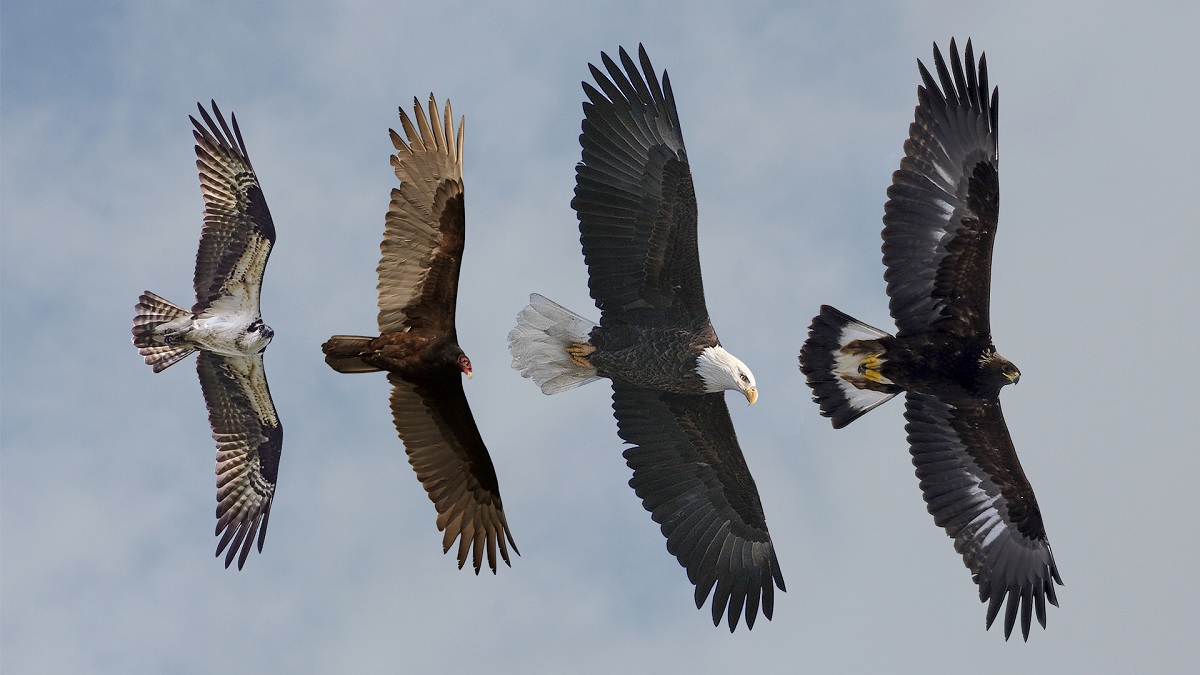
Golden Eagle Facts and Key Traits Every Nature Enthusiast Should Know
The golden eagle is one of the most powerful and majestic birds of prey, renowned for its impressive hunting skills and striking appearance. You notice its dark brown plumage, golden nape, and broad wingspan, which allow it to soar gracefully across mountains, grasslands, and open terrains. She highlights that the golden eagle’s keen eyesight and strong talons make it an apex predator, capable of spotting and capturing prey from great distances.
Observing this bird in the wild reveals its adaptability to diverse habitats, territorial behavior, and remarkable hunting strategies. Beyond its ecological role, the golden eagle holds cultural significance in many societies, symbolizing strength, freedom, and courage. Studying this magnificent raptor provides insight into the balance between predator and prey, the dynamics of its ecosystem, and the conservation efforts needed to protect a species that continues to captivate both scientists and wildlife enthusiasts.
Physical Characteristics
The golden eagle is a striking bird of prey, instantly recognizable by its powerful build and distinctive coloration. You notice its dark brown feathers contrasted with golden-hued plumage on the head and neck, which gives the species its name. She highlights that broad wings, strong legs, and sharp talons enable the golden eagle to hunt and navigate various terrains with precision. Observing its physical traits provides insight into its predatory abilities, aerial prowess, and adaptation to diverse habitats, illustrating why it is regarded as one of the most formidable raptors in the world.
Size, Wingspan, and Body Structure
The golden eagle is a large raptor, with body lengths ranging from 66 to 102 centimeters and a wingspan between 1.8 to 2.34 meters. You notice that this wingspan allows effortless soaring, enabling the bird to glide over vast distances while conserving energy. She demonstrates that the robust body structure, muscular legs, and powerful chest contribute to flight strength, hunting precision, and endurance. Large wings paired with lightweight but strong bones facilitate both agile maneuvers and long-distance migration.
Sexual dimorphism is evident in golden eagles, with females generally larger than males. You notice that this size difference allows females to capture larger prey while males specialize in more agile hunting techniques. She highlights that body proportions, including tail length and wing shape, influence flight dynamics and hunting efficiency. Observing the golden eagle’s structure provides insight into evolutionary adaptations that optimize survival, predation, and energy efficiency across diverse habitats, from mountains to grasslands.
Feather and plumage details are also remarkable. You notice that dark brown feathers provide camouflage against cliffs and forests, while the golden nape feathers add a distinctive feature visible from a distance. She demonstrates that feathers are not only for visual identification but also serve aerodynamic and thermal functions, insulating the bird during high-altitude flights and extreme temperatures. The combination of size, wingspan, and plumage highlights the golden eagle’s physical adaptations for both hunting and environmental resilience.
Head, Beak, and Talons
The golden eagle possesses a sharp, hooked beak designed for tearing flesh and consuming prey efficiently. You notice that the beak’s curved tip allows it to pierce tough skin and access nutrient-rich tissues. She highlights that keen eyesight, positioned on the head for binocular vision, enables the bird to spot prey from miles away, combining physical and sensory adaptations for effective hunting. Strong neck muscles support precise movements while feeding or capturing prey.
Talons are crucial for the golden eagle’s predatory success. You notice that its massive, curved claws provide a powerful grip, capable of immobilizing animals larger than the eagle itself. She demonstrates that these talons, paired with muscular legs, allow the bird to exert tremendous force, ensuring successful captures and feeding. The interplay between beak, talons, and vision exemplifies a perfectly adapted predatory toolkit, showcasing how physical characteristics are aligned with hunting behavior and survival strategies.
Head and facial features also aid in communication and identification. You notice that dark eyes with piercing gaze convey alertness and dominance within territories. She highlights that facial plumage, combined with the golden crown, serves in signaling and mate selection, indicating health and fitness. Observing these features underscores how the golden eagle’s anatomy is integral to hunting, reproduction, and ecological interactions, emphasizing the intricate connection between physical traits and lifestyle.
Legs, Feet, and Flight Adaptations
The golden eagle’s legs are covered in dense feathers, providing insulation at high altitudes. You notice that muscular legs allow for explosive takeoffs, rapid landing, and secure prey handling. She demonstrates that strong legs, combined with robust talons, facilitate hunting of mammals, birds, and reptiles, reflecting adaptations for both strength and agility. Flight requires coordinated use of wings, tail, and legs, illustrating an integration of multiple physical systems for survival.
Feet and toes are highly specialized. You notice that each toe is equipped with sharp talons capable of gripping slippery or struggling prey, allowing precise control during capture. She highlights that the feet also help in perching on cliffs, trees, or rocky ledges, demonstrating multifunctionality in locomotion and hunting. These features, coupled with wing and tail adaptations, support aerial agility, thermoregulation during high-altitude flights, and energy-efficient soaring.
Wing and feather structure are equally remarkable. You notice that long, broad wings allow for soaring and gliding across vast distances with minimal effort. She demonstrates that the combination of strong flight muscles, tail control, and feather arrangement optimizes lift, maneuverability, and speed. Observing the golden eagle in flight illustrates how physical characteristics are not only defensive and predatory tools but also integral to efficient travel, territorial defense, and survival in diverse ecosystems.
Habitat and Range
The golden eagle inhabits a wide range of ecosystems, from mountainous regions and open grasslands to deserts and tundra. You notice that their habitat choice is closely linked to prey availability, nesting sites, and minimal human disturbance. She highlights that understanding habitat and range provides insight into migration patterns, territorial behavior, and ecological impact. Observing where golden eagles thrive illustrates how adaptability, environmental conditions, and food resources shape distribution, emphasizing their role as apex predators across vast and varied landscapes.
Mountainous and Rugged Terrains
Golden eagles are commonly found in mountainous and rugged terrains where cliffs and high ridges provide ideal nesting sites. You notice that elevated locations allow them to survey large areas for prey such as rabbits, marmots, and other small mammals. She demonstrates that these habitats offer strategic advantages for hunting, as soaring and gliding from great heights reduce energy expenditure. The combination of open spaces and elevated perches makes mountain regions particularly suitable for territorial defense, courtship displays, and brood protection.
Mountainous regions also influence seasonal movement and territorial behavior. You notice that golden eagles may shift nesting locations or expand hunting grounds depending on prey availability and weather conditions. She highlights that these areas often have minimal human disturbance, which is essential for breeding success and chick survival. Observing their activity in rugged landscapes reveals how physical adaptations, such as strong wings and keen eyesight, integrate with habitat preferences to optimize survival and energy efficiency in challenging environments.
Grasslands and Open Landscapes
Golden eagles also inhabit open landscapes and grasslands where prey populations are abundant. You notice that wide-open spaces facilitate efficient hunting, allowing eagles to spot and swoop down on prey from significant distances. She demonstrates that these habitats support hunting versatility, enabling the capture of mammals, birds, and occasionally reptiles. The ability to traverse vast expanses also supports territorial dominance and resource control, highlighting the link between habitat type and predatory strategy.
Grasslands influence social and breeding behavior as well. You notice that pairs establish territories in areas that balance food abundance with nesting safety. She highlights that open landscapes require vigilance and energy-efficient flight for successful foraging. Observing golden eagles in grasslands underscores the importance of prey density, habitat structure, and environmental conditions in shaping hunting efficiency, reproductive success, and overall survival strategies.
Deserts and Semi-Arid Regions
Golden eagles adapt to deserts and semi-arid regions where prey is less abundant and water sources are limited. You notice that these eagles exploit sparsely vegetated areas to locate small mammals and birds, using soaring flight to conserve energy. She demonstrates that nesting in cliff faces or isolated rocky outcrops provides shelter from extreme temperatures and predators. The golden eagle’s adaptability allows it to thrive in harsh conditions while maintaining effective hunting and territorial behavior.
Life in arid regions requires behavioral and physiological flexibility. You notice that golden eagles may adjust hunting times to avoid the hottest parts of the day and rely on thermals to gain altitude with minimal effort. She highlights that resource scarcity influences territory size, with eagles covering larger areas to secure adequate food. Observing golden eagles in deserts demonstrates their remarkable resilience, showing how habitat challenges shape behavior, movement patterns, and ecological strategies.
Geographic Distribution and Range
Golden eagles have an extensive geographic range spanning North America, Europe, Asia, and parts of North Africa. You notice that distribution is influenced by prey availability, climate, and suitable nesting sites. She demonstrates that populations in colder climates may migrate seasonally, while those in temperate regions often remain resident year-round. The species’ wide range illustrates ecological flexibility and the ability to exploit diverse environments, from alpine zones to grasslands and deserts.
Human activity affects distribution and habitat selection. You notice that areas with minimal urbanization, hunting pressure, and habitat destruction support stable populations. She highlights that conservation programs, protected areas, and land management strategies help maintain suitable habitats for golden eagles across their range. Observing their distribution provides insight into how environmental conditions, prey density, and human influence interact to shape the presence and survival of this apex predator worldwide.
Hunting and Feeding Behavior
Golden eagles are apex predators with remarkable hunting skills and feeding strategies. You notice that their keen eyesight, powerful talons, and swift flight allow them to capture a wide range of prey, from small mammals to birds and reptiles. She highlights that understanding hunting and feeding behavior provides insight into their ecological role, energy requirements, and adaptation to different habitats. Observing these behaviors reveals how golden eagles balance efficiency, patience, and precision to survive and thrive in diverse environments.
Hunting Techniques and Strategies
Golden eagles employ a combination of soaring, gliding, and sudden stoops to hunt efficiently. You notice that they often scan vast areas from elevated perches or while soaring, using exceptional vision to detect movement of potential prey from kilometers away. She demonstrates that once a target is identified, the eagle executes a rapid dive, extending talons forward to seize the animal with precision and strength. Their hunting technique combines patience, agility, and timing, reflecting evolutionary adaptations optimized for capturing agile or burrowing prey.
The choice of hunting technique depends on prey type and habitat. You notice that in open grasslands, golden eagles rely heavily on high-altitude observation and stooping dives, while in mountainous terrains, they may ambush prey near cliff edges or valleys. She highlights that the bird’s ability to adjust strategy based on environmental conditions and prey behavior is crucial for energy conservation and hunting success. Observing these techniques reveals how physical attributes, like wing shape and muscular strength, integrate with behavioral intelligence to ensure survival.
Golden eagles often exhibit cooperative hunting behavior in some cases, particularly when targeting larger prey. You notice that pairs may work together to flush or corner animals like foxes or young deer, although solitary hunting is more common. She demonstrates that strategic positioning, timing, and stealth are essential components of this cooperation, ensuring maximum efficiency and minimal risk. Observing hunting strategies provides insight into cognitive skills, physical adaptations, and ecological interactions of golden eagles.
Diet and Feeding Habits
The golden eagle’s diet is diverse, including rabbits, hares, marmots, squirrels, birds, reptiles, and occasionally carrion. You notice that dietary choices are influenced by prey abundance, habitat type, and seasonal changes. She highlights that eagles are opportunistic feeders, adjusting their hunting targets according to availability, ensuring energy needs are met year-round. This flexibility allows them to inhabit a wide range of environments, from tundra to deserts, and maintain their position as apex predators in ecosystems.
Golden eagles exhibit particular feeding behaviors to maximize efficiency. You notice that they often carry prey to a safe perch before consuming it, using their strong beak to tear flesh into manageable pieces. She demonstrates that juvenile eagles gradually develop these feeding skills under parental guidance, learning to handle different prey types and improve hunting success. Observing diet and feeding patterns provides a comprehensive understanding of nutritional needs, ecological roles, and adaptations that make the golden eagle a versatile and resilient predator.
Energy Conservation and Foraging Patterns
Golden eagles balance hunting effort with energy conservation by soaring over large territories to locate prey rather than expending constant flapping energy. You notice that thermals and wind currents are used to glide silently and efficiently, reducing fatigue during long foraging sessions. She highlights that hunting at optimal times of day, like early morning or late afternoon, increases success rates while minimizing exposure to competitors and predators. These behavioral adaptations ensure that energy intake from prey exceeds energy expenditure.
Eagles also display selective foraging based on prey size and accessibility. You notice that smaller, easier-to-catch prey may be targeted during high activity periods, while larger or more challenging prey is pursued when conditions are favorable. She demonstrates that this strategic foraging enhances survival and reproductive success, particularly during breeding seasons when energy demands increase. Observing foraging patterns highlights the intricate link between behavior, habitat, and physical capabilities, showcasing the golden eagle’s mastery of hunting and feeding in its environment.
Hunting and Feeding Behavior
Golden eagles are apex predators with remarkable hunting skills and feeding strategies. You notice that their keen eyesight, powerful talons, and swift flight allow them to capture a wide range of prey, from small mammals to birds and reptiles. She highlights that understanding hunting and feeding behavior provides insight into their ecological role, energy requirements, and adaptation to different habitats. Observing these behaviors reveals how golden eagles balance efficiency, patience, and precision to survive and thrive in diverse environments.
Hunting Techniques and Strategies
Golden eagles employ a combination of soaring, gliding, and sudden stoops to hunt efficiently. You notice that they often scan vast areas from elevated perches or while soaring, using exceptional vision to detect movement of potential prey from kilometers away. She demonstrates that once a target is identified, the eagle executes a rapid dive, extending talons forward to seize the animal with precision and strength. Their hunting technique combines patience, agility, and timing, reflecting evolutionary adaptations optimized for capturing agile or burrowing prey.
The choice of hunting technique depends on prey type and habitat. You notice that in open grasslands, golden eagles rely heavily on high-altitude observation and stooping dives, while in mountainous terrains, they may ambush prey near cliff edges or valleys. She highlights that the bird’s ability to adjust strategy based on environmental conditions and prey behavior is crucial for energy conservation and hunting success. Observing these techniques reveals how physical attributes, like wing shape and muscular strength, integrate with behavioral intelligence to ensure survival.
Golden eagles often exhibit cooperative hunting behavior in some cases, particularly when targeting larger prey. You notice that pairs may work together to flush or corner animals like foxes or young deer, although solitary hunting is more common. She demonstrates that strategic positioning, timing, and stealth are essential components of this cooperation, ensuring maximum efficiency and minimal risk. Observing hunting strategies provides insight into cognitive skills, physical adaptations, and ecological interactions of golden eagles.
Diet and Feeding Habits
The golden eagle’s diet is diverse, including rabbits, hares, marmots, squirrels, birds, reptiles, and occasionally carrion. You notice that dietary choices are influenced by prey abundance, habitat type, and seasonal changes. She highlights that eagles are opportunistic feeders, adjusting their hunting targets according to availability, ensuring energy needs are met year-round. This flexibility allows them to inhabit a wide range of environments, from tundra to deserts, and maintain their position as apex predators in ecosystems.
Golden eagles exhibit particular feeding behaviors to maximize efficiency. You notice that they often carry prey to a safe perch before consuming it, using their strong beak to tear flesh into manageable pieces. She demonstrates that juvenile eagles gradually develop these feeding skills under parental guidance, learning to handle different prey types and improve hunting success. Observing diet and feeding patterns provides a comprehensive understanding of nutritional needs, ecological roles, and adaptations that make the golden eagle a versatile and resilient predator.
Energy Conservation and Foraging Patterns
Golden eagles balance hunting effort with energy conservation by soaring over large territories to locate prey rather than expending constant flapping energy. You notice that thermals and wind currents are used to glide silently and efficiently, reducing fatigue during long foraging sessions. She highlights that hunting at optimal times of day, like early morning or late afternoon, increases success rates while minimizing exposure to competitors and predators. These behavioral adaptations ensure that energy intake from prey exceeds energy expenditure.
Eagles also display selective foraging based on prey size and accessibility. You notice that smaller, easier-to-catch prey may be targeted during high activity periods, while larger or more challenging prey is pursued when conditions are favorable. She demonstrates that this strategic foraging enhances survival and reproductive success, particularly during breeding seasons when energy demands increase. Observing foraging patterns highlights the intricate link between behavior, habitat, and physical capabilities, showcasing the golden eagle’s mastery of hunting and feeding in its environment.
You said:
write a blog section for [Behavior and Social Patterns] with h2 Paragrapgh within 70-90 words and h3 multiple Paragraph format within 400+ words each h3 around 170 to 150 words without any final thoughts
ChatGPT said:
Behavior and Social Patterns
Golden eagles exhibit fascinating behavior and social patterns that reflect their predatory lifestyle and territorial instincts. You notice that these raptors are mostly solitary, forming strong pair bonds during the breeding season, yet they may tolerate other eagles in overlapping hunting territories. She highlights that understanding behavior and social patterns provides insight into territoriality, mating strategies, communication, and survival tactics. Observing these patterns illustrates how golden eagles balance solitary hunting with selective social interactions to maintain dominance and reproductive success.
Territorial Behavior and Home Range
Golden eagles are highly territorial, often maintaining expansive home ranges that provide sufficient prey and nesting sites. You notice that pairs defend territories from intruders using displays, aerial chases, and vocalizations. She highlights that territory size varies with prey abundance, habitat quality, and population density, ensuring that each eagle has access to adequate resources. Maintaining a defended territory is crucial for reproductive success, as it allows safe nesting, uninterrupted hunting, and protection of fledglings from competitors and predators.
Territorial boundaries are reinforced through physical and visual displays. You notice that eagles perform aerial circuits, soaring along the edges of their territories to signal occupancy. She demonstrates that nest locations on cliffs or high perches are strategically chosen for both defense and surveillance of surrounding areas. Observing territorial behavior reveals how golden eagles integrate spatial awareness, flight ability, and sensory perception to protect resources, optimize hunting efficiency, and support long-term survival within a given range.
Territoriality also influences interactions with conspecifics. You notice that adult eagles are generally aggressive toward intruders, yet young or non-breeding eagles may avoid confrontation by occupying peripheral zones. She highlights that territorial disputes rarely result in serious injury, as visual and aerial displays often suffice to establish dominance. Understanding these patterns provides insight into how golden eagles manage population density, minimize conflict, and maintain ecological balance within their habitats.
Pair Bonding and Breeding Behavior
Golden eagles form long-term monogamous pairs, often returning to the same nesting sites year after year. You notice that pairs engage in courtship flights, synchronized aerial maneuvers, and mutual calling to strengthen bonds. She demonstrates that pair bonds are essential for cooperative nesting, hunting, and chick-rearing, as both adults contribute to feeding and protecting offspring. Observing these behaviors highlights the importance of social coordination in reproductive success and population stability.
During breeding season, golden eagles exhibit cooperative hunting and provisioning for chicks. You notice that adults coordinate hunting efforts, bringing prey to the nest while the other protects the young. She highlights that this cooperation ensures that energy demands for growing chicks are met efficiently, increasing survival rates. Pair bonds are reinforced through shared responsibilities, territorial defense, and mutual vigilance, reflecting a sophisticated level of social coordination within an otherwise solitary species.
Environmental factors influence pair behavior and breeding success. You notice that prey availability, weather conditions, and habitat quality affect nest occupancy, egg-laying timing, and chick survival. She demonstrates that golden eagles adapt social interactions accordingly, delaying breeding or adjusting foraging strategies when resources are scarce. Observing pair bonding and breeding behavior provides insight into how social patterns, territoriality, and environmental adaptation intersect to ensure the survival of this apex predator.
Communication and Interaction
Golden eagles rely on vocalizations, body language, and flight displays to communicate with mates, rivals, and offspring. You notice that calls serve multiple purposes, including warning intruders, coordinating hunting, and reinforcing pair bonds. She highlights that visual signals such as wing flapping, tail spreading, and aerial maneuvers convey intent and dominance, reducing the need for physical confrontations. Observing communication strategies reveals how golden eagles maintain social structure, resolve conflicts, and coordinate activities effectively.
Interactions with offspring are particularly nuanced. You notice that parents teach hunting techniques, prey handling, and vigilance skills through demonstration and guided practice. She demonstrates that these early social interactions are crucial for the survival of juvenile eagles once they disperse to establish their own territories. Communication extends to subtle cues that maintain cohesion and safety within the family unit, emphasizing the importance of learned behavior alongside instinct.
Social patterns are also shaped by environmental pressures. You notice that scarce prey or high population density can increase aggressive encounters or alter territorial boundaries. She highlights that understanding these patterns provides insight into resource management, reproductive strategies, and adaptive behavior. Observing golden eagles’ communication and social interactions offers a comprehensive view of how solitary raptors balance aggression, cooperation, and survival within complex ecosystems.
People Also Asked
What Is A Golden Eagle?
The golden eagle is a large bird of prey known for its impressive size, powerful build, and distinctive golden-brown plumage. You notice its long wingspan and strong talons, which make it an apex predator in its habitat. She highlights that golden eagles are skilled hunters, feeding on mammals, birds, and occasionally reptiles. Observing this raptor provides insight into its ecological role, territorial behavior, and adaptation to diverse environments. Its combination of strength, speed, and vision makes the golden eagle one of the most formidable birds in the world.
Where Do Golden Eagles Live?
Golden eagles inhabit a wide range of environments, including mountains, open grasslands, deserts, and tundra. You notice that they prefer areas with abundant prey, minimal human disturbance, and suitable nesting sites such as cliffs or tall trees. She highlights that geographic distribution spans North America, Europe, Asia, and parts of North Africa. Observing their habitat choice reveals how these birds adapt to different terrains and climates, balancing hunting efficiency with safety. Their presence in diverse ecosystems underscores their adaptability and role as apex predators in maintaining ecological balance.
What Do Golden Eagles Eat?
Golden eagles are carnivorous and feed on a wide variety of prey, including rabbits, hares, marmots, squirrels, birds, and reptiles. You notice that they can also scavenge carrion when available. She demonstrates that diet varies based on prey abundance, habitat type, and seasonal changes. Hunting techniques, including stooping dives and ambush strategies, allow golden eagles to capture prey efficiently. Observing their feeding behavior provides insight into energy requirements, ecological impact, and predatory adaptations. Their ability to adjust diet ensures survival across diverse environments and supports reproductive success.
How Do Golden Eagles Hunt?
Golden eagles hunt using a combination of soaring flight, keen eyesight, and rapid stoops. You notice that they often scan vast areas from elevated perches or while gliding on thermals, spotting prey from miles away. She highlights that once prey is identified, the eagle dives with talons extended, capturing animals with precision and power. Hunting strategies vary with habitat and prey type, from ambushing in cliffs to high-speed dives over open grasslands. Observing these techniques reveals their intelligence, physical adaptations, and energy-efficient approach to securing food.
How Do Golden Eagles Reproduce?
Golden eagles form long-term monogamous pairs and return to the same nesting sites year after year. You notice that courtship involves aerial displays, mutual calling, and synchronized flight to strengthen pair bonds. She highlights that both adults share responsibilities, with females incubating eggs and both parents feeding and protecting chicks. Nests are usually located on cliffs or high perches, providing safety and visibility. Observing reproduction reveals how golden eagles coordinate behavior, maintain territories, and ensure offspring survival through cooperation and careful parental investment.
How Do Golden Eagles Communicate?
Golden eagles use vocalizations, body language, and flight displays to communicate with mates, rivals, and offspring. You notice calls are used to warn intruders, reinforce pair bonds, and coordinate hunting. She highlights that visual signals such as wing flapping, tail spreading, and aerial maneuvers convey dominance and intent, reducing conflict. Parent-offspring interactions involve teaching hunting and survival skills. Observing communication patterns provides insight into social structure, territorial behavior, and adaptive strategies. These interactions are crucial for survival, cooperation, and maintaining ecological dominance within their habitats.
Final Thoughts
The golden eagle stands out as one of the most powerful and majestic birds of prey, admired for its strength, agility, and keen hunting abilities. With impressive wingspans and sharp talons, it dominates its natural habitat, from mountainous regions to open plains, showcasing remarkable adaptations that allow it to capture a wide range of prey. Observing the behavior of the golden eagle reveals its intelligence, territorial instincts, and intricate courtship rituals, highlighting the complexity of its life in the wild.
Despite facing threats from habitat loss, human activity, and environmental changes, conservation efforts have helped stabilize populations in many regions. The golden eagle not only plays a crucial role in maintaining ecological balance by controlling prey populations but also inspires cultural symbolism and fascination across societies. Protecting this incredible raptor ensures that future generations can continue to witness its awe-inspiring presence in the skies.