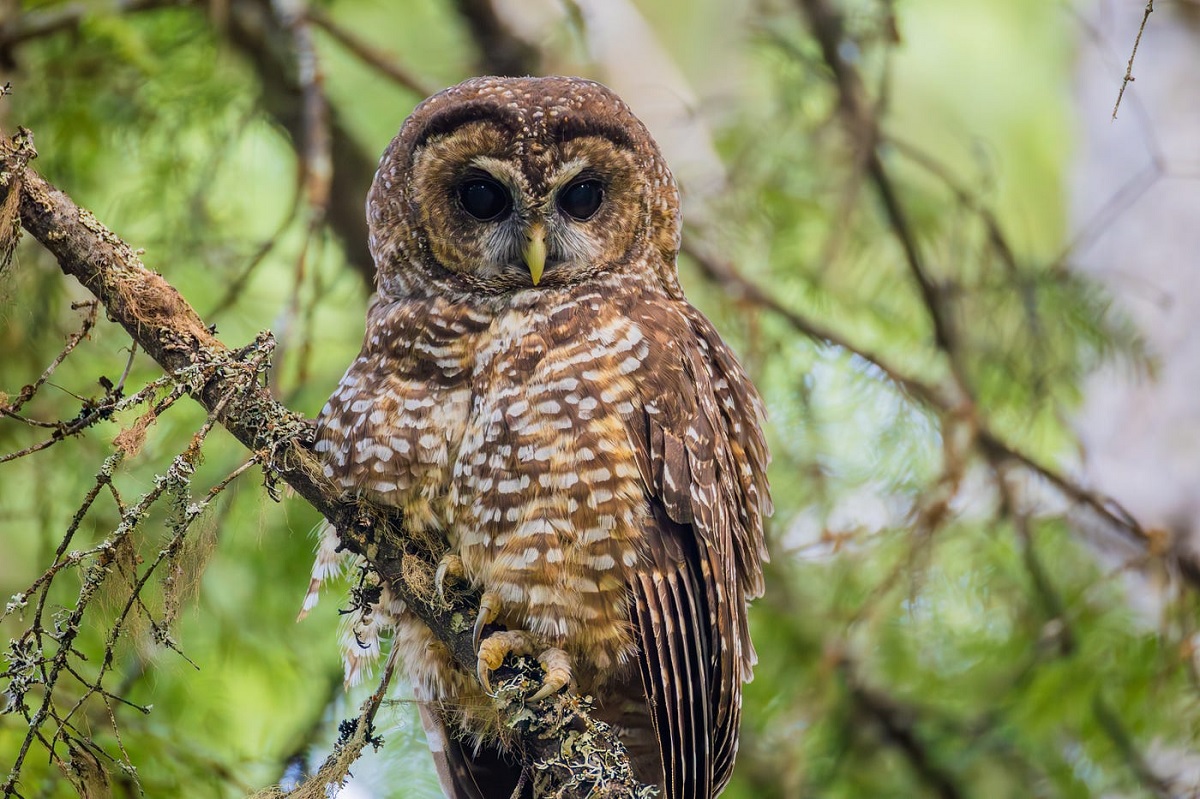
Barred Owl vs Spotted Owl: Key Differences, Habits, and Habitat Guide
Owls are fascinating creatures, and comparing different species can reveal subtle yet important differences in their behavior, habitat, and appearance. Among the most intriguing comparisons is barred owl vs spotted owl. These two species share similarities, such as nocturnal habits and forest habitats, but they also have distinct characteristics that make them unique. The barred owl is known for its rounded head, dark eyes, and distinctive hooting call, often heard echoing through mixed woodlands.
On the other hand, the spotted owl has darker plumage with prominent spots, large dark eyes, and a softer, more eerie call, typically found in old-growth forests. Understanding the differences between these two owls helps bird enthusiasts, researchers, and conservationists identify them correctly and appreciate their ecological roles. Observing their behavior and habitats reveals the intricate ways these species have adapted to survive and thrive in their respective environments.
Physical Appearance Comparison
Understanding the physical differences between the barred owl and spotted owl is essential for identifying them in the wild. While both species share general owl characteristics like large eyes, rounded heads, and sharp talons, they have distinctive markings, coloration, and body structure. Observing these differences helps bird watchers, researchers, and conservationists distinguish one species from the other accurately. Physical traits, such as size, feather patterns, and facial features, provide key insights into their adaptations to specific habitats and behaviors. Careful observation of plumage, eyes, and body shape allows for accurate identification in forests, making this comparison particularly valuable for anyone studying or appreciating these owls.
Size and Body Structure
The barred owl is generally larger and more robust than the spotted owl. It has a length of about 16–25 inches with a wingspan reaching up to 43 inches, giving it a broader and heavier appearance. Its body is rounded and sturdy, allowing it to navigate dense woodlands efficiently. In contrast, the spotted owl is smaller and more slender, measuring around 16–20 inches in length with a slightly narrower wingspan. Its lightweight body aids in maneuvering through old-growth forests where agility is crucial.
Both species have rounded heads and lack ear tufts, which is a key similarity. However, the barred owl has a stockier chest and a more pronounced horizontal barring pattern on its chest and belly, while the spotted owl has vertical streaks with white spots on a darker background. Their talons and beaks are similarly sharp and adapted for hunting, but the size difference gives the barred owl an advantage when capturing larger prey. Understanding size and body structure differences helps in distinguishing these owls, especially when observing them from a distance or during flight.
Plumage and Color Patterns
Plumage is one of the most striking differences between barred owls and spotted owls. The barred owl has a pale brown face with dark brown eyes and a well-defined horizontal barring on the chest, giving it its name. Its back and wings feature a mottled gray and brown pattern, which helps camouflage it in mixed forests. The overall coloration is lighter and more uniform, making the barred owl recognizable even in dim light.
The spotted owl, on the other hand, has darker plumage with prominent white spots across its head, wings, and back. Its chest and belly feature vertical streaks rather than horizontal bars. This color pattern provides excellent camouflage in dense old-growth forests where shadowed areas dominate. Additionally, the facial disk of the spotted owl is darker and more pronounced, with large dark eyes that appear almost black. These differences in plumage and coloration are crucial for distinguishing the two species, especially in habitats where both may coexist, and for understanding how each species has adapted to its preferred environment.
Facial Features and Eye Color
Facial features and eye color are subtle yet effective identifiers. The barred owl has a round facial disk with dark brown eyes and a lighter ring around its face, giving it a somewhat expressive appearance. Its beak is yellowish and slightly hooked, suitable for grasping and tearing prey. The combination of dark eyes and horizontal chest bars contributes to a distinctive, recognizable profile.
The spotted owl also has a rounded facial disk but with slightly darker overall coloration. Its eyes are similarly dark, blending into the facial feathers, which enhances camouflage in shadowy forest environments. The beak is also hooked but appears smaller relative to its more compact body. The facial disk of the spotted owl is less prominent in terms of contrast compared to the barred owl, helping it remain concealed. Observing these subtle facial differences can be particularly useful when the owls are perched in trees, allowing bird watchers to differentiate the species even from a moderate distance.
Wing Shape and Flight Appearance
Wing shape and flight patterns differ slightly due to size and habitat adaptation. The barred owl has broader wings with rounded tips, allowing for silent and powerful flight through mixed woodlands. Its wings produce minimal noise, aiding in stealthy hunting at night. When perched, the barred owl appears bulkier, and in flight, its large wingspan is noticeable as it glides between trees.
Spotted owls have narrower wings relative to body size, which aids in navigating dense old-growth forests. Their flight is agile and quick, suited for weaving through thick canopy layers. The spotted owl’s wingspan is slightly shorter, and its smaller body reduces energy expenditure during hunting. These differences in wing morphology not only affect flight but also help identify the species when observing movement patterns, hunting behavior, or gliding through forested areas. Wing shape and flight dynamics reflect adaptations to each owl’s preferred habitat, emphasizing how physical traits support survival and ecological roles.
Habitat and Range Differences
Understanding the habitat and range differences between the barred owl and spotted owl is essential for identifying these species and studying their ecological roles. While both species inhabit forests, they prefer different types of woodlands and environmental conditions. The barred owl thrives in mixed forests and riparian zones, whereas the spotted owl is closely associated with old-growth forests. Observing their preferred habitats and geographic ranges helps researchers, birdwatchers, and conservationists track populations, study interactions, and implement effective preservation strategies. Habitat and range play a crucial role in each species’ behavior, survival, and adaptation.
Preferred Habitats
The barred owl is highly adaptable, thriving in a variety of wooded environments, including deciduous, mixed, and coniferous forests. It often favors areas near rivers, swamps, or other water sources, which provide abundant prey and shelter. He or she can inhabit forests that have been partially disturbed, including suburban woodlands, as long as sufficient cover and food are available. The barred owl’s versatility allows it to occupy a broad range of habitats across its geographic distribution.
In contrast, the spotted owl has stricter habitat requirements, primarily inhabiting dense, old-growth forests with large trees and closed canopies. These forests offer deep shade, stable microclimates, and extensive nesting sites, which are essential for their survival. Spotted owls are less tolerant of habitat disturbance, fragmentation, or human development, making them more vulnerable to environmental changes. Their reliance on mature forests reflects evolutionary adaptations to specialized hunting, nesting, and camouflage. Understanding these habitat preferences is critical for conservation planning and protecting vulnerable owl populations.
Geographic Range
The barred owl has a broad geographic range across North America, primarily found in the eastern United States, parts of the Midwest, and extending into southern Canada. Its range has expanded westward in recent decades, overlapping with areas traditionally inhabited by the spotted owl. This expansion has led to increased interactions between the two species, including competition for nesting sites and prey. The barred owl’s adaptability contributes to its widespread distribution and ability to thrive in varied landscapes.
The spotted owl has a more restricted geographic range, concentrated along the Pacific Northwest of the United States and parts of western Canada. He or she depends on old-growth forests in California, Oregon, Washington, and British Columbia. Fragmented habitats, logging, and urbanization have reduced their available range, increasing the species’ vulnerability. The contrast in range between barred owls and spotted owls highlights the ecological pressures faced by the latter and emphasizes the need for targeted conservation strategies to preserve remaining old-growth forests.
Overlapping Zones and Competition
Where the ranges of barred owls and spotted owls overlap, competition can occur for territory, nesting sites, and food. The barred owl’s generalist behavior allows it to occupy areas that spotted owls traditionally depend on, leading to direct competition. He or she often outcompetes the spotted owl due to larger size, adaptability, and aggressive behavior. This competition can reduce spotted owl populations and force them into smaller, less optimal habitats.
In overlapping zones, barred owls may also influence spotted owl behavior, altering their hunting times or nesting locations. Conservationists closely monitor these areas to manage habitats, prevent population declines, and maintain ecological balance. Understanding these interactions provides insight into the dynamics of species coexistence, competition, and adaptation, highlighting the complex relationships shaped by habitat and range differences between the two owl species.
Seasonal and Environmental Influences
Both species are influenced by seasonal changes and environmental conditions within their habitats. Barred owls can tolerate a wider range of temperatures and habitat conditions, allowing them to remain in areas year-round. They may shift hunting strategies or perch locations according to prey availability and seasonal vegetation changes.
Spotted owls are more sensitive to environmental fluctuations, relying on stable microclimates provided by mature forests. Seasonal changes in temperature, prey abundance, or habitat conditions can significantly impact breeding success and survival rates. Conservation efforts focus on maintaining old-growth forest integrity, ensuring that spotted owls have stable habitats despite environmental pressures. Seasonal and environmental influences highlight the ecological requirements and vulnerabilities of these species, emphasizing the role of habitat in their long-term survival and adaptation.
Behavior and Hunting Patterns
Behavior and hunting patterns are key factors in understanding how barred owls and spotted owls survive and interact with their environment. Both species are nocturnal predators with unique strategies for locating and capturing prey. Studying their behavior provides insight into territoriality, communication, and ecological roles. Observing hunting methods, perching habits, and social interactions reveals how these owls adapt to their specific habitats and food sources. Differences in hunting techniques, activity periods, and responses to environmental changes highlight the evolutionary adaptations that distinguish these two owl species.
Nocturnal Activity and Daily Behavior
Barred owls are primarily nocturnal but often exhibit crepuscular behavior, becoming active during dawn and dusk. They spend much of the day perched quietly in dense trees, scanning for prey and monitoring territory. He or she relies on keen eyesight and acute hearing to detect movements of small mammals, birds, and amphibians. Barred owls are known for their expressive vocalizations, which serve both to attract mates and to establish dominance over a territory.
Spotted owls are almost strictly nocturnal, with peak activity occurring during the night. They tend to remain hidden during daylight hours in shaded, old-growth forest canopies, minimizing detection by predators and humans. Spotted owls exhibit stealthy and patient behavior, often waiting quietly for prey to move rather than actively pursuing it. Both species display territoriality, defending their nesting and hunting grounds from intruders. Observing these behavioral patterns helps bird watchers and researchers understand how habitat, prey availability, and environmental conditions influence daily routines and survival strategies.
Hunting Techniques and Prey Selection
The barred owl employs a versatile hunting strategy, combining perching, short flights, and slow glides to ambush prey. Its diet consists mainly of small mammals like mice, squirrels, and rabbits, but it also includes birds, amphibians, and invertebrates. He or she uses acute hearing to detect movements in low-light conditions, swooping silently to capture prey with sharp talons. The barred owl’s broad wings and strong body allow it to hunt both in open areas and dense forests, making it a generalist predator.
The spotted owl, in contrast, has a more specialized hunting style adapted to old-growth forests. It typically perches silently for long periods, waiting for small mammals such as flying squirrels or wood rats to appear. Spotted owls rely heavily on camouflage and stealth, minimizing movement to remain undetected. Their narrow wings facilitate maneuverability through dense forest canopies, and they rarely hunt in open areas. While both species primarily feed on mammals, the spotted owl’s prey selection reflects the availability of species within mature forests, illustrating how habitat directly influences hunting behavior and energy conservation strategies.
Territoriality and Social Behavior
Barred owls are strongly territorial, defending large areas with vocal calls, especially during the breeding season. He or she will vocalize frequently to warn intruders and communicate with mates. Outside the breeding season, some tolerance may occur between neighboring individuals, but aggressive interactions remain common. Barred owls also exhibit social behaviors such as cooperative hunting among family groups or parents feeding fledglings, reflecting adaptability in both solitary and social contexts.
Spotted owls are highly territorial as well, with territories centered around nesting and foraging sites in old-growth forests. Their calls are quieter and more subtle than barred owls, serving primarily to maintain territory boundaries and communicate with mates. Spotted owls display low levels of social interaction outside the breeding pair, emphasizing solitude and efficiency in energy use. Territorial defense often involves both vocal warnings and physical posturing, especially when barred owls encroach on spotted owl habitat. Observing these interactions provides insight into competition, adaptation, and the influence of habitat on social structure.
Adaptations to Hunting in Different Habitats
Barred owls’ adaptability allows them to hunt effectively in various habitats, from mixed forests to wetlands and urban edges. Their broad diet and flexible hunting times enable them to exploit diverse food sources, giving them a competitive advantage in overlapping ranges. He or she can adjust hunting strategies according to prey availability, vegetation density, and human presence.
Spotted owls, however, have evolved for highly specialized forest hunting. Their narrow wings, silent flight, and nocturnal habits maximize success in dense, shaded forests. Limited dietary flexibility makes them vulnerable to environmental changes and competition from barred owls. Studying these adaptations highlights how each species’ behavior and hunting strategies are shaped by evolutionary pressures, habitat preferences, and the need to balance energy expenditure with survival and reproduction.
Identifying Barred Owl vs Spotted Owl in the Wild
Identifying barred owls and spotted owls in the wild requires careful observation of physical traits, behaviors, vocalizations, and habitat. While both species are nocturnal and share forested habitats, their subtle differences make it possible to distinguish them with practice. Recognizing these differences helps bird watchers, researchers, and conservationists monitor populations and understand ecological dynamics. Key identifiers include size, plumage, facial features, eyes, calls, perching behavior, and habitat preferences. By paying attention to these aspects, you can accurately differentiate barred owls from spotted owls even in overlapping ranges.
Observing Physical Features
Physical appearance is often the first clue when identifying these owls. The barred owl is larger, with a stockier body, rounded head, and broad wings. He or she displays horizontal barring across the chest and belly, with lighter overall plumage. The facial disk is pale with dark brown eyes, giving it a distinctive expression, and the beak is yellowish. In contrast, the spotted owl is smaller and more slender, with vertical streaks on the chest and white spots across darker plumage on its wings and back. Its facial disk is darker, blending with shadowed areas, and its large dark eyes provide excellent night vision.
In the wild, size comparison is useful when observing both species in overlapping habitats. The barred owl often appears bulkier, and its broader wings create a noticeable difference in flight patterns. The spotted owl’s more compact body allows it to maneuver quickly through dense forests. Observing beak size, plumage patterns, and wing shape can give immediate visual cues for identification, particularly when owls are perched within your line of sight.
Listening for Vocalizations
Vocalizations are one of the most reliable ways to identify these species in their natural habitat. Barred owls are famous for their loud, rhythmic hooting, often described as “Who cooks for you? Who cooks for you all?” This distinctive pattern can carry across long distances, especially in mixed forests or near water bodies. He or she uses calls for territory defense, mate communication, and social interactions, often vocalizing both day and night.
Spotted owls, in contrast, produce softer, low-pitched hoots and whistles that are less frequent and more subtle. Their calls are used primarily for maintaining territory boundaries and communicating with mates. During breeding season, the frequency may increase, but they rarely vocalize in the daytime. By focusing on the pitch, repetition, and timing of calls, you can differentiate between the loud, persistent barred owl and the quieter, more reserved spotted owl. This auditory cue is particularly useful when visual observation is limited due to dense foliage or low light conditions.
Habitat and Perching Behavior
Habitat and perching preferences provide additional identification clues. Barred owls are adaptable, inhabiting mixed forests, riparian areas, and even suburban woodlands. They perch on broad branches, often near water sources, and may be seen in partially disturbed or secondary forests. Their flexible habitat preferences allow them to occupy a wide range of environments, giving bird watchers multiple opportunities to spot them.
Spotted owls are highly selective, favoring old-growth forests with closed canopies, tall trees, and stable microclimates. He or she usually perches quietly in shaded areas, blending into the forest shadows. Observing the tree type, canopy density, and proximity to water or disturbed areas can help distinguish the species. The spotted owl’s perching behavior emphasizes stealth, patience, and concealment, whereas the barred owl may be more exposed and vocal. Noticing perch height, branch thickness, and surrounding vegetation is essential when attempting to identify these species in their natural habitats.
Flight Patterns and Hunting Observations
Watching flight and hunting behavior is another effective way to differentiate these owls. Barred owls have broad, rounded wings, allowing silent glides over mixed woodland areas. They often use short bursts of flight between perches and can navigate both open spaces and dense forests with ease. Observing prey capture behavior can also indicate species, as barred owls are generalist hunters feeding on mammals, birds, amphibians, and invertebrates.
Spotted owls have narrower wings adapted for maneuvering through dense old-growth forests. Their flight is quieter and more precise, often involving slow, patient glides along forest corridors. Hunting is largely opportunistic within shaded habitats, focusing on small mammals like flying squirrels and wood rats. He or she remains highly stealthy, using camouflage and silent movements to surprise prey. Noting differences in wing shape, glide distance, and hunting style can reinforce visual and auditory identification.
Seasonal Considerations and Juvenile Identification
Seasonal changes and age also influence identification. Barred owls may vocalize more frequently during mating season, while juvenile plumage exhibits softer colors and less pronounced barring. Spotted owls maintain dark plumage year-round, with juveniles showing less distinct spotting and streaking. Breeding season behavior, such as nest defense or feeding fledglings, provides additional cues.
Juveniles of both species can be challenging to differentiate due to less distinct markings. Observing behavior, habitat selection, and vocalizations becomes even more critical in these cases. Combining multiple identification methods—physical traits, calls, habitat, and flight patterns—ensures accurate recognition of barred owls and spotted owls in the wild.
People Also Asked
What Are The Main Physical Differences Between Barred Owl And Spotted Owl?
The barred owl is larger and stockier, with a rounded head, broad wings, and horizontal barring on its chest and belly. He or she has pale facial disks with dark brown eyes. In contrast, the spotted owl is smaller and more slender, with vertical streaks on the chest and white spots on darker feathers. Its facial disk is darker, blending with the shaded forest environment. Observing these physical traits, including body size, wing shape, and plumage patterns, can help you accurately distinguish between these two owl species in the wild.
How Do Their Vocalizations Differ?
Barred owls have loud, rhythmic hoots, often described as “Who cooks for you? Who cooks for you all?” He or she uses these calls for territory defense, mate communication, and social interaction. Spotted owls produce softer, low-pitched hoots that are less frequent and more subtle, mainly used for maintaining territory boundaries or communicating with a mate. By listening carefully to pitch, repetition, and call intensity, you can identify which species is nearby, especially in low-visibility conditions or dense forests where visual observation is difficult.
What Are The Habitat Preferences Of Each Owl?
Barred owls are highly adaptable, thriving in mixed forests, riparian areas, and even suburban woodlands. He or she often perches near water and can tolerate partially disturbed habitats. Spotted owls, however, are more specialized, preferring dense old-growth forests with closed canopies, tall trees, and stable microclimates. They rely on undisturbed environments for nesting and hunting. Understanding these habitat preferences is crucial when attempting to spot or study these species, as the barred owl can appear in more varied locations while the spotted owl remains tied to mature forests.
Do Their Ranges Overlap, And What Happens When They Do?
Yes, the ranges of barred owls and spotted owls overlap in parts of the Pacific Northwest and western North America. He or she may encounter the other species in overlapping territories, leading to competition for nesting sites, food, and habitat. Barred owls are more aggressive and adaptable, which can negatively impact spotted owl populations by forcing them into smaller, less optimal habitats. Understanding this dynamic helps you recognize not only the species but also the ecological pressures affecting spotted owls in areas where barred owls have expanded.
How Can You Identify Them During Flight?
Barred owls have broad, rounded wings, enabling powerful silent glides over mixed forests and open areas. He or she often flies in short bursts between perches and displays a heavier, bulkier silhouette. Spotted owls have narrower wings and a more compact body, allowing precise navigation through dense old-growth forests. Their flight is stealthy and deliberate, usually involving slow, quiet glides along forest corridors. Observing wing shape, flight pattern, and agility can give you clear visual cues to distinguish between these two species in the wild.
What Are The Key Behavioral Differences To Note?
Barred owls are versatile and vocal, often active during both night and twilight hours. He or she demonstrates territorial calls and may tolerate partially disturbed habitats. Spotted owls are more secretive, strictly nocturnal, and highly sensitive to environmental changes. They exhibit stealthy hunting behavior and prefer shaded old-growth forests for perching and nesting. By observing activity patterns, vocalizations, and responses to habitat disturbances, you can understand the behavioral differences and identify which owl species you are observing in natural settings.
Final Thoughts
Observing the differences between these two remarkable owl species highlights the unique traits that make each one fascinating. From their distinct physical appearances and feather patterns to their varied habitats and hunting behaviors, there is much to appreciate about both. Understanding their vocalizations and breeding habits helps bird enthusiasts identify them more accurately in the wild.
Awareness of conservation concerns is also crucial, as habitat loss and environmental changes impact their populations differently. By paying attention to these factors, you can better distinguish between the species while enjoying their presence in nature. For wildlife watchers and researchers alike, knowing the nuances of barred owl vs spotted owl enriches both field observations and overall knowledge of North American owls. Appreciating these differences ensures that efforts to protect and study them are more informed and effective.