Types of Blue Colored Birds: Stunning Species You Can Spot in the Wild
Blue-colored birds have always fascinated bird watchers and nature enthusiasts with their striking hues and delicate features. Their vibrant plumage can range from soft pastel blues to deep, iridescent shades that shimmer in sunlight. These birds are found in a variety of habitats, from tropical forests to open woodlands, each displaying unique behaviors and characteristics that make them a joy to observe.
Types of blue colored birds encompass a diverse range of species, including songbirds, waterfowl, and even some raptors. Their coloration often serves purposes beyond beauty, such as attracting mates, signaling territory, or providing camouflage in their environment. Understanding the different species and their traits enhances the appreciation of these remarkable creatures.
From the cheerful blue jay to the elegant indigo bunting, each bird exhibits its own unique patterns, calls, and habits. Studying these birds offers insight into their ecological roles and evolutionary adaptations.
Observing blue-colored birds in the wild allows you to connect with nature while enjoying their brilliant colors and captivating behaviors. Their presence adds both beauty and balance to the ecosystems they inhabit.
Types of Blue Colored Birds
Blue-colored birds are among the most captivating and admired species in the avian world. Their vivid hues, ranging from pale sky blue to deep, iridescent indigo, make them stand out in a variety of habitats. These birds are found across continents and climates, from dense tropical forests to open woodlands, each exhibiting unique behaviors and ecological roles. Understanding the different types of blue-colored birds provides insight into their biology, adaptation strategies, and importance in ecosystems.
Small Songbirds with Blue Plumage
Small songbirds with blue plumage are both charming and vibrant, making them favorites for bird watchers. Species like the eastern bluebird and indigo bunting exhibit brilliant coloration that plays a critical role in mating and territorial displays.
The eastern bluebird, common in North America, has bright blue upperparts and a reddish-orange chest. These cavity-nesting birds often utilize old woodpecker holes or nest boxes, and they feed on insects and berries. Their melodious songs and cheerful calls make them easy to identify even in partially hidden habitats. Males are particularly colorful during the breeding season, signaling health and vitality to potential mates.
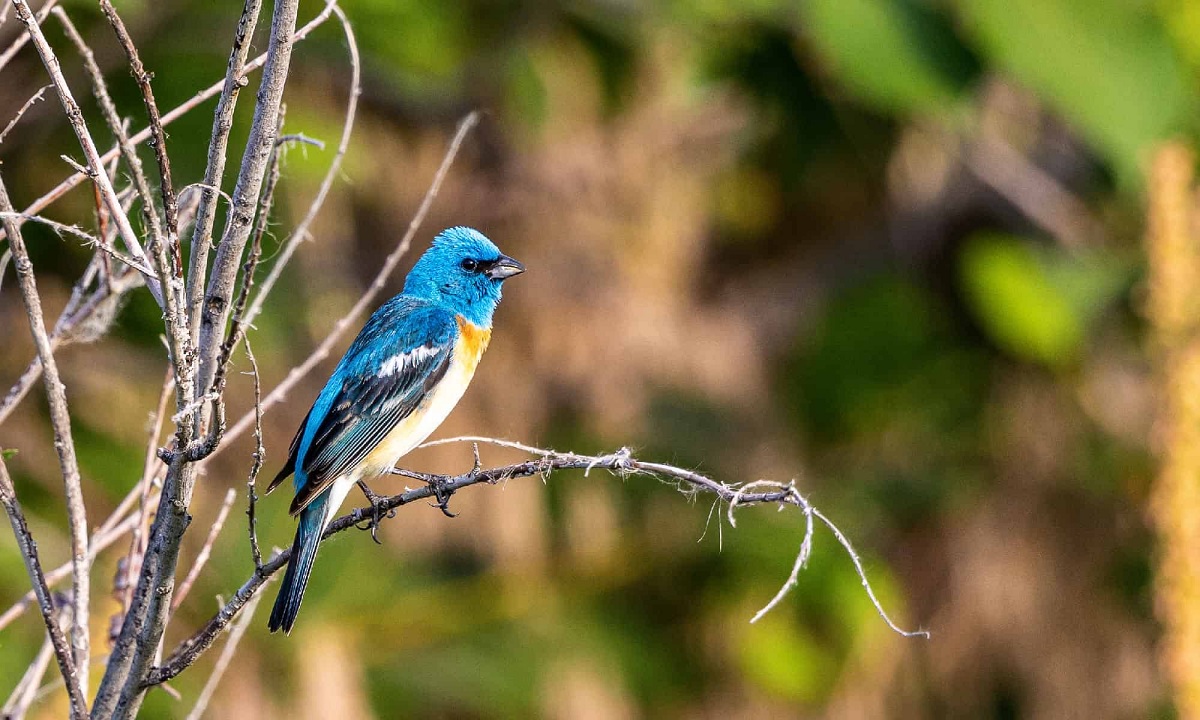
Indigo buntings display intense cobalt-blue plumage in males, while females are more brownish with subtle blue hints. They inhabit brushy fields and forest edges, feeding on seeds, berries, and insects. Male indigo buntings sing from exposed perches to defend territories and attract females. During migration, these birds travel long distances to Central and South America, showcasing their endurance despite small size.
Blue-gray gnatcatchers are tiny, agile birds with soft blue-gray plumage and distinctive white eye rings. Constantly flitting through foliage, they hunt insects and spiders, often hovering to snatch prey mid-air. Their nests are delicate, cup-shaped structures woven from plant fibers and spider silk. Migratory populations move south during winter, highlighting their adaptability across regions and climates.
Tree swallows exhibit iridescent blue upperparts with bright white underparts. They are cavity nesters near wetlands or lakes, catching flying insects mid-air. Tree swallows form large communal roosts outside the breeding season and rely on their vibrant coloration to attract mates. Their use of nest boxes demonstrates adaptability to human-altered environments.
Medium-Sized Blue Birds
Medium-sized blue birds combine visual appeal with fascinating behaviors. Species like the blue jay and stellar’s jay are well-known for their intelligence, social interactions, and vocal abilities.
Blue jays are bright blue with white underparts and black markings around the neck and face. Native to North America, they are highly territorial and known for complex social behaviors, including mimicking calls of other birds and even predators. Blue jays are omnivorous, feeding on insects, seeds, and occasionally small vertebrates. Their striking coloration helps communicate dominance and territorial claims.
Steller’s jays, found in western North America, have deep cobalt-blue plumage with black crests and faces. These intelligent birds are skilled at food caching and communicating with loud, varied calls. Steller’s jays often inhabit coniferous forests and are notable for their problem-solving skills, adaptability to human environments, and social hierarchies within flocks.
Both species demonstrate how medium-sized blue birds use visual and vocal cues for social interaction, territorial defense, and survival. Their intelligence and adaptability allow them to thrive in diverse habitats, from dense forests to suburban areas.
Tropical Blue Birds
Tropical blue birds are some of the most spectacularly colored species, often exhibiting brilliant iridescence that changes with light angles. Birds like the hyacinth macaw and blue-and-gold tanager exemplify this group.
The hyacinth macaw, native to South America, is the largest parrot species and features striking cobalt-blue plumage with yellow eye rings and facial markings. These birds are highly social, living in pairs or small flocks, and rely on strong beaks to crack hard nuts. They are highly dependent on specific forest habitats, and their vibrant coloration plays a role in mate selection and species recognition.
Blue-and-gold tanagers, found in tropical forests from Central to South America, display electric blue plumage with contrasting yellow undersides. They feed on fruits, insects, and nectar, playing a crucial role in seed dispersal. Their vivid colors help attract mates, and they often forage in mixed-species flocks, benefiting from increased vigilance and foraging efficiency.
These tropical species demonstrate how vibrant blue plumage can serve ecological and social functions, including mate attraction, communication, and species identification, while enhancing their visibility in dense forest habitats.
Water-Associated Blue Birds
Several blue-colored birds are closely associated with water habitats, including kingfishers and herons. Their coloration often aids in camouflage, hunting efficiency, and signaling to potential mates.
Kingfishers, such as the common kingfisher, have bright blue backs and wings with orange underparts. They hunt fish by diving from perches into water, displaying incredible precision and speed. Kingfishers prefer clear streams, rivers, and lakes, where fish are abundant, and their blue coloration blends with the water and sky during hunting. They also use vocalizations and nesting burrows to maintain territory and reproduce successfully.
Herons like the little blue heron are medium-sized wading birds with slate-blue plumage. They inhabit wetlands, marshes, and shallow rivers, feeding primarily on fish, amphibians, and aquatic invertebrates. Their coloration provides both camouflage in the water and visual signals during breeding displays. Herons are solitary hunters, often standing motionless before striking swiftly at prey.
Water-associated blue birds highlight how plumage coloration can evolve in conjunction with habitat and hunting strategies, demonstrating the interplay between ecology and appearance.
Raptors and Large Blue Birds
Some raptors and larger birds also feature blue in their plumage, though often mixed with other colors. Examples include the blue-throated macaw and certain species of sea eagles.
The blue-throated macaw is native to Bolivia and is critically endangered. It has brilliant cobalt-blue plumage with yellow patches on the wings and face. These parrots are highly social, forming strong pair bonds and living in small family groups. Their coloration plays a vital role in mate selection and social interactions.
Sea eagles like the white-tailed eagle occasionally display blue-gray tones on wings and backs, particularly in juveniles. These large raptors hunt fish and waterfowl, using powerful talons and sharp eyesight. The bluish tinge in plumage may aid in camouflage over water or serve as a signal of maturity and health.
Larger blue birds show how color can serve multiple functions beyond mate attraction, including camouflage, species recognition, and social signaling, even in apex predators.
Ecological Roles of Blue Birds
Blue-colored birds, whether small songbirds or large raptors, play critical roles in their ecosystems. They control insect populations, disperse seeds, and maintain aquatic and terrestrial food webs. Their vibrant colors also make them indicators of habitat health, as many species require clean, resource-rich environments to thrive.
Understanding the diversity of blue birds, including songbirds, tropical species, water-associated birds, and raptors, highlights the evolutionary and ecological significance of plumage coloration. Observing these birds allows enthusiasts to appreciate both their beauty and their essential roles in maintaining biodiversity.
From the tiny blue-gray gnatcatcher to the massive hyacinth macaw, types of blue-colored birds encompass a stunning array of species with unique behaviors, diets, and ecological niches. Their presence enriches natural habitats and provides endless fascination for bird watchers and researchers alike.
Seasonal or Regional Color Variations
Many blue-colored birds display variations in plumage depending on the season or region they inhabit. These changes are not only visually striking but also serve critical ecological functions, such as mating displays, camouflage, and signaling age or status. Seasonal and regional differences can provide insights into the bird’s life cycle, habitat adaptation, and evolutionary strategies, making them fascinating subjects for bird watchers and researchers alike.
Seasonal Plumage Changes
Several blue birds undergo seasonal color changes, particularly between breeding and non-breeding periods. For instance, male indigo buntings display brilliant cobalt-blue feathers during the breeding season, which helps attract females and assert dominance over territories. Outside the breeding season, their plumage dulls to a more muted brownish-blue, offering better camouflage while foraging and migrating.
These changes are hormonally driven and timed with environmental cues such as daylight length and temperature. Seasonal plumage transformation ensures that birds can balance reproductive success with survival needs. Observing these shifts allows you to understand the intricate relationship between appearance, behavior, and seasonal ecological pressures.
Other small songbirds, like the blue-gray gnatcatcher, maintain subtle variations in shade depending on season. Juveniles often exhibit duller coloration, which gradually intensifies as they mature. This helps reduce predation risk while signaling age and maturity within the species.
Regional Color Variations
Geographic distribution can also result in noticeable color differences among blue birds. Eastern bluebirds in northern regions often exhibit brighter plumage compared to southern populations, influenced by diet, climate, and genetic variation. Differences in food availability, especially pigments in fruits or insects, can directly affect feather coloration.
For example, indigo buntings in different parts of North America may show slight shifts in blue intensity. Birds in forested regions may appear darker to blend with shaded habitats, while those in open areas develop brighter tones to stand out during mating displays. These regional variations enhance survival and reproductive success by optimizing visual signaling according to local conditions.
Bluebirds, buntings, and other species demonstrate that plumage is a dynamic trait shaped by environmental pressures. Studying these variations helps identify populations, track migration patterns, and understand local adaptation strategies.
Sexual Dimorphism and Seasonal Coloration
In many blue bird species, males and females exhibit different color patterns, which often interact with seasonal changes. Males usually display more vibrant colors during breeding to attract mates, while females remain muted to reduce predation risk while nesting.
For instance, male tree swallows have iridescent blue backs that shine during spring and summer breeding periods. Outside these seasons, the sheen may become less noticeable, allowing the birds to blend better into the environment. Females retain subtler hues year-round, highlighting the role of sexual selection in driving color intensity and patterns.
These differences can also indicate reproductive readiness, territorial dominance, and overall health. By paying attention to sexual dimorphism alongside seasonal changes, bird watchers can gain deeper insights into breeding behavior and social hierarchy.
Environmental Influences on Plumage
Color variations are often influenced by environmental factors such as temperature, sunlight, and diet. Carotenoid pigments obtained from insects, fruits, or plants can enhance the blue tones in feathers, while wear and molting cycles can dull them over time.
Birds living in tropical regions may maintain intense coloration year-round due to stable food supplies and minimal seasonal variation, whereas temperate species exhibit marked seasonal changes. Exposure to sunlight can intensify iridescence in feathers, creating striking visual effects that vary depending on the bird’s location and environmental conditions.
Environmental factors also interact with genetics, producing subtle regional differences even within the same species. Observing these influences helps you understand the complex relationship between habitat, diet, and plumage in blue-colored birds.
Observing Seasonal and Regional Variations
Understanding seasonal and regional color variations allows you to identify species accurately and interpret their behaviors. By noting differences in shade, brightness, or feather pattern, you can determine breeding status, age, and even geographic origin.
For example, a duller-colored male indigo bunting observed in fall is likely preparing for migration, whereas a bright male in spring indicates active territorial behavior. Similarly, variations in blue intensity across regions can help track populations and understand adaptation strategies. Paying attention to these subtle cues enriches your experience as a bird watcher and provides critical data for ornithological studies.
FAQs
What Are The Most Common Types Of Blue Colored Birds?
Some of the most common types of blue-colored birds include the eastern bluebird, indigo bunting, blue jay, and tree swallow. These species are widespread across North America and are often seen in forests, fields, and gardens. Each bird displays a unique shade of blue and distinctive markings, making identification easier for bird watchers.
Eastern bluebirds have bright blue backs with reddish-orange chests, while indigo buntings feature cobalt-blue males and brownish females. Blue jays are larger with bold blue, white, and black patterns, and tree swallows have iridescent blue upperparts with white underparts, adding to the diversity of blue-colored birds.
How Can I Identify Small Blue Songbirds?
Small blue songbirds can be identified by their size, color intensity, and behavior. Species like eastern bluebirds, indigo buntings, and blue-gray gnatcatchers are small, often under eight inches in length, and have vivid blue or blue-gray plumage. Observing their foraging patterns, flight style, and vocalizations helps in accurate identification.
Eastern bluebirds often perch in open areas, scanning for insects, while indigo buntings sing from exposed perches to defend territory. Blue-gray gnatcatchers constantly flit among foliage hunting insects, and their white eye rings are distinguishing features. Size, plumage shade, and behavior together provide clear identification cues for these small blue birds.
What Tropical Blue Birds Should I Know About?
Tropical blue birds include species such as the hyacinth macaw, blue-and-gold tanager, and blue dacnis. These birds are found in Central and South America and often display vivid, iridescent blue feathers that make them highly visible in dense forests. Tropical blue birds usually rely on fruits, insects, and nectar for sustenance.
The hyacinth macaw is the largest parrot species with brilliant cobalt-blue plumage and yellow facial markings. Blue-and-gold tanagers have electric blue backs and yellow underparts, often foraging in mixed-species flocks. Observing these tropical birds provides insights into the ecological roles of vibrant coloration and species interactions in lush habitats.
Do Blue Birds Show Seasonal Color Changes?
Yes, many blue birds exhibit seasonal color variations. Male indigo buntings and eastern bluebirds, for example, display brighter blue plumage during the breeding season to attract mates and defend territories. During the non-breeding season, their colors dull to brownish or muted shades, providing camouflage while foraging or migrating.
Juvenile birds often have softer colors compared to adults, helping reduce predation risk. Seasonal changes are influenced by hormonal cycles, daylight, and environmental factors. Paying attention to these shifts allows you to determine breeding status, age, and seasonal behavior of blue-colored birds in the wild.
Are All Blue Birds Songbirds?
Not all blue birds are songbirds. While many small and medium-sized blue birds, such as indigo buntings and blue jays, are classified as songbirds, other blue-colored species include parrots, kingfishers, and even some raptors. These species display blue plumage but differ in behavior, diet, and vocalizations.
For instance, hyacinth macaws are large parrots with strong beaks for cracking nuts, while kingfishers hunt fish near water. Raptors like the white-tailed eagle may exhibit bluish-gray tones in juvenile plumage. Observing behavior, diet, and habitat helps distinguish songbirds from other types of blue-colored birds.
How Do Regional Variations Affect Blue Bird Colors?
Regional variations can influence the shade and intensity of blue in bird plumage. Birds in northern regions may display brighter blue feathers due to diet, sunlight, and environmental conditions, while southern populations may have slightly duller or muted hues. These differences often help with camouflage or signaling during mating.
For example, eastern bluebirds in northern areas appear more vivid than those in southern open woodlands. Indigo buntings in forested regions may show darker blue to blend with shaded habitats. Recognizing these regional variations enhances identification skills and helps you understand adaptation strategies among blue-colored birds.
Final Thoughts
Blue-colored birds captivate birdwatchers and nature enthusiasts alike with their vibrant plumage and striking presence. From small songbirds like the Eastern Bluebird and Indigo Bunting to exotic tropical species such as the Hyacinth Macaw, each bird displays unique behaviors and adaptations that help it thrive in its specific habitat. Observing these birds in the wild provides an opportunity to appreciate the diversity and ecological roles they play.
Exploring the types of blue colored birds reveals fascinating differences in feeding habits, migration patterns, and social behaviors. Some, like kingfishers and blue jays, are closely tied to water sources, while others inhabit forests, grasslands, or tropical regions. Seasonal changes and molting can also affect their plumage, adding another layer of intrigue for enthusiasts aiming to identify species accurately.
Studying the types of blue colored birds emphasizes the importance of habitat conservation and protection. Preserving their natural environments ensures these stunning birds continue to thrive, allowing future generations to experience the beauty and diversity of blue-hued avian species.