Northern Gannet: Stunning Seabird Facts, Behavior, and Conservation
The northern gannet is one of the most striking seabirds found along the coasts of the North Atlantic. Known for its impressive size and graceful flight, it captivates birdwatchers and nature enthusiasts alike. Its long, slender wings and streamlined body allow it to dive from great heights with remarkable precision, making it a master of aerial hunting.
These birds are easily recognized by their bright white plumage, accented with black wingtips, and their sharp, pointed beaks designed for catching fish. Northern gannets often gather in large colonies on cliffs or rocky islands, creating a bustling and vibrant scene that reflects their social nature.
Their diving technique is extraordinary, as they plunge into the water at high speeds to catch fish, demonstrating both power and elegance. Northern gannets also form strong pair bonds, often returning to the same nesting sites each year, highlighting their loyalty and remarkable instinct for survival.
Observing a northern gannet in its natural habitat offers a glimpse into the remarkable adaptations that allow seabirds to thrive in challenging environments, blending skill, beauty, and resilience.
Northern Gannet Physical Appearance
The northern gannet is a visually striking seabird, instantly recognizable by its elegant shape and distinctive coloration. Its appearance reflects both its predatory lifestyle and adaptation to life at sea. Observing its plumage, body structure, and other physical features provides insight into how this species thrives in challenging ocean environments. From the glistening white feathers to the sharp, pointed beak, each aspect of the northern gannet’s appearance plays a role in survival, hunting, and social interaction.
Plumage and Coloration
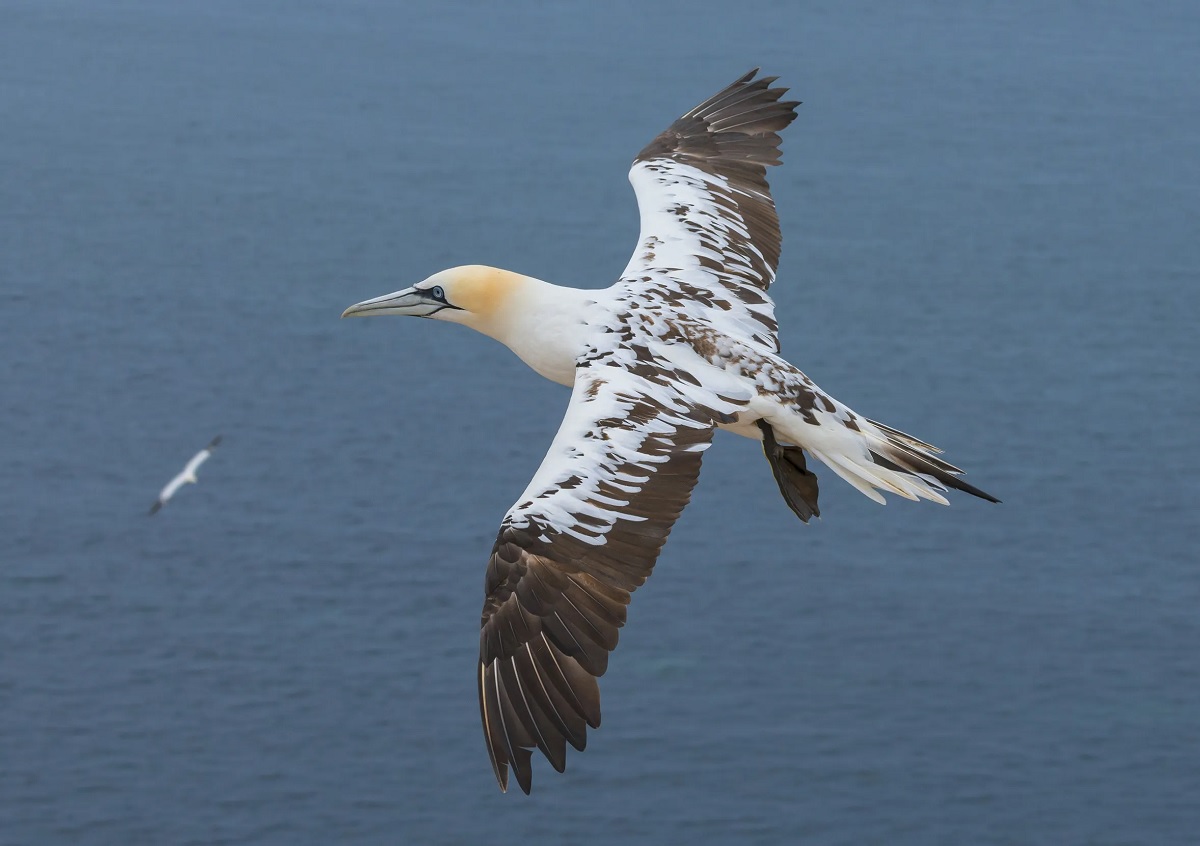
The plumage of a northern gannet is one of its most remarkable features. Adults display predominantly snow-white feathers that give them a radiant appearance against the blue ocean backdrop. Black wingtips provide a sharp contrast, particularly visible during flight, while a subtle yellowish hue often appears on the head and neck. This coloration is more than aesthetic; it aids in species recognition among large colonies and may even serve a role in thermoregulation.
Juvenile gannets, in contrast, show mottled brown and white feathers, which gradually transition to the striking adult colors over several years. This gradual color change helps protect young birds from predators while they gain flight experience. The northern gannet’s feathers are also waterproof, allowing it to plunge into cold ocean waters without losing body heat, a crucial adaptation for a seabird that spends much of its life at sea.
Beak and Facial Features
The northern gannet’s beak is long, pointed, and slightly hooked at the tip, perfectly designed for catching and holding slippery fish. Its pale blue or gray coloration complements the facial skin, which is usually bare around the eyes and has a soft bluish tint. The eyes themselves are surrounded by striking black lines, giving the bird a sharp, almost fierce appearance.
These adaptations are essential for hunting; the streamlined beak minimizes water resistance during high-speed dives, while keen eyesight allows the bird to spot fish from great heights. The facial skin also plays a role in communication within dense colonies, as subtle color variations and expressions help convey social cues, particularly during mating or territorial disputes. Together, the beak and facial features make the northern gannet a formidable hunter and a visually captivating bird.
Wings and Flight Structure
Northern gannets have long, narrow wings that are perfectly built for gliding over ocean waters and executing dramatic plunge dives. The wingspan can reach up to 6.5 feet, allowing the bird to cover vast distances while conserving energy. The black tips of the wings not only enhance visual contrast but also strengthen the feather edges, reducing wear during constant flight.
Their streamlined wing shape supports both high-speed diving and long-distance travel, enabling the northern gannet to forage far from nesting colonies. During flight, their elegant gliding patterns, combined with sudden, precise dives, create a spectacle of power and grace. These wing adaptations are essential for survival, as northern gannets rely on both endurance and agility to locate schools of fish in open waters, often traveling hundreds of miles during foraging trips.
Body Structure and Size
The body of the northern gannet is robust yet streamlined, designed for both flight and diving. Adults typically weigh between 2.5 to 3.5 kilograms, with a length of about 85 to 100 centimeters. Their strong chest muscles power sustained flight and high-speed dives, while their rigid tail feathers help with steering during plunges.
Legs are short and set far back on the body, which aids swimming but gives them a somewhat awkward gait on land. Webbed feet allow efficient propulsion underwater, complementing their hunting strategy. This combination of physical traits illustrates the bird’s dual adaptation to aerial and aquatic environments. Their body structure ensures that they remain highly efficient predators, able to exploit both air and sea for survival.
Head and Neck Features
The northern gannet’s head and neck are equally adapted to its aquatic lifestyle. The neck is long and muscular, allowing the bird to absorb the impact of high-speed dives into water, often from heights exceeding 30 meters. The head is streamlined to reduce splash upon entry, and the skull structure protects the brain from shock.
Coloration of the head, with pale yellow hues blending into white, is most pronounced during breeding season, possibly signaling health and readiness to mate. The combination of head, beak, and neck adaptations exemplifies the northern gannet’s evolutionary refinements for precise hunting and survival in harsh marine environments.
Northern Gannet Habitat and Range
Northern gannets are highly specialized seabirds, relying on coastal cliffs, rocky islands, and open ocean environments for survival. Their habitat and distribution reflect their dependence on abundant fish populations and secure nesting sites. These areas provide protection, access to food, and space for large colonies. Understanding their habitat and range gives insight into the species’ migratory patterns and ecological needs.
Coastal Breeding Sites
Northern gannets primarily choose cliffs and rocky islands along the North Atlantic for breeding. These sites offer safety from land predators and stable nesting grounds for dense colonies. Some colonies can host thousands of birds, creating bustling nesting environments. The elevated locations also provide easy access to nearby waters, essential for foraging trips.
Breeding colonies are often reused year after year, showing the birds’ strong site fidelity. Nests are built close together, which allows for social interactions like pair bonding and cooperative defense. The elevated positions protect chicks from flooding and minimize disturbance, increasing their survival chances.
The location of these colonies is critical for the species’ reproductive success. Islands or remote cliffs reduce the risk of human interference and predation, ensuring that both adults and chicks remain safe during the breeding season.
Open Ocean Foraging Areas
Northern gannets spend much of their life over open ocean waters outside the breeding season. They follow seasonal fish movements, traveling long distances from colonies to find abundant prey like mackerel and herring. Their long, narrow wings allow efficient gliding over vast stretches of ocean while conserving energy.
The birds rely on nutrient-rich waters, often where ocean currents bring prey closer to the surface. This makes hunting more efficient and sustains them during long foraging trips. Northern gannets dive from great heights into the water to catch fish, a hunting method that is highly dependent on open ocean habitats.
Open ocean areas are essential for survival, as access to plentiful food directly affects reproductive success and adult health. Their ability to navigate and exploit these habitats highlights their adaptability and specialized skills as seabirds.
Migratory Range
Northern gannets exhibit seasonal migrations, moving south from northern colonies during winter to escape harsh conditions. These migrations span the North Atlantic, with some birds reaching as far as the Gulf of Mexico or the coasts of Western Europe. Migration patterns are driven by food availability and climatic conditions.
During migration, northern gannets exploit seasonal fish abundance, ensuring energy needs are met even when breeding grounds are less productive. Their long-range travel demonstrates their endurance and reliance on multiple habitats. Migration also allows them to avoid freezing waters in northern regions.
The species’ expansive range reflects adaptability to different marine environments. Understanding their migratory behavior is important for conservation, as it highlights key feeding and wintering areas that must be protected alongside breeding sites.
Colony Distribution
Major northern gannet colonies are concentrated in regions like eastern Canada, Iceland, the United Kingdom, and northern France. Colony size varies, but remote islands often host the largest populations due to minimal human disturbance and predator presence. These communal nesting sites are essential for social behavior, mating, and chick-rearing.
Colony distribution depends on geography, availability of suitable nesting sites, and proximity to productive fishing grounds. Birds rely on isolated cliffs and islands that balance protection and food access.
Protecting these colonies is critical for population stability. Conservation efforts focus on minimizing human interference and preserving key breeding islands, ensuring that the northern gannet can continue thriving in its natural habitats.
Northern Gannet Feeding Habits
Northern gannets are exceptional hunters, relying on specialized feeding strategies to thrive in marine environments. Their feeding habits are closely tied to the availability of fish and the ability to dive from great heights with precision. Understanding their diet, hunting methods, and social feeding behavior offers insight into their remarkable adaptability as seabirds. From aerial dives to cooperative hunting, northern gannets showcase skills that ensure survival in both breeding and non-breeding seasons.
Diving and Hunting Techniques
Northern gannets are renowned for their dramatic plunge-diving behavior, which is central to their feeding habits. They spot schools of fish from the air and dive from heights of up to 30 meters, hitting the water at speeds over 100 kilometers per hour. Their streamlined bodies and pointed beaks reduce resistance, allowing them to penetrate the water efficiently. Upon entering, they use powerful wings and webbed feet to chase fish underwater if needed.
These dives are carefully calculated, as northern gannets must judge both the depth and density of fish schools. Their eyes, positioned forward on their head, provide exceptional binocular vision to track prey movement from above. Often, they dive individually, but in areas with dense fish populations, multiple birds may plunge simultaneously, increasing feeding efficiency. These hunting techniques illustrate their evolution as highly skilled predators in marine ecosystems.
Diet and Prey Preferences
The diet of northern gannets primarily consists of small to medium-sized fish, with species like mackerel, herring, and sand eels forming the bulk of their intake. They occasionally consume squid or other small marine animals if fish availability is low. Feeding success is highly dependent on seasonal fish abundance and ocean currents, which concentrate prey near the water surface.
Northern gannets are opportunistic hunters and can adapt their prey choices based on availability. During breeding season, adults focus on high-protein fish to feed chicks, ensuring rapid growth and survival. Their ability to locate, capture, and deliver these fish reflects both skill and stamina. Diet diversity also enhances resilience, allowing northern gannets to survive periods when certain fish species are scarce. This flexibility highlights their efficiency as marine predators.
Cooperative and Social Feeding
Northern gannets sometimes engage in social feeding, especially when schools of fish are abundant near the surface. Groups of birds may dive simultaneously, creating a feeding frenzy that drives fish into tighter clusters, making them easier to catch. This cooperative behavior increases the success rate for all individuals involved.
Social feeding is not limited to hunting; it also plays a role in colony life. Young gannets observe and learn from adults, gradually improving their own hunting skills. Adults may also coordinate feeding trips to nearby waters, balancing energy expenditure and food intake. These interactions demonstrate the species’ reliance on both instinct and learned behavior, showing how social structures enhance survival.
Seasonal and Environmental Influences
Northern gannet feeding habits vary with season and environmental conditions. During the breeding season, they concentrate on nearby waters to reduce travel time and provide frequent meals for chicks. Outside of breeding, they may travel hundreds of kilometers to exploit seasonal fish migrations. Ocean currents, water temperature, and prey density all influence hunting patterns.
Their adaptability to environmental changes ensures survival despite fluctuating food availability. Northern gannets adjust their diving frequency, foraging locations, and prey selection to match conditions. This flexibility, combined with exceptional diving skills, allows them to thrive across a wide range of marine habitats, making them one of the most efficient seabird hunters in the North Atlantic.
Northern Gannet Reproduction and Life Cycle
Northern gannets have a fascinating reproductive process that reflects their adaptation to life on cliffs and remote islands. Their life cycle is closely tied to seasonal changes, food availability, and social behavior within colonies. From courtship rituals to chick-rearing, every stage demonstrates remarkable strategies for survival and species continuity. Understanding their reproduction and life cycle reveals the intricate balance between biology, behavior, and environmental factors that sustain these seabirds.
Courtship and Mating
Courtship in northern gannets is highly ritualized and visually striking. Pairs perform synchronized displays, including mutual bill fencing, neck stretching, and wing flapping, to strengthen pair bonds. These behaviors are essential for maintaining fidelity, as northern gannets often return to the same mate and nesting site each year. Courtship usually begins shortly after adults return to breeding colonies in spring, with birds selecting elevated nests on cliffs or rocky islands.
The displays also serve a practical purpose by signaling readiness to mate and establishing territory within dense colonies. Vocalizations accompany visual gestures, allowing pairs to communicate and coordinate effectively. These rituals can last several days before copulation occurs, demonstrating the species’ investment in successful reproduction. Courtship ensures that both parents are committed to raising chicks, a necessity given the high demands of feeding and protecting young in harsh marine environments.
Nesting and Egg Laying
Northern gannets build nests using seaweed, grass, and soil, creating shallow cup-shaped structures on cliff edges. Nests are typically positioned close to one another, forming large, crowded colonies that can contain thousands of birds. Females usually lay a single egg, which is pale blue or greenish with darker speckles. Both parents share incubation duties, keeping the egg warm for about 42 to 46 days.
The shared responsibility ensures that one parent can forage while the other protects the egg from predators and harsh weather. Nest placement is crucial, as elevated sites reduce flooding risk and provide visibility over the surrounding colony. Parents display high vigilance during this period, using vocalizations and aggressive posturing to defend their nests from intruders. The nesting phase sets the stage for the next stage of the life cycle: chick development.
Chick Development
Northern gannet chicks are altricial, meaning they hatch helpless and require constant care. They are initially covered with downy feathers and rely entirely on their parents for warmth and food. Adults feed chicks by regurgitating partially digested fish, providing necessary nutrients for rapid growth. Chicks develop quickly, gaining weight and strength over several weeks while learning essential survival behaviors through observation.
During this stage, parents alternate foraging trips and nest attendance, ensuring a continuous food supply. Chicks also interact with neighboring chicks, which fosters social skills and prepares them for colony life. Feather development and wing growth occur gradually, enabling chicks to eventually leave the nest and practice short flights before fully fledging. Successful chick-rearing depends on food availability, weather conditions, and parental coordination.
Fledging and Maturity
After approximately 12 to 13 weeks, northern gannet chicks fledge, leaving the nest and beginning independent life. Initially, young birds stay near the colony, practicing flight and hunting skills under guidance or observation. Juveniles display mottled brown plumage, which gradually transitions to the adult white and black pattern over several years. This delayed maturation provides camouflage during vulnerable early life stages.
Sexual maturity is typically reached at 4 to 5 years of age, at which point birds return to breeding colonies to establish territories and begin courtship. Lifespan can exceed 20 years in the wild, allowing multiple breeding opportunities. The life cycle of the northern gannet demonstrates the species’ adaptation to marine life, balancing growth, survival, and reproduction in challenging environments.
Northern Gannet Behavior and Social Life
Northern gannets are highly social seabirds whose behavior is closely linked to colony life and survival at sea. Their interactions, both during feeding and breeding, reveal complex social structures and communication strategies. Observing their behavior provides insight into how these birds coordinate, protect territories, and maintain relationships within large, densely populated colonies. Their social life is a key factor in their success as a species.
Colony Dynamics and Social Structure
Northern gannets are colonial birds, often nesting in dense groups on cliffs and remote islands. Colonies can host thousands of individuals, making social interactions inevitable. Despite the crowded conditions, birds maintain individual territories within the colony, using vocalizations, bill fencing, and body postures to assert dominance and reduce conflict. These behaviors help prevent physical altercations while ensuring access to nests and mates.
Social bonds are particularly strong between mated pairs, who return to the same partner year after year. Beyond mating, colony life facilitates cooperative vigilance, where birds watch for predators or intruders, alerting the group with distinct calls. Juvenile birds learn behaviors by observing adults, including foraging techniques and social cues, which enhances their survival skills. The colony functions as both a protective and educational environment, highlighting the importance of social structure in northern gannet life.
Communication and Vocalizations
Northern gannets rely heavily on vocalizations for communication within colonies. Their calls range from harsh squawks to softer murmurs, each serving a specific purpose. Vocal signals help identify mates, coordinate parenting duties, and establish territory boundaries. The loud calls also serve as warnings to potential intruders, maintaining order in densely populated nesting areas.
Visual cues accompany vocalizations, including bill fencing, neck stretching, and wing flapping. These displays convey intentions such as aggression, submission, or courtship readiness. Communication is essential during the breeding season, when the risk of nest intrusion or predation is high. Young gannets also use calls to solicit feeding from parents, reinforcing the connection between vocal behavior and survival. Effective communication ensures that individuals coexist successfully within large, noisy colonies while maintaining reproductive success and social cohesion.
Foraging and Cooperative Behavior
While northern gannets often hunt individually, they sometimes feed in groups when schools of fish are abundant near the surface. Group foraging creates a cooperative effect, driving fish into tighter clusters and increasing feeding efficiency for all birds involved. This social feeding demonstrates adaptability and highlights the role of cooperative behavior in survival.
Young birds benefit from observing adults during foraging, learning techniques such as spotting fish from the air and executing high-speed dives. Even outside the breeding season, gannets maintain loose social structures while feeding at sea, often congregating in areas rich with prey. Social behavior extends beyond nesting, showing how collaboration and observation shape their survival strategies in open ocean environments.
Play and Interaction
Northern gannets also display playful behavior, particularly juveniles within colonies. Activities such as mock dives, chasing, and gentle bill fencing help develop motor skills, coordination, and social bonds. Play strengthens relationships between colony members and prepares younger birds for the demands of hunting and mating later in life.
Adults occasionally engage in playful interactions as well, often during courtship or post-feeding gatherings. These behaviors reinforce pair bonds and maintain cohesion within dense colonies. Social interaction, whether for play, communication, or cooperation, is vital for the overall fitness and resilience of northern gannet populations.
FAQs
What Does A Northern Gannet Look Like?
The northern gannet is a large seabird with striking white plumage and black wingtips. Its streamlined body and long, pointed beak make it perfect for hunting fish. The head often has a subtle yellow tint, while the eyes are surrounded by dark lines that give it a sharp appearance. Juveniles are mottled brown and white, gradually changing to adult coloring over several years.
You will notice their long wings, which allow for efficient gliding over oceans, and webbed feet, which help propel them underwater. Their physical appearance is perfectly adapted to both flight and diving.
Where Do Northern Gannets Live?
Northern gannets primarily inhabit the North Atlantic coasts, nesting on cliffs and rocky islands. Major colonies exist in places like eastern Canada, the United Kingdom, Iceland, and northern France. They rely on remote, elevated sites to avoid predators and human disturbance while providing easy access to the sea.
Outside the breeding season, northern gannets spend most of their time over open ocean waters, following schools of fish. They may migrate south during winter, traveling hundreds of kilometers to find food and more favorable conditions.
What Do Northern Gannets Eat?
Northern gannets feed mainly on small to medium-sized fish, including mackerel, herring, and sand eels. Occasionally, they consume squid or other small marine animals when fish are less abundant. They hunt by spotting prey from the air and performing high-speed plunge dives, often reaching speeds over 100 kilometers per hour.
You will notice that adults feed chicks by regurgitating partially digested fish. Their feeding habits are highly adapted to ocean life, and they often adjust their prey choice based on seasonal availability, ensuring survival even when conditions change.
How Do Northern Gannets Hunt For Food?
Northern gannets are expert hunters, using plunge-diving as their main technique. They spot fish from heights of 30 meters or more and dive into the water with precision. Their streamlined bodies and pointed beaks reduce water resistance, allowing them to catch fish efficiently.
Sometimes, multiple gannets dive together, especially when fish are densely packed near the surface. They can also chase prey underwater using webbed feet for propulsion. These skills make them one of the most efficient seabird predators in the North Atlantic.
How Do Northern Gannets Reproduce?
Northern gannets form strong pair bonds and often return to the same mate each year. Courtship includes synchronized displays like bill fencing, neck stretching, and wing flapping. Females typically lay one pale blue or greenish egg in a nest made of grass, seaweed, and soil.
Both parents share incubation duties for about 42 to 46 days. After hatching, chicks are altricial, relying entirely on parents for warmth and food. They fledge after roughly 12 to 13 weeks, gradually learning to hunt and survive independently.
Are Northern Gannets Social Birds?
Yes, northern gannets are highly social and form large, densely populated colonies. Within these colonies, individuals maintain small territories, using vocalizations and visual displays to communicate and reduce conflicts. Pairs are loyal, and juveniles learn essential skills by observing adults.
They also show cooperative feeding behavior at times, diving together to herd fish into tighter groups. Social interaction plays a major role in survival, communication, and reproduction, making colony life crucial for their overall fitness and success.
How Long Do Northern Gannets Live?
Northern gannets have a lifespan that can exceed 20 years in the wild. They reach sexual maturity around 4 to 5 years of age, at which point they return to breeding colonies to establish territories and begin reproducing.
Their longevity allows multiple breeding seasons, increasing the chance of raising successful offspring. Survival depends on factors like food availability, weather conditions, and avoidance of predators. Adult northern gannets continue to refine their hunting and social skills throughout their lives, ensuring sustained reproductive success.
Final Thoughts
The northern gannet is a remarkable seabird that captures attention with its striking appearance and incredible diving skills. Observing its elegant flight and precise plunges into the ocean highlights the perfect blend of strength and agility that nature has equipped it with. Its social behavior in large colonies also shows the importance of community and cooperation for survival.
Conservation efforts have become increasingly important for the northern gannet, as threats from pollution, overfishing, and habitat disruption continue to rise. Protecting marine ecosystems ensures that these birds have access to sufficient food sources and safe breeding grounds. Awareness about the northern gannet’s role in the marine environment can inspire stronger actions to preserve its populations and habitats for future generations.
Studying the northern gannet provides insights into the delicate balance of oceanic life and the adaptability of seabirds. Its fascinating behaviors, combined with its ecological significance, make it a species worth celebrating and protecting. Observing this bird reminds us of the beauty and complexity of life along our coasts.