Great Horned Owl Predators: Who Threatens This Mighty Night Hunter
The great horned owl is a formidable predator in its own right, often sitting at the top of the food chain in forests, grasslands, and suburban areas. Despite its strength, size, and impressive hunting skills, it is not entirely without threats. Understanding the natural risks and threats these owls face offers insight into their survival strategies and ecological balance.
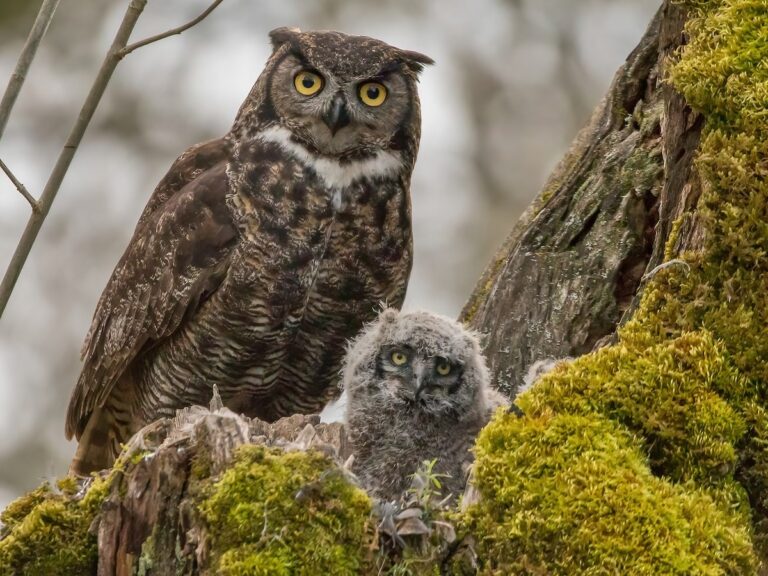
These owls are known for hunting a wide range of prey, from small mammals to other birds, yet even they must navigate dangers from larger predators and environmental challenges. Young owlets are particularly vulnerable, relying heavily on parental protection to survive the first critical weeks of life.
Natural predators and human-related threats both play a role in shaping their behavior, nesting habits, and hunting patterns. Observing these interactions provides a deeper understanding of how great horned owls maintain their place in the ecosystem while responding to the risks posed by other animals.
By studying great horned owl predators, you can appreciate the balance of power in nature and recognize the resilience and adaptability that these remarkable birds exhibit in the wild.
Natural Predators Of Great Horned Owls
Even though great horned owls are powerful and skilled hunters, they are not completely free from natural predators. Both juvenile and adult owls face threats from larger predators, while eggs and chicks are especially vulnerable. Understanding these natural predators provides insight into the survival challenges that influence their behavior, nesting choices, and hunting strategies.
Larger Birds Of Prey
Adult great horned owls can occasionally fall prey to larger birds of prey, such as eagles and other owl species. Golden eagles and larger raptors may attack if territories overlap, especially when hunting competition arises. These encounters are rare but highlight the competitive nature of avian predators.
Interactions with other birds of prey are often territorial as well as predatory. A golden eagle might view an adult owl as a threat to its hunting grounds or potential prey in areas where food is limited. Observing these dynamics emphasizes that even apex predators must navigate risks from other top-level species.
Juvenile owls are more susceptible during their early weeks outside the nest. Large raptors can seize them before they learn to fly efficiently. Recognizing the role of other birds in regulating owl populations provides perspective on the delicate balance of predator-prey interactions in ecosystems.
Mammalian Predators
Mammalian predators also pose significant threats to great horned owls, particularly eggs and young chicks. Raccoons, foxes, and weasels are known to raid nests, taking advantage of unprotected eggs or fledglings. These predators rely on stealth and opportunism, often striking at night when the owls are active or away from the nest.
Even adult owls can be vulnerable if injured, sick, or caught off guard. Coyotes or larger mammals may attack on rare occasions, though healthy adult owls usually defend themselves successfully using sharp talons and strong beaks. Nest site selection often reflects the risk of mammalian predation, with owls choosing elevated or concealed locations to reduce exposure.
Understanding these mammalian threats helps explain owl behavior, including aggressive defense, silent flight, and careful selection of nesting sites. Their survival strategies reflect an ongoing balance between predation risk and reproductive success.
Human-Related Threats
While not strictly natural, humans also indirectly act as predators or threats to great horned owls. Habitat destruction, vehicle collisions, and pesticide use all create hazards for both adult and young owls. These human-related threats influence owl behavior, often forcing them to adapt nesting and hunting strategies.
Owls nesting near urban or suburban areas may experience disturbances from pets, loud noises, or accidental interference. Adult owls often respond with aggressive defensive calls or relocation to safer areas, highlighting the impact of environmental pressures. Recognizing human influence on owl predation risks emphasizes the importance of conservation and habitat protection.
Vulnerability Of Eggs And Chicks
The most vulnerable stage for great horned owls is during egg-laying and chick development. Eggs are immobile and defenseless, making nests prime targets for both avian and mammalian predators. Chicks, though attended by parents, are unable to escape, relying on camouflage, nest concealment, and parental defense for protection.
Parental vigilance is crucial, with adults alternating hunting and guarding duties. The risk of predation shapes the timing of breeding, nest location, and even the behavior of both parents and chicks. Understanding this vulnerability provides context for the aggressive protective instincts observed in adult owls.
Natural predators of great horned owls demonstrate that even top predators face challenges in survival. From larger birds of prey to opportunistic mammals, these threats shape owl behavior, nesting, and hunting patterns, highlighting the complexity and resilience of these remarkable birds in the wild.
Vulnerable Life Stages And Predator Risks
Great horned owls face varying levels of predator risk throughout their lives. While adult owls are skilled hunters and often apex predators, eggs and juveniles are highly vulnerable. Understanding these life stages and the associated risks helps explain many behaviors, including nesting choices, parental care, and defensive strategies that ensure survival in the wild.
Egg Stage Vulnerability
The egg stage is the most critical and defenseless period in a great horned owl’s life. Eggs are stationary and rely entirely on nest concealment and parental protection for survival. Predators such as raccoons, snakes, and other mammals often target eggs, especially in nests that are easily accessible or poorly hidden.
Adult owls compensate for this vulnerability by selecting elevated or concealed nesting sites, such as tree cavities, cliff ledges, or abandoned nests of other birds. Females usually incubate the eggs, remaining close to protect them from predators, while males provide food and monitor the surrounding area. Even with vigilance, some eggs may fall prey to opportunistic animals, highlighting the importance of nest location and parental attention.
Nestling And Fledgling Stage
Once the eggs hatch, the young owlets enter the nestling stage, during which they are still flightless and dependent on their parents for warmth, food, and protection. At this stage, they are at risk from both avian predators like larger owls or hawks and terrestrial predators such as foxes or raccoons.
Parents maintain constant vigilance, often vocalizing warning calls or physically defending the nest. Nestlings use camouflage and remain still to avoid detection. As they grow, fledglings begin to explore their surroundings but remain vulnerable until they develop strong flight skills and survival instincts. This stage requires careful observation and support from both parents to maximize survival chances.
Juvenile Stage And Independence
Juvenile great horned owls face risks during their transition to independence. Newly fledged owls must learn hunting skills, navigation, and predator awareness while remaining cautious of larger raptors and mammals. Juveniles may venture into unfamiliar areas, increasing their exposure to hazards.
During this stage, vocalizations serve as warnings or coordination signals with parents. Learning to respond to threats while practicing hunting is essential for survival. Many juveniles do not survive their first year due to predation, environmental challenges, or inexperience. This vulnerability drives behaviors like cautious exploration and reliance on parental guidance.
Adult Stage Predator Risks
Adult great horned owls are highly skilled predators with few natural enemies, but they are not completely immune. Larger raptors like eagles or territorial conflicts with other owls can occasionally pose a threat. Injured or sick adults are more susceptible to predation.
Even in the adult stage, vigilance and defensive behaviors remain crucial. Aggressive postures, hissing, bill snaps, and territorial calls help deter potential predators. Nesting adults, in particular, maintain heightened awareness to protect their young from opportunistic attacks.
The various life stages of great horned owls illustrate a clear progression of vulnerability, with eggs and juveniles at greatest risk. Predation pressures shape behavior, nesting, and parental care, ensuring that survival strategies are adapted to each stage of life.
Defensive Adaptations Against Predators
Great horned owls have evolved a variety of defensive adaptations to protect themselves, their nests, and their young from predators. These adaptations combine physical traits, behavioral strategies, and environmental awareness. Understanding how these owls defend themselves offers insight into their resilience and ability to survive despite facing numerous natural threats throughout their life stages.
Physical Adaptations For Defense
Great horned owls possess powerful talons, sharp beaks, and strong wings that make them formidable against predators. Their talons can deliver lethal strikes to smaller threats, while their beaks are capable of inflicting serious injury during close encounters. These physical traits allow adult owls to defend themselves effectively against mammals or competing raptors.
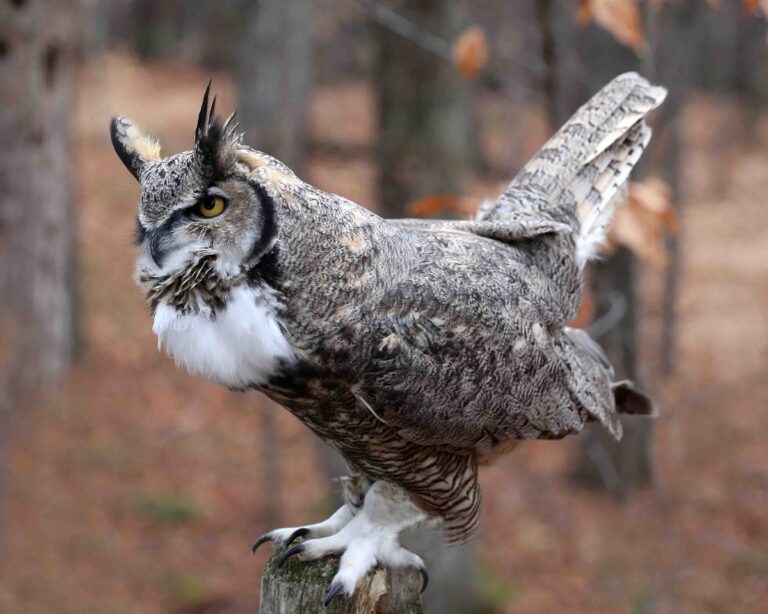
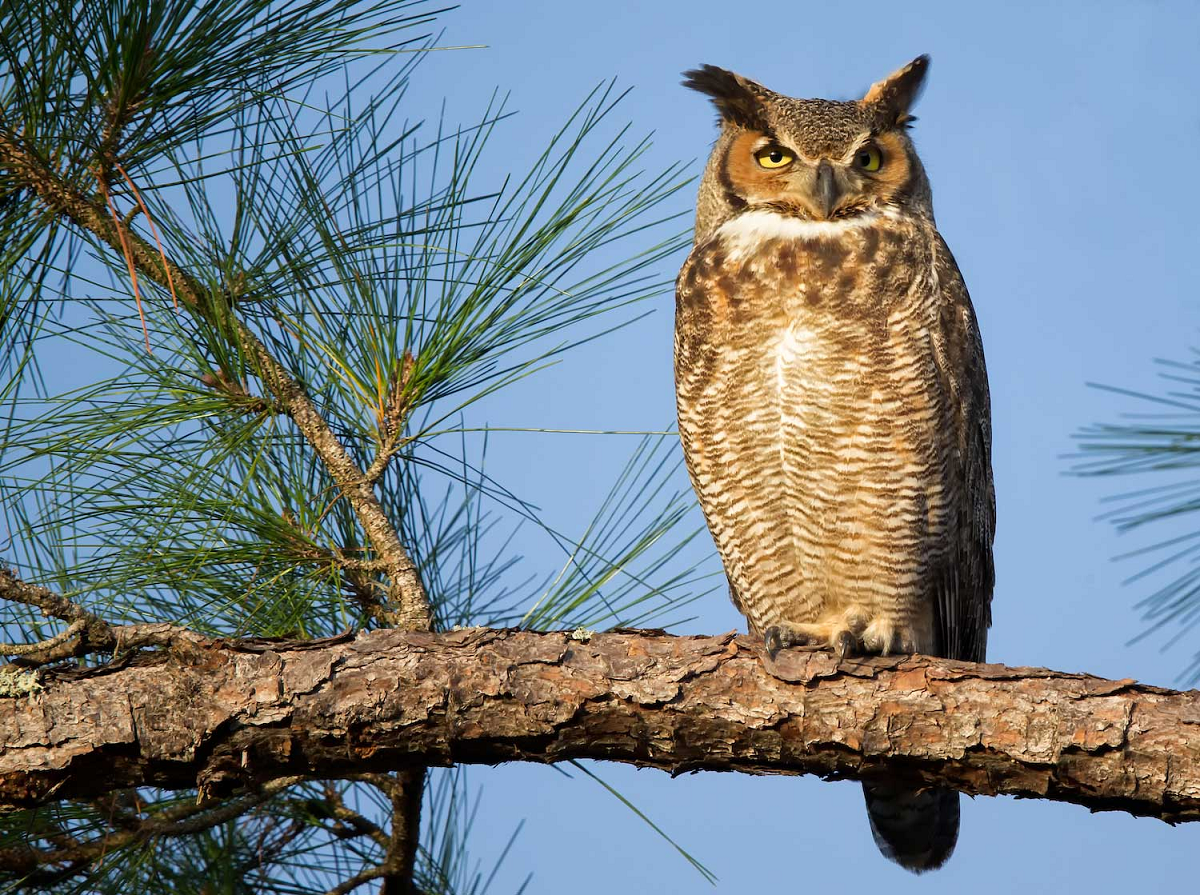
Their dense, camouflaged plumage also plays a critical role in defense. The mottled brown and gray feathers allow them to blend seamlessly into tree bark or foliage, reducing the likelihood of detection by predators. Even when stationary, an owl’s silhouette can be difficult to distinguish from its surroundings, giving it a natural advantage.
These physical defenses are complemented by acute sensory abilities. Exceptional night vision and asymmetrical ears enable them to detect approaching threats early, allowing timely defensive action, whether that means flying away, hiding, or confronting the predator directly.
Nesting And Habitat Strategies
The choice of nesting site is a key defensive adaptation against predators. Great horned owls often select elevated or concealed locations, such as tree cavities, cliff ledges, or abandoned nests of other birds, minimizing exposure to ground-based or aerial predators. Ground-nesting is rare and usually occurs in areas with dense cover.
By nesting in locations that are difficult to access, owls reduce the likelihood of predation on eggs and young. The nest’s positioning also allows adults to monitor surroundings effectively, giving them time to respond to potential threats. Parents often choose sites near abundant prey to reduce hunting time, balancing feeding needs with protection.
Nesting strategy is reinforced by behavioral adaptations. Adults remain vigilant, frequently checking the area, and may engage in defensive displays if a predator approaches, deterring attacks before they escalate.
Vocal And Threat Displays
Great horned owls use vocalizations and physical displays to defend against threats. Hoots, screeches, hisses, and bill snaps are not only communication tools but also deterrents to predators. A loud, aggressive vocal display can startle or warn intruders, signaling that the owl is prepared to defend itself.
Physical posturing enhances the effect. By spreading wings, raising feathers, and staring directly at a threat, an owl appears larger and more intimidating. These threat displays often prevent direct confrontations by convincing predators that the risk of attack outweighs potential gain.
Even young owlets display instinctive hissing or wing flapping when approached, demonstrating that defensive behavior is partly innate. Vocal and visual cues work together to enhance survival chances at all life stages.
Behavioral Flexibility And Escape Tactics
Behavioral flexibility is another key defensive adaptation. Great horned owls can choose to confront, flee, or hide depending on the type of predator and situational context. Silent flight allows them to escape unnoticed, while sudden attacks can neutralize smaller threats.
Adults are also capable of relocating nests if repeated predation occurs, demonstrating adaptability in response to environmental pressures. Juveniles learn to recognize threats early, gradually refining their flight, hunting, and hiding skills to reduce vulnerability.
This combination of physical, vocal, and behavioral strategies ensures that great horned owls are well-equipped to survive in habitats filled with predators, maintaining their role as apex nocturnal hunters while protecting themselves and their offspring.
Coordination Between Adults And Offspring
Parental coordination is crucial in defending vulnerable young. Adults often take turns guarding the nest while the other hunts, ensuring continuous protection. Parents communicate through vocalizations to coordinate responses to potential threats, increasing the effectiveness of their defense.
Young owlets learn from observing adult behavior, adopting defensive postures, hissing, and using camouflage as they grow. This transmission of survival skills enhances the overall fitness of the next generation, allowing them to respond appropriately to predators when they leave the nest.
By combining anatomy, behavior, and social coordination, great horned owls maintain a robust system of defenses that minimize risk and increase survival rates in the wild.
Predation Patterns By Habitat
Great horned owls experience different predation pressures depending on their habitat. Forests, grasslands, wetlands, and suburban areas each present unique threats that influence nesting choices, hunting behavior, and defensive strategies. Understanding predation patterns by habitat provides insight into how these owls adapt to environmental challenges and maintain survival across diverse ecosystems.
Forest Habitats
In dense forests, great horned owls face predation mainly from larger birds of prey and climbing mammals. Eagles and larger owls occasionally compete for territory or prey, while raccoons and snakes can target nests and eggs. The dense canopy provides cover, allowing adults and nestlings to remain concealed, but it also limits visibility, making early threat detection crucial.
Forest owls rely heavily on camouflage and silent flight to avoid predators. Nests are usually placed in high tree cavities or dense foliage to reduce accessibility for climbing mammals. Parental vigilance is constant, with adults alternating hunting and guarding duties. Forest habitats emphasize stealth and early warning as primary survival strategies against natural predators.
The complexity of forest ecosystems also influences hunting patterns, with owls needing to balance feeding demands with the risk of encountering predators. Observing forest-dwelling owls highlights the importance of strategic nesting and behavioral flexibility in minimizing predation risk.
Grasslands And Open Areas
In open grasslands, predation threats shift. Adult owls are more exposed to large raptors like eagles and hawks, while nests on low trees, rock ledges, or artificial structures are susceptible to mammals such as foxes and coyotes. The lack of dense cover makes camouflage less effective, increasing reliance on vigilance and rapid escape.
Owls in these habitats often select elevated nesting sites to reduce access to ground predators. They also rely on silent, low-altitude flight to approach prey while staying alert for potential threats. The open environment allows greater visibility, so adult owls can detect predators from a distance, giving them time to react defensively.
Grassland predation patterns show a trade-off between hunting efficiency and vulnerability. Nest placement, flight strategy, and alertness are critical adaptations that help maintain survival in more exposed habitats compared to forests.
Wetlands And Riparian Zones
Wetlands and riparian habitats introduce different predation pressures. Adult owls may encounter occasional competition from other raptors, while eggs and nestlings are vulnerable to semi-aquatic predators like mink or raccoons. Dense vegetation near water provides both concealment and obstacles for predator navigation.
Nesting sites are often chosen on trees or elevated platforms to avoid flooding and predation. Vocal alerts and threat displays are frequently employed to ward off predators approaching the nest. Parents also adjust hunting schedules to maximize protection during critical times, such as dawn or dusk, when semi-aquatic predators are most active.
These habitats highlight how environmental conditions shape owl defensive behaviors. The combination of vegetation, water access, and predator presence requires flexibility in nest location, vigilance, and communication strategies.
Urban And Suburban Areas
In suburban and urban environments, predation patterns differ due to human presence. Domestic pets like cats and dogs, as well as occasional human disturbances, pose the primary risks. While natural predators may be less common, urban owls must navigate vehicles, noise, and reduced prey availability.
Nesting sites are often on tall structures, such as utility poles, abandoned buildings, or large trees, providing some protection from ground-based threats. Vocalizations may be adjusted to overcome ambient noise, ensuring communication between mates and offspring. Adults also exhibit increased vigilance, responding aggressively to potential threats in areas with frequent human activity.
Urban predation patterns illustrate the adaptability of great horned owls. Their ability to modify nesting and hunting behaviors in response to new threats demonstrates resilience and underscores the importance of flexibility in survival strategies across different habitats.
Human-Related Threats Mistaken For Predators
Great horned owls often perceive humans and human-related activities as threats, even though they are not natural predators. These perceived threats can influence owl behavior, nesting patterns, and hunting strategies. Understanding human-related dangers mistaken for predators helps explain how owls adapt to urban, suburban, and rural environments while maintaining their safety and survival instincts.
Urban Disturbances And Noise
In urban areas, loud noises from traffic, construction, or industrial activity can startle great horned owls, prompting defensive or evasive behaviors. Sudden, unfamiliar sounds may trigger alarm calls similar to those used when responding to natural predators. This response illustrates the owl’s reliance on acute auditory senses to detect danger.
Noise pollution can also interfere with vocal communication between mates or between parents and offspring. To compensate, owls may increase the volume or frequency of hoots, trills, and warning calls. While these adaptations help maintain communication, constant exposure to human noise may elevate stress levels and reduce hunting efficiency.
Observing owl behavior in noisy environments reveals how they interpret human activity as potential predation. Adjustments in flight patterns, perching choices, and vocalizations are all strategies to cope with these perceived threats.
Domestic Pets And Human Interaction
Domestic animals such as dogs and cats are often mistaken for natural predators by great horned owls. Pets approaching nests or hunting areas can trigger alarm calls, hissing, and aggressive postures, especially if young owlets are present. Even well-intentioned human activity, like walking near nesting trees, may be interpreted as predatory behavior.
Adult owls respond by increasing vigilance, hiding, or using vocal warnings to deter perceived threats. Parents may adjust hunting schedules to minimize exposure to pets or relocate to safer perches if disturbances persist. These behaviors demonstrate the owl’s flexibility in adapting to environments dominated by humans and their animals.
Misinterpreting domestic threats highlights the importance of understanding how owls perceive risk. Protective behaviors are often similar to responses to natural predators, showing how instinct drives survival strategies regardless of the actual source of danger.
Habitat Alteration And Perceived Threats
Human-driven habitat changes, including deforestation, urban development, and agriculture, can create stress and increase vulnerability for great horned owls. The loss of natural cover forces owls to rely on exposed perches, which increases their sensitivity to nearby humans or pets. These changes can mimic the presence of predators, prompting defensive adaptations.
Owls often respond by choosing higher or more concealed nesting sites, altering hunting patterns, or shifting activity to less disturbed areas. Even simple activities, such as tree trimming or recreational use of nearby land, can trigger defensive behaviors that resemble responses to natural threats.
This interplay between human activity and owl behavior illustrates how perception, rather than actual predation risk, shapes survival strategies. It also underscores the importance of conserving quiet, undisturbed habitats for owls in human-dominated landscapes.
Vehicles And Light Pollution
Vehicles, particularly on roads near nesting or hunting areas, are another human-related threat mistaken for predators. Rapid movement, engine noise, and headlights can trigger alarm calls, evasive flight, or temporary relocation. Owls may avoid otherwise ideal hunting grounds due to repeated disturbances, which can affect feeding success.
Light pollution at night interferes with hunting efficiency and can be perceived as environmental danger. Great horned owls rely heavily on low-light vision, and artificial lighting may create stress or force them to alter activity schedules. Their response mimics predator avoidance behaviors, including increased vigilance and cautious flight patterns.
Awareness of these factors emphasizes that human infrastructure and activity have significant behavioral impacts on owls. Even in the absence of actual predation, owls treat disturbances as threats, demonstrating how survival instincts are shaped by perception.
Adaptation And Resilience
Despite these challenges, great horned owls show remarkable resilience in human-dominated areas. They modify nesting sites, hunting strategies, and vocal communication to reduce exposure to perceived threats. Vocalizations may become louder or more frequent to maintain communication, while nest selection prioritizes concealment and safety.
Parents teach young to recognize and respond to potential dangers, whether real or perceived, helping the next generation survive in environments shared with humans. Over time, owls can become habituated to non-lethal disturbances, adjusting behavior without compromising survival.
Human-related threats mistaken for predators highlight the adaptability of great horned owls. Observing these behaviors provides valuable insight into how instinct and perception drive survival, even in landscapes dominated by human activity.
FAQs
What Are The Main Predators Of Great Horned Owls?
Great horned owls are apex predators, but they still face threats from larger raptors such as golden eagles, other owl species, and occasionally hawks. Juvenile owls are particularly vulnerable to these avian predators, as they are less experienced and slower to react.
Mammals like raccoons, foxes, and weasels also pose risks, mainly targeting eggs and nestlings. Even adult owls can fall prey to opportunistic attacks if injured or weakened. Understanding these predators helps you recognize how owls adapt their nesting, hunting, and defensive behaviors to survive.
How Do Juvenile Owls Face Higher Predator Risks?
Juvenile great horned owls are at the highest risk during their early weeks outside the nest. Lacking strong flight skills and experience, they are vulnerable to both aerial and terrestrial predators. Large raptors, foxes, and raccoons often exploit this vulnerability to target inexperienced fledglings.
Parents remain highly protective, alternating between hunting and guarding the young. Vocal warnings and defensive posturing help reduce risk, but juveniles must learn quickly to respond to threats. Observing juveniles can help you understand how predator pressures shape survival strategies and behavior in early life stages.
Are Adult Great Horned Owls Safe From Predators?
Adult great horned owls are generally safe due to their size, strength, and hunting abilities, but they are not completely free from risk. Larger raptors, territorial disputes with other owls, or opportunistic mammalian predators may occasionally challenge them.
Even healthy adults rely on vigilance, camouflage, and physical defense to deter threats. Aggressive behaviors, including hissing, wing spreading, and talon use, are crucial in warding off potential predators. This shows that even apex predators must remain alert and prepared in their environment.
How Do Nesting Sites Affect Predator Risk?
Nesting sites play a critical role in minimizing predator risks. Great horned owls often choose elevated, concealed locations such as tree cavities, cliff ledges, or abandoned nests of other birds. These sites protect eggs and chicks from mammals and reduce visibility to aerial predators.
The choice of nest location also allows adults to monitor surrounding areas effectively, giving them time to respond to intruders. Understanding nesting strategies helps you recognize how predation pressure influences owl behavior and survival, particularly during the vulnerable egg and chick stages.
Do Predation Risks Vary By Habitat?
Yes, predation risks for great horned owls vary depending on the habitat. In forests, climbing mammals and larger raptors are primary threats, while open fields expose owls to aerial predators. Wetlands may introduce semi-aquatic predators like mink or raccoons, and urban areas create risks from pets and human-related disturbances.
Habitat influences nest placement, hunting strategies, and vigilance. Observing owls in different environments helps you understand how they adapt behaviorally and physically to minimize risks, demonstrating their flexibility and resilience across ecosystems.
How Do Great Horned Owls Defend Against Predators?
Great horned owls use a combination of physical, vocal, and behavioral adaptations to defend against predators. Powerful talons and sharp beaks provide direct defense, while hissing, wing spreading, and bill snapping intimidate intruders. Camouflage and careful nest placement reduce detection.
Adults remain highly vigilant, often alternating hunting and guarding duties. Vocal warnings alert chicks and mates, while flight and stealth allow escape when needed. These combined strategies ensure survival even in areas with high predator presence.
Can Humans Be Considered Predators By Great Horned Owls?
While humans do not directly prey on great horned owls, they are sometimes perceived as predators. Habitat destruction, domestic pets, vehicles, and noise can trigger defensive behaviors similar to those used against natural predators.
Owls respond with increased vigilance, vocal warnings, and nest relocation if necessary. Understanding human-related threats helps you interpret owl behavior and highlights the adaptability of these birds in coping with both real and perceived dangers in human-dominated environments.
Conclusion
Even a top nocturnal predator like the great horned owl faces threats throughout its life, especially during vulnerable stages such as eggs, nestlings, and juvenile years. Predators, including larger raptors, mammals, and snakes, can pose significant risks, influencing where and how owls choose to nest and hunt. Understanding these dynamics sheds light on the challenges these birds face in the wild.
By observing the interactions between owls and their threats, you gain insight into how these birds adapt for survival. Defensive behaviors like camouflage, silent flight, aggressive posturing, and strategic nest placement all help minimize risk from natural enemies. Human-related dangers, such as habitat loss, vehicle collisions, and exposure to toxins, also act as indirect predators, affecting population stability.
Studying great horned owl predators not only highlights the resilience of these remarkable birds but also emphasizes the importance of protecting their habitats. Awareness of these threats allows conservation efforts to ensure that these iconic hunters continue to thrive in diverse ecosystems.