Razorbill Revealed: Fascinating Facts About Its Behavior, Habitat, and Conservation
The razorbill is a striking seabird known for its distinctive black and white plumage and unique, laterally compressed beak. Belonging to the auk family, it inhabits the cold waters of the North Atlantic, often nesting on cliff edges and rocky coastlines. The bird’s agile diving skills allow it to catch fish and other small marine prey with remarkable efficiency, making it an expert hunter in its aquatic environment.
Studying the razorbill offers a fascinating glimpse into the adaptations that enable seabirds to thrive in harsh coastal habitats. Its social behavior, breeding patterns, and migratory routes also reveal how this species interacts with its environment and copes with seasonal changes. Understanding the life of the razorbill helps you appreciate the diversity of seabirds and the ecological role they play in maintaining healthy marine ecosystems.
Physical Characteristics
The physical characteristics of the razorbill are both striking and highly specialized for life in marine environments. Its unique body shape, coloration, and beak design reflect adaptations that help it survive and thrive along North Atlantic coastlines. Understanding these features gives you insight into how the razorbill navigates its habitat, hunts for food, and protects itself from predators. Examining its anatomy helps reveal the link between form and function in seabirds, highlighting the remarkable evolutionary solutions that support survival in harsh conditions.
Plumage and Coloration
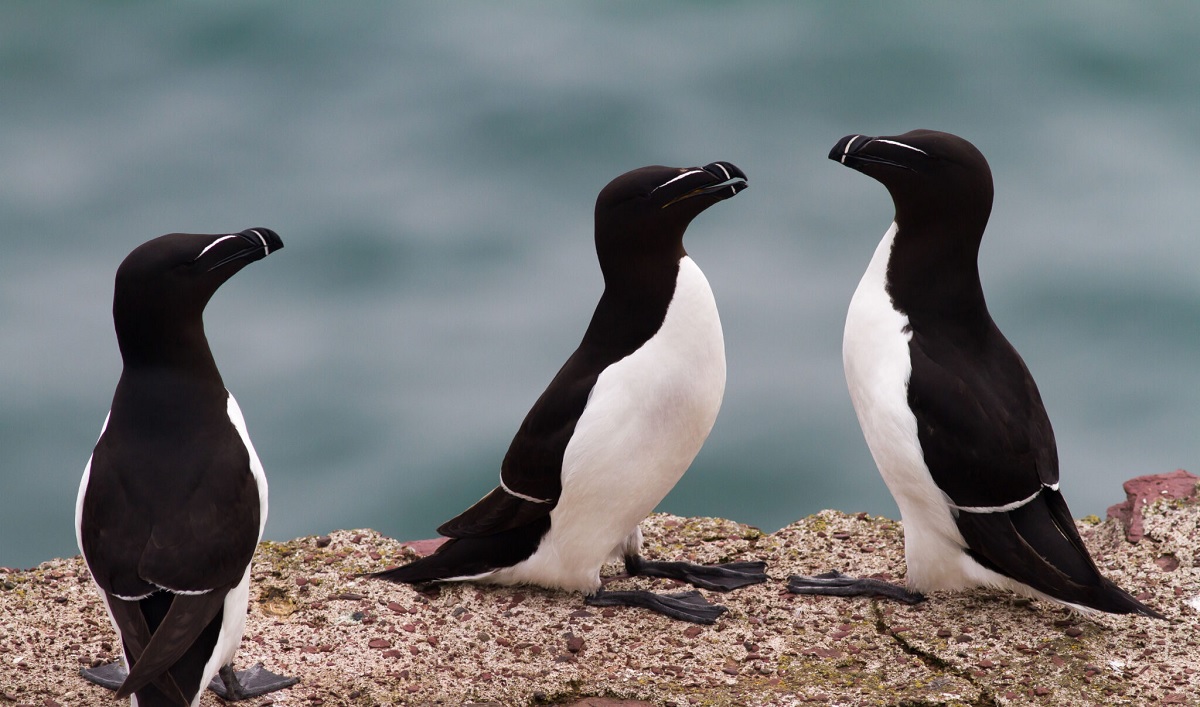
The razorbill displays a distinctive black and white plumage that serves multiple purposes. Its head, back, and wings are deep black, while its underparts and belly are white. This contrasting coloration provides effective camouflage when viewed from different angles: from above, the dark back blends with the ocean depths, while from below, the white belly matches the bright sky, helping it avoid predators during diving and swimming.
The plumage also plays a role in social signaling and mating displays. During the breeding season, adults maintain sleek, glossy feathers that accentuate their sharp appearance, making them more attractive to potential mates. Juvenile razorbills, however, have duller, less distinct coloration, which helps them remain inconspicuous to predators during their early development. You can see that the coloration of the razorbill is not merely aesthetic but a functional adaptation shaped by predation pressures, environmental conditions, and social interactions within colonies.
Beak Structure
One of the most recognizable features of the razorbill is its thick, laterally compressed beak, which ends in a sharp curve. The beak is dark with distinct white lines during the breeding season, adding to the bird’s distinctive appearance. This specialized structure allows the razorbill to catch and hold slippery fish effectively, making it a highly efficient predator. Its beak also supports feeding multiple small fish at once, which is particularly useful when provisioning chicks.
The beak’s design reflects evolutionary adaptations to marine life. Its strength and shape provide leverage to capture and manipulate prey underwater, where agility and precision are essential. Beyond feeding, the beak also plays a role in courtship and social interactions, as razorbills often engage in billing displays and gentle pecking during mate bonding. By studying the beak, you can better understand the relationship between diet, hunting strategies, and reproductive behavior in seabirds.
Body Shape and Adaptations
The razorbill’s body is streamlined for efficient swimming and diving. Its compact, aerodynamic shape reduces resistance in water, allowing it to propel quickly and maneuver easily while hunting. Short, strong wings serve a dual purpose: they enable flight in the air and function as powerful flippers underwater. The legs are positioned far back on the body, enhancing swimming efficiency but making land movement more awkward.
These physical adaptations reflect the bird’s reliance on marine habitats for survival. Its dense bones reduce buoyancy, aiding underwater diving, while waterproof feathers protect against cold water and harsh weather. The razorbill’s body shape exemplifies evolutionary trade-offs: enhanced aquatic performance at the expense of terrestrial mobility. Studying its anatomy gives you insight into the precise balance between flight, swimming, and diving adaptations, highlighting how seabirds evolve to thrive in demanding coastal and oceanic environments.
Habitat and Distribution
The razorbill occupies a unique ecological niche along the North Atlantic, thriving in cold coastal waters and rocky cliff environments. Its habitat choices are closely tied to breeding, feeding, and migratory behaviors, reflecting its specialized adaptations to marine life. Understanding the habitat and distribution of the razorbill helps you appreciate how environmental factors, ocean currents, and seasonal changes influence its survival. Studying these patterns also reveals the bird’s reliance on specific coastal and offshore ecosystems across its range.
Coastal Breeding Colonies
Razorbills typically breed on steep cliffs and rocky islands along the North Atlantic coast. These locations provide safety from many terrestrial predators while offering easy access to nearby feeding areas. Colonies are often densely packed, allowing for social interactions, protection, and collective vigilance against threats. Nests are usually simple scrapes in the rock, occasionally lined with seaweed or feathers, emphasizing the bird’s adaptability to harsh cliffside environments.
Breeding colonies are critical for reproductive success, as the proximity of mates facilitates pair bonding and coordinated chick-rearing. These sites are carefully chosen based on elevation, protection from waves, and accessibility to food sources. The birds often return to the same colonies year after year, showing strong site fidelity. You can see that the razorbill’s choice of breeding habitat demonstrates a balance between safety, social behavior, and resource availability, highlighting how coastal environments shape its life cycle.
Oceanic Feeding Areas
Outside the breeding season, razorbills spend much of their time at sea, feeding in cold, nutrient-rich waters. They rely on areas with abundant fish populations, including capelin, sand eels, and small schooling species. These oceanic feeding zones are typically found along continental shelves, near upwellings, or in regions where currents concentrate prey. The birds are expert divers, using their wings to “fly” underwater in pursuit of fish.
The location of feeding grounds is closely linked to seasonal migrations and breeding schedules. Razorbills travel significant distances to exploit abundant food sources, adjusting their range based on oceanic conditions and prey availability. Understanding these feeding areas is essential for conservation, as changes in fish populations or water quality directly affect the species’ survival. Studying the razorbill at sea illustrates the intricate connection between marine ecosystems, prey distribution, and seabird life history strategies.
Geographic Range and Migration
Razorbills are distributed across the North Atlantic, ranging from eastern North America to western Europe. Key breeding sites include Newfoundland, Iceland, Norway, and the British Isles, while wintering populations often move south along coastal waters to areas with milder temperatures and reliable food sources. This migratory behavior ensures access to optimal conditions throughout the year.
The geographic distribution of razorbills reflects both environmental tolerance and ecological specialization. Birds must balance access to safe breeding sites with productive feeding grounds, navigating thousands of kilometers during seasonal migrations. Their presence across multiple countries also highlights the importance of international conservation efforts. Understanding their range helps you see how climate, prey availability, and habitat conditions interact to determine where the razorbill lives, breeds, and thrives throughout its life cycle.
Feeding and Hunting Behavior
The feeding and hunting behavior of the razorbill is a remarkable example of adaptation to marine life. Its diet, diving techniques, and hunting strategies are closely linked to its physical characteristics and habitat. Understanding how the razorbill hunts and feeds helps you appreciate the bird’s role in marine ecosystems, its energy requirements, and the strategies it employs to catch prey efficiently in the cold, often challenging waters of the North Atlantic.
Diet and Prey Selection
Razorbills primarily feed on small fish such as sand eels, capelin, herring, and sprats, though they occasionally consume crustaceans and other marine invertebrates. You should know that their prey choice is influenced by availability, season, and location. During the breeding season, adults focus on energy-rich fish to meet the high demands of feeding chicks. This selective diet ensures that both adults and young receive adequate nutrition for survival and growth.
The bird’s ability to locate prey is aided by keen eyesight and exceptional diving skills. Razorbills can dive up to 120 meters, though most dives are shallower, allowing them to chase schools of fish underwater. Their wing structure enables efficient “underwater flight,” giving them maneuverability and speed while hunting. You can see that diet and prey selection are not only a reflection of preference but also an adaptation to environmental conditions and seasonal availability, ensuring the razorbill remains an effective predator within its ecosystem.
Diving Techniques and Foraging Strategies
The razorbill employs highly specialized diving techniques to capture prey. Using strong wings to propel itself underwater, it “flies” through the water with agility, often pursuing fish in short bursts. The laterally compressed beak aids in grasping slippery prey, while the streamlined body reduces drag, allowing precise and rapid movements. Surface dives are typically 20 to 60 meters, providing access to abundant midwater prey without expending unnecessary energy.
Foraging strategies also include cooperative hunting and following fish schools to maximize success. Adults may adjust dive depth and location based on prey movement, demonstrating flexibility and intelligence in hunting. These techniques reflect an evolutionary balance between energy expenditure and reward. By observing their underwater foraging behavior, you understand how physical adaptations, sensory perception, and learned strategies combine to make the razorbill a highly efficient marine predator, perfectly suited to the North Atlantic environment.
Seasonal Feeding Patterns
Feeding behavior in razorbills varies seasonally due to changes in prey abundance and reproductive needs. During the breeding season, adults make frequent, short trips to feeding grounds to deliver food to chicks, requiring high-energy prey and efficient hunting techniques. Outside the breeding season, they may undertake longer foraging excursions, often following ocean currents and seasonal fish migrations to maintain a steady food supply.
These seasonal patterns demonstrate the bird’s remarkable adaptability. The ability to modify hunting behavior and diet according to environmental conditions ensures survival in both summer and winter months. Understanding these patterns highlights the interplay between ecological conditions, energy demands, and life history strategies. Seasonal feeding behavior underscores the razorbill’s reliance on productive marine ecosystems and the importance of maintaining healthy fish populations for its continued survival.
Breeding and Nesting
Breeding and nesting are crucial aspects of the razorbill’s life cycle, reflecting its adaptations to coastal environments and social behaviors. These seabirds exhibit strong site fidelity, returning to the same colonies each year to mate and raise their young. Understanding their breeding and nesting habits helps you appreciate the strategies razorbills use to ensure chick survival, protect eggs from predators, and maintain healthy populations in the often harsh and exposed conditions of North Atlantic cliffs and rocky islands.
Courtship and Pair Bonding
Razorbills are monogamous and typically form long-term pair bonds, returning to the same mate and nesting site year after year. Courtship involves a series of displays and vocalizations, including mutual preening, billing, and synchronized movements, which strengthen the bond between partners. You should know that these behaviors are critical for coordinating breeding efforts, particularly in densely populated colonies where competition for nesting sites can be intense.
During courtship, the male often presents small gifts, such as fish, to the female, reinforcing pair loyalty and demonstrating his ability to provide. These rituals not only facilitate mating but also help establish social hierarchies within the colony. Observing courtship behaviors highlights how razorbills balance reproductive needs with social interactions, ensuring both partners are synchronized for nesting and chick-rearing duties. These strategies increase the likelihood of successful reproduction in challenging coastal environments.
Nesting Sites and Egg Laying
Razorbills choose nesting sites on cliffs or rocky ledges, which provide safety from terrestrial predators while maintaining proximity to feeding areas. Nests are typically simple scrapes in the rock, occasionally lined with seaweed, feathers, or pebbles to cushion the egg. You should know that site selection is influenced by factors such as elevation, exposure to wind and waves, and accessibility to food sources.
Each breeding pair lays a single egg per season, which both parents incubate alternately for approximately 35-40 days. This shared parental investment ensures the egg remains protected and at the correct temperature, maximizing the chances of hatching success. The simple yet strategic choice of nesting location, combined with diligent incubation, reflects the razorbill’s adaptation to its rugged environment and its commitment to offspring survival.
Chick Rearing and Fledging
After hatching, razorbill chicks are semi-precocial, covered in down and capable of limited movement, but still dependent on their parents for food and protection. Both adults participate in feeding, delivering fish to the chick multiple times per day. You should understand that this parental care is essential for rapid growth and survival in the harsh coastal environment.
Chicks remain in the nest for several weeks, gaining strength and learning basic survival skills before fledging. Fledging often occurs at night, reducing predation risk, and the young are guided toward the sea, where they begin independent foraging. Studying chick-rearing behaviors shows how razorbills balance protection, nourishment, and teaching survival skills, ensuring the next generation is equipped to thrive in demanding marine habitats.
FAQs
What Does A Razorbill Look Like?
A razorbill has a striking black-and-white body, giving her a tuxedo-like appearance when she sits on rocky cliffs. You notice his thick, deep, black bill that has a distinctive white line running across it, which makes identification easier even from a distance. When she spreads her wings, you see sharp contrasts between the dark upperparts and bright white underparts. During breeding season, his bill looks even more pronounced, helping you distinguish him from similar seabirds like murres. Overall, a razorbill’s bold coloring, sleek shape, and strong bill make this bird stand out along cold coastal regions.
Where Do Razorbills Live?
You usually find razorbills along the cool North Atlantic coasts where she breeds on steep cliffs and rocky islands. He prefers places that offer safety from predators and easy access to fish-rich waters. During winter, you see her moving farther south into open ocean areas, often far from land. These birds rely heavily on healthy marine ecosystems, so you often spot them near rich feeding zones. If you explore coastal regions of Iceland, Canada, Greenland, or northern Europe, you are likely to witness razorbills nesting in crowded colonies.
What Do Razorbills Eat?
A razorbill primarily feeds on small fish, making her an efficient underwater hunter. You often see him diving deep beneath the surface, using powerful wings to swim and chase fast-moving prey. She commonly targets species like sand eels, herring, and capelin, depending on what is abundant in the area. When feeding young, he brings multiple small fish stacked crosswise in his bill. Because razorbills depend on thriving fish populations, you notice their feeding habits closely tied to ocean health and temperature conditions.
How Do Razorbills Breed?
During breeding season, you observe razorbills forming dense colonies on cliffs where she lays a single egg each year. He chooses narrow ledges or rocky crevices that protect the egg from predators and harsh weather. Both parents share responsibilities, taking turns incubating and feeding the chick. You notice her bonding rituals, like gentle bill-touching, which strengthen pair relationships. Once the chick hatches, he grows quickly and relies heavily on the rich fish diet supplied by both parents. After several weeks, the chick bravely leaps from the cliff to join the ocean.
Can Razorbills Fly And Swim Well?
A razorbill is skilled both in the air and underwater, making him an impressive dual-ability bird. In flight, you notice her rapid wingbeats that allow fast, direct movement over the ocean. When diving, he uses his wings like flippers to glide smoothly through the water, reaching significant depths to catch fish. Although she appears more comfortable at sea, her flight is strong and purposeful. These abilities help razorbills survive harsh marine environments and travel long distances between feeding and breeding areas.
Are Razorbills Endangered Or At Risk?
Razorbills are not currently endangered, but you see him facing several threats that could impact long-term survival. She is vulnerable to climate change, which affects fish availability and shifts ocean temperatures. Pollution, oil spills, and fishing nets also pose risks, making him dependent on conservation efforts. Many regions monitor breeding colonies and protect coastal habitats to support these birds. When marine ecosystems are healthy, you notice razorbills thriving. However, continued attention is important to ensure this species remains stable in the future.
Conclusion
The razorbill is a remarkable seabird that showcases unique adaptations for life in harsh coastal environments. Its striking black and white plumage, specialized beak, and impressive diving skills make it a standout among North Atlantic birds. Observing their social behavior in colonies reveals strong pair bonds and cooperative nesting strategies, which are vital for chick survival. Despite facing threats from pollution, overfishing, and habitat disruption, conservation efforts have helped stabilize certain populations.
Understanding the life and challenges of the razorbill highlights the importance of protecting marine ecosystems and maintaining biodiversity. By appreciating their specialized behaviors, feeding strategies, and breeding habits, we gain insight into how these birds thrive in demanding environments. The razorbill serves as a symbol of resilience and adaptation, reminding us of the intricate balance within coastal habitats and the critical role humans play in preserving these fascinating species.