What Bird Has the Largest Wingspan in the World: Record Holders and Amazing Facts
Soaring through the skies, some birds captivate us with their sheer size and majesty, inspiring awe and curiosity about the natural world. You often notice that the ability to glide effortlessly for long distances is closely linked to wingspan, which provides both lift and efficiency during flight. She demonstrates that wingspan not only reflects physical adaptation but also reveals ecological roles, hunting strategies, and migration patterns.
Exploring what bird has the largest wingspan in the world highlights the remarkable diversity among avian species, from the smallest songbirds to massive seabirds. Understanding these giant wings offers insight into how evolution shapes anatomy for survival, endurance, and dominance in aerial habitats, showing the fascinating balance between size, flight mechanics, and environmental demands in the avian kingdom.
Top Birds with the Largest Wingspans
Birds with enormous wingspans are some of the most impressive creatures in the animal kingdom, showcasing evolution’s ability to optimize flight for efficiency, hunting, and long-distance travel. You often notice that these species rely on wingspan not just for movement but also for survival, whether it’s soaring over oceans, hunting prey, or navigating expansive territories. She highlights that understanding the top birds with the largest wingspans provides insight into their physical adaptations, ecological roles, and how wingspan shapes their behavior, lifestyle, and environmental impact.
Wandering Albatross
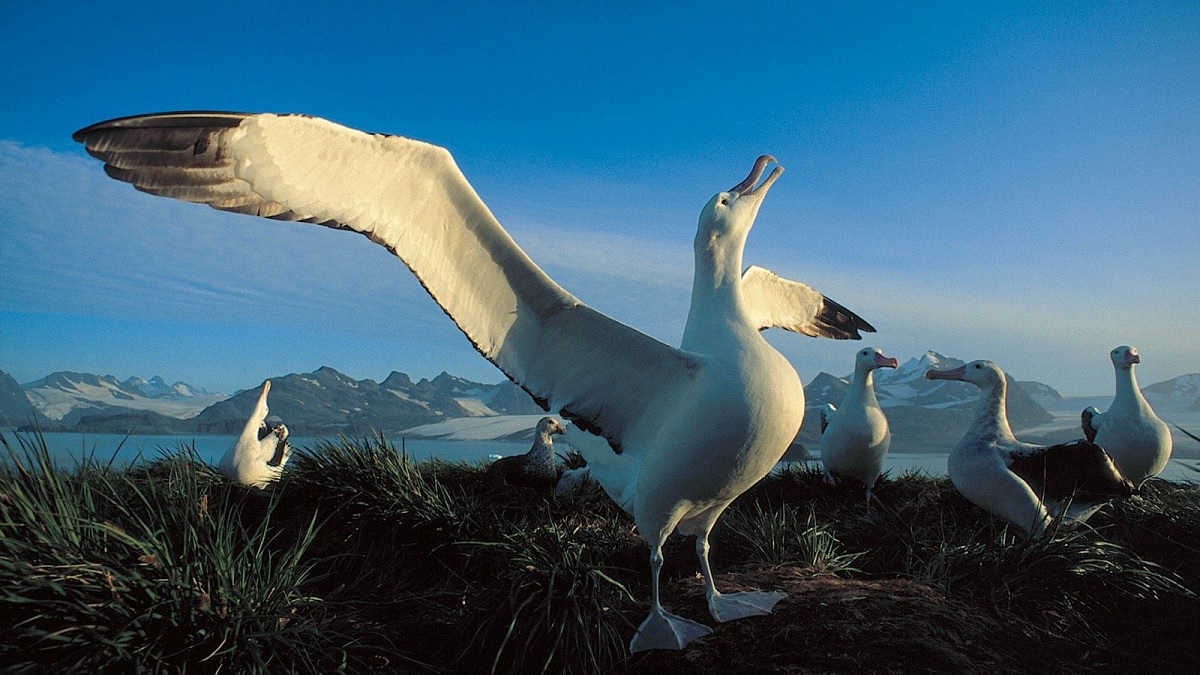
The wandering albatross holds the record for the largest wingspan among living birds, with measurements reaching up to 3.5 meters (11.5 feet). You notice that this extraordinary wingspan allows the albatross to glide effortlessly over vast ocean expanses with minimal energy expenditure. She demonstrates that these birds spend most of their lives at sea, using their long wings to harness wind currents, enabling them to travel thousands of kilometers without flapping. This adaptation is crucial for hunting squid and fish while conserving energy during long migratory journeys.
Their wings are not just long but highly specialized for gliding. You notice the combination of lightweight bones and strong flight muscles creates a balance that supports stability and maneuverability over turbulent waters. She observes that the wandering albatross relies on dynamic soaring techniques, using wind gradients above waves to maintain lift, demonstrating the perfect integration of anatomy and environmental adaptation. Their wingspan also influences social and reproductive behavior, as they return to remote islands to nest, often covering vast distances between feeding and breeding grounds.
This extraordinary wingspan comes with limitations, particularly on land. You notice that albatrosses require space to take off and land, often running along beaches or cliff edges. She highlights that while they dominate the skies, terrestrial movement is cumbersome, showing that extreme wingspan is a specialized adaptation suited to their aerial lifestyle. The wandering albatross exemplifies how evolutionary pressures favor wingspan optimization for energy-efficient flight, long-distance travel, and survival in oceanic environments, making it the ultimate example of avian wingspan achievement.
Andean Condor
The Andean condor is another bird with a staggering wingspan, reaching up to 3.3 meters (10.8 feet), allowing it to soar over mountainous terrain with remarkable grace. You notice that its wings are built for thermal soaring, exploiting rising air currents to glide effortlessly across the Andes in search of carrion. She observes that this wingspan is vital for energy conservation in high-altitude environments where oxygen is limited and hunting or scavenging requires extensive travel.
Condors’ long, broad wings provide stability and maneuverability over rugged landscapes. You notice their ability to circle for hours without flapping, which is essential for monitoring large areas for food. She highlights that this adaptation allows Andean condors to exploit food sources spread across vast mountainous regions, showcasing a perfect match between physical characteristics and ecological needs. Their wings also contribute to social interaction, as they gather in communal roosts and utilize soaring displays during courtship and dominance behaviors.
Despite their large wingspan, Andean condors are also capable of powered flight when necessary. You notice the careful balance of wing loading, feather arrangement, and musculature that enables them to launch from cliffs and maintain altitude efficiently. She demonstrates that their wingspan, while advantageous for soaring, also defines their habitat preferences and foraging strategies, illustrating the interplay between physical adaptation and ecological specialization. Andean condors remain iconic symbols of flight mastery in extreme environments, highlighting how wingspan contributes to survival, energy efficiency, and ecological dominance.
Marabou Stork
The marabou stork is a massive bird with wingspans reaching around 3.2 meters (10.5 feet), making it one of Africa’s largest flying birds. You notice that its wings enable long gliding flights over savannas and wetlands while searching for carrion and small prey. She demonstrates that these wings are adapted for soaring and thermal flight, allowing marabou storks to travel long distances with minimal energy expenditure while maintaining a vantage point for scavenging opportunities.
Their wings are broad and strong, allowing stability during slow flight over open areas. You notice the advantage this provides for spotting carcasses, coordinating with other scavengers, and efficiently covering large territories. She highlights that the marabou’s wingspan also contributes to their social and breeding behavior, as they often nest in large colonies where visual communication and aerial displays play a role in mate selection and territory establishment.
Marabou storks rely heavily on environmental conditions for efficient flight. You notice that they exploit rising air currents, particularly during the heat of the day, to gain altitude without flapping extensively. She demonstrates that this reliance on thermal soaring and wingspan efficiency allows them to optimize foraging and energy use. Their adaptation exemplifies how extreme wingspan supports survival strategies in resource-sparse habitats, balancing the demands of flight mechanics, energy conservation, and ecological niche specialization.
Bald Eagle
The bald eagle, with a wingspan ranging from 1.8 to 2.3 meters (6–7.5 feet), is smaller than albatrosses and condors but still among the largest raptors in North America. You notice that their wings provide lift for soaring, hunting, and navigating river valleys and coastal areas. She observes that this wingspan is critical for energy-efficient flight during long patrols for fish and small mammals, allowing them to cover extensive territories while conserving strength for hunting and territorial defense.
Bald eagles’ wings are broad and slightly curved, aiding in maneuverability and stability during hunting dives. You notice that the combination of wingspan, wing shape, and feather structure allows precise control in various wind conditions. She demonstrates that this adaptation is essential for capturing agile prey, balancing speed, lift, and agility. Their wings also play a role in social and courtship displays, emphasizing the connection between physical traits and behavioral ecology.
While smaller than oceanic or mountainous giants, the bald eagle’s wingspan demonstrates the balance between hunting efficiency, maneuverability, and energy conservation. You notice that their flight patterns, from soaring to gliding to powered dives, are optimized for both survival and ecological dominance in diverse habitats. She highlights that understanding wingspan in raptors like bald eagles illustrates how morphology supports hunting strategy, territorial behavior, and long-distance travel, showcasing another dimension of avian adaptation and aerial mastery.
Physical Adaptations for Large Wingspans
Birds with enormous wingspans possess specialized physical adaptations that enable efficient flight, energy conservation, and survival across diverse habitats. You often notice that their skeletal structure, muscle composition, and feather arrangement work in harmony to maximize lift, stability, and maneuverability. She highlights that understanding the physical adaptations for large wingspans provides insight into flight mechanics, ecological strategies, and evolutionary design, revealing how these extraordinary birds master the skies while balancing energy efficiency, predation, and environmental demands.
Skeletal and Muscular Modifications
Large wingspans require a delicate balance between strength and weight, and birds exhibit specialized skeletal and muscular adaptations to achieve this. You notice that lightweight, hollow bones reduce overall mass while maintaining rigidity, allowing wings to support extended spans without compromising flight efficiency. She demonstrates that powerful pectoral muscles are essential for flapping, takeoff, and sustained gliding, providing the force needed to lift and propel massive wings while conserving energy during long-distance travel.
The shoulder and wing joint structures are also highly specialized. You notice that these joints allow a wide range of motion, enabling both soaring and precise maneuvering. She highlights that adaptations such as elongated wing bones, reinforced joints, and muscle attachment points optimize leverage and strength, permitting birds to adjust wing shape for lift, stability, and aerodynamic efficiency. These skeletal and muscular features are particularly critical for species like albatrosses and condors, which rely on minimal wing flapping to glide over vast distances.
In addition, tendons and ligaments in the wings act like natural springs, storing and releasing energy during flight cycles. You notice that this mechanism reduces muscular fatigue, allowing birds to maintain flight for hours or even days. She demonstrates that skeletal and muscular adaptations work in concert with other physical traits, such as feather structure and wing loading, creating a finely tuned system that balances power, endurance, and maneuverability. This integration ensures that birds with large wingspans can survive in demanding aerial environments while optimizing energy use.
Feather Structure and Aerodynamics
Feathers play a critical role in supporting large wingspans, influencing lift, thrust, and maneuverability. You notice that primary and secondary feathers are long, rigid, and asymmetrically shaped, providing optimal airflow and surface area for gliding. She highlights that overlapping feathers create a smooth, aerodynamic profile, reducing drag while enhancing lift, stability, and control. This arrangement allows birds with massive wingspans to soar efficiently over long distances with minimal energy expenditure.
The spacing and flexibility of feathers also contribute to flight precision. You notice that slotted wingtips allow air to pass between feathers, reducing turbulence and improving lift at slow speeds. She demonstrates that these feather adaptations are particularly important for large birds, whose mass and wing area require precise control to prevent stalling or excessive drag. By adjusting feather position during flight, birds can optimize performance in various conditions, from strong oceanic winds to mountainous thermals.
Feather maintenance is essential for sustaining large wingspans. You notice that preening ensures proper alignment, structural integrity, and flexibility, which are critical for efficient flight. She observes that feathers also provide insulation, contributing to thermoregulation during long flights at varying altitudes. The combination of feather structure, wing shape, and aerodynamics allows birds to exploit environmental conditions, conserve energy, and maintain agility despite enormous wingspans, highlighting the intricate evolutionary design behind these remarkable avian features.
Energy Efficiency and Wing Mechanics
Large wingspans demand efficient energy use, and birds have evolved specific wing mechanics to meet this requirement. You notice that long, broad wings increase lift while reducing the need for frequent flapping, allowing gliding and soaring over vast distances. She highlights that this adaptation is crucial for species like albatrosses and condors, which traverse oceans or mountainous regions, relying on minimal muscular effort to maintain altitude and travel efficiently.
Wing aspect ratio and wing loading are key factors in energy conservation. You notice that high aspect ratios, with long and narrow wings, reduce drag and enhance glide efficiency. She demonstrates that low wing loading, where weight is distributed over a larger surface area, decreases the energy needed to stay airborne and increases maneuverability. These adaptations allow birds with large wingspans to exploit thermals, wind currents, and air gradients for prolonged, energy-efficient flight.
Additionally, flight posture and wing motion are finely tuned to maximize energy savings. You notice that extended wings, slight dihedral angles, and subtle adjustments in wing curvature contribute to stability, lift, and thrust. She observes that birds integrate skeletal, muscular, and feather adaptations with wing mechanics to optimize flight efficiency, demonstrating a complex interplay between anatomy and behavior. These energy-efficient strategies enable large-winged birds to cover enormous distances, hunt effectively, and navigate challenging environmental conditions with minimal effort, showcasing the evolutionary brilliance of physical adaptation.
Balancing Wingspan with Survival Needs
Physical adaptations for large wingspans also influence survival beyond flight mechanics. You notice that these adaptations dictate habitat preferences, nesting strategies, and foraging behavior, as takeoff and landing requirements may limit the areas birds can safely access. She highlights that large wingspans enhance predator avoidance, scavenging efficiency, and migration success, while requiring behavioral adjustments to compensate for reduced terrestrial agility.
Wing strength and control are essential during breeding and social displays. You notice that aerial courtship and territorial displays rely on the combination of wingspan, maneuverability, and endurance. She demonstrates that these adaptations integrate physical prowess with reproductive success, ensuring that large-winged birds can thrive in their ecological niches.
By understanding the physical adaptations for large wingspans, you gain insight into how birds achieve the balance between flight efficiency, survival, and ecological demands. She highlights that skeletal design, musculature, feather structure, and wing mechanics collectively enable these extraordinary birds to conquer the skies, illustrating the intricate evolutionary engineering behind the world’s largest wingspans.
Flight Capabilities and Behavior
Birds with large wingspans exhibit unique flight capabilities and behaviors that allow them to traverse vast distances, hunt efficiently, and conserve energy. You notice that their soaring, gliding, and dynamic maneuvers are closely tied to physical adaptations like wing shape, feather structure, and muscle strength. She highlights that understanding flight capabilities and behavior provides insight into migration patterns, hunting strategies, and environmental adaptation, showing how wingspan influences both survival and ecological roles in diverse habitats.
Soaring and Gliding Techniques
Soaring and gliding are essential behaviors for birds with massive wingspans, allowing them to travel long distances with minimal energy use. You notice that species such as albatrosses and condors utilize thermal currents and wind gradients to maintain altitude without constant flapping. She demonstrates that these techniques are crucial for hunting, migration, and patrolling large territories, as they enable birds to cover hundreds or thousands of kilometers efficiently.
Thermals and wind patterns play a key role in flight behavior. You notice that birds adjust wing angles and feather positions to catch rising air, maximizing lift and stability. She observes that precise control over wing posture allows for maneuvering around obstacles, maintaining altitude, and conserving energy during extended flights. This combination of anatomy and behavior exemplifies the link between physical adaptations and flight strategies.
Soaring also impacts social and reproductive behavior. You notice that communal flight displays, such as in condor roosts or albatross mating flights, help establish dominance and pair bonds. She highlights that the efficiency of gliding allows these birds to allocate energy to other activities, including foraging and reproduction, showing how flight behavior integrates with overall survival and ecological success.
Hunting and Foraging Behavior in Flight
Flight capabilities directly influence hunting and foraging strategies. You notice that raptors and scavengers with large wingspans, like eagles and storks, use their aerial advantage to spot prey or carrion from high above. She demonstrates that extended wings provide stability and lift, allowing for slow, controlled flight that maximizes observation time and precision during dives or descents.
Birds adjust their flight behavior according to prey type and habitat. You notice that soaring over open areas or coastal waters enhances hunting efficiency by conserving energy while scanning for food. She observes that long wingspans allow for extended flight durations, facilitating migration to areas rich in resources. This aerial strategy ensures optimal feeding opportunities while balancing energy expenditure.
Flight behavior also involves strategic decision-making. You notice that large-winged birds often select the most energy-efficient route when migrating or patrolling territories. She highlights that behavioral adaptations, combined with wingspan advantages, create a synergistic system where flight mechanics, foraging efficiency, and ecological intelligence intersect, allowing these birds to thrive in diverse environments.
Social and Migratory Flight Patterns
Large-winged birds often exhibit distinctive social flight patterns. You notice that crows, condors, and albatrosses fly in groups or formations to maintain safety, share thermal currents, and communicate during long journeys. She demonstrates that coordinated flight reduces energy expenditure and increases awareness of predators or competitors, highlighting the behavioral benefits of wingspan in group dynamics.
Migration also relies heavily on flight adaptations. You notice that long-winged birds cover vast distances between breeding and feeding grounds, relying on gliding efficiency and navigation skills. She observes that flight behavior during migration balances endurance, resource management, and environmental cues, reflecting both instinct and learned strategies. The combination of social flight and migratory behavior underscores how wingspan influences movement, survival, and ecological success.
Understanding flight capabilities and behavior reveals the intricate relationship between anatomy, energy efficiency, and ecological adaptation. You notice that wingspan, feather structure, and wing mechanics define soaring, hunting, and migratory strategies. She highlights that these behaviors enable birds to thrive in complex environments, demonstrating how physical traits and learned strategies shape flight performance, survival, and ecological roles.
People Also Asked
What Bird Has The Largest Wingspan In The World?
The wandering albatross holds the record for the largest wingspan in the world, stretching up to 3.5 meters (11.5 feet). You notice that this incredible wingspan allows the bird to glide effortlessly over oceans, covering thousands of kilometers without flapping its wings frequently. She highlights that the albatross uses wind currents and dynamic soaring techniques to conserve energy while searching for food like squid and fish. Observing this bird demonstrates how evolution has optimized wing length for long-distance flight, survival, and efficiency in marine environments.
How Does Wingspan Affect A Bird’s Flight?
A large wingspan significantly enhances a bird’s ability to soar, glide, and cover long distances efficiently. You notice that birds like albatrosses and condors can remain airborne for hours using minimal energy by exploiting wind currents and thermals. She demonstrates that wingspan influences lift, stability, and maneuverability, enabling birds to hunt, migrate, and navigate diverse terrains. It also impacts their feeding and social behavior, as extended wings support long patrols and aerial displays, showing the critical role wingspan plays in survival and ecological adaptation.
Which Other Birds Have Large Wingspans?
Several birds besides the wandering albatross have impressive wingspans, including the Andean condor, marabou stork, and bald eagle. You notice that condors can reach up to 3.3 meters (10.8 feet), while marabou storks span around 3.2 meters (10.5 feet). She highlights that these wingspans allow birds to soar efficiently over mountains, wetlands, and open landscapes, conserving energy during hunting and migration. Observing these species reveals how wingspan correlates with habitat, flight style, and ecological role, demonstrating the diversity of adaptations among the world’s largest-winged birds.
Why Do Albatrosses Have Such Large Wingspans?
Albatrosses have evolved enormous wingspans to glide over vast ocean expanses without expending excessive energy. You notice that their long, narrow wings enable dynamic soaring, allowing them to exploit wind gradients above waves for lift. She demonstrates that this adaptation is essential for survival, as these birds spend most of their lives at sea searching for food. Their wings also support social and mating behaviors, as gliding efficiency allows them to reach nesting islands and display dominance or courtship without fatigue.
Can Large Wingspans Limit A Bird’s Movement?
While large wingspans improve flight efficiency, they can limit terrestrial movement. You notice that birds like albatrosses and condors require space to take off and land, often relying on beaches, cliffs, or open areas. She highlights that this specialization shows a trade-off between aerial performance and ground agility. Despite these limitations, large-winged birds thrive in habitats that support gliding and soaring, demonstrating how evolutionary adaptations balance wingspan advantages with environmental constraints.
How Do Large Wingspans Influence Migration?
Birds with enormous wingspans are exceptionally suited for long-distance migration. You notice that their ability to glide and soar reduces energy expenditure, enabling them to travel thousands of kilometers between feeding and breeding grounds. She demonstrates that wingspan, combined with navigation skills and wind exploitation, allows these birds to cross oceans and mountain ranges efficiently. Observing migratory patterns highlights how wingspan is not just a physical feature but a crucial adaptation for survival, ecological success, and global movement across diverse habitats.
Final Thoughts
Among all bird species, a few extraordinary birds stand out for their impressive wingspans, showcasing nature’s remarkable adaptations for flight. These birds rely on their wide wings to soar effortlessly over oceans, mountains, and vast landscapes, covering incredible distances with minimal energy. When exploring what bird has the largest wingspan in the world, species like the wandering albatross emerge as record holders, with wings designed for long gliding and endurance. Large wingspans provide advantages in migration, hunting, and scavenging, allowing these birds to exploit resources over vast areas.
While size offers benefits, it also requires specialized flight techniques and lightweight skeletal structures to remain efficient. Understanding the birds with the largest wingspans highlights the intricate balance between form and function in the animal kingdom, inspiring admiration for these aerial giants and appreciation for the evolutionary innovations that enable their extraordinary abilities.