Hooded Merganser Facts and Key Behaviors Every Birdwatcher Should Know
A hooded merganser stands out as one of the most striking and easily recognizable waterfowl on quiet lakes, wooded ponds, and slow-moving rivers. With its bold crest, crisp markings, and agile diving skills, the hooded merganser captures attention the moment he slips across the water. You see this bird navigating shallow wetlands with surprising speed, using his slim, serrated bill to catch fish, insects, and crustaceans beneath the surface.
His crest, which can flare dramatically during courtship or fold neatly against the head, adds a unique charm that birdwatchers admire. She often nests in tree cavities near water, giving her young an immediate path to explore their aquatic world. Observing these birds offers a glimpse into how adaptable and skillful small diving ducks can be. Their elegant movements and expressive plumage make them a favorite for anyone who enjoys exploring diverse bird habitats.
Physical Characteristics of Hooded Merganser
The hooded merganser showcases a remarkable blend of precision and beauty, making him one of the most recognizable small diving ducks. His compact frame, bold crest, and slender serrated bill help him stand out while also supporting his hunting skills. She glides across lakes, ponds, and woodland wetlands with smooth control, especially in shallow waters where she feeds and nests.
You see these birds move with confidence, whether they are diving for prey or signaling to one another. Every detail of their body contributes to survival, from their unique feather patterns to the streamlined shape that enhances agility. Their features highlight just how specialized and adaptable hooded mergansers are in their natural habitats.
Crest Shape and Visual Display
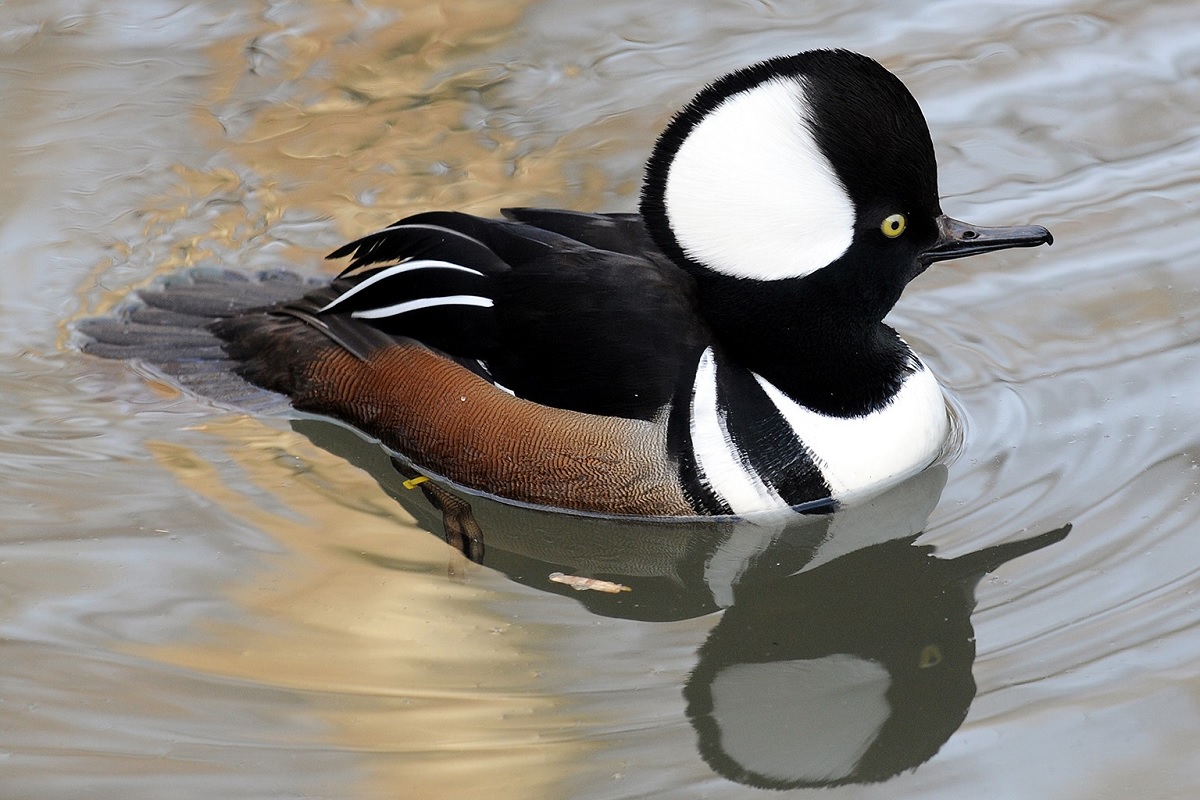
The crest of the hooded merganser is one of his most expressive features, especially when fully expanded. When a male raises his crest, you notice a dramatic fan shape with a white oval patch outlined in black. This bold contrast becomes even more eye-catching on reflective water, making him stand out during courtship and territorial displays. His crest acts as a visual signal, helping him communicate dominance and interest.
Females also have crests, though theirs are softer and appear in warm brown tones. She lifts her crest when alert or when interacting with nearby birds. Her crest blends beautifully with natural surroundings, offering subtle elegance. Even when lowered, the crest contributes to their signature silhouette and helps you understand their mood and behavior.
The shifting movement of the crest, from fully fanned to relaxed, shows how expressive these birds can be, giving you a deeper appreciation for their communication style.
Plumage Patterns and Seasonal Differences
The plumage of the hooded merganser displays an impressive mix of contrast and seasonal variety. During breeding season, the male becomes highly striking with crisp black-and-white markings, rich chestnut flanks, and the bright white patch on his crest. His colors appear especially vivid in sunlight or clear water, helping him attract mates and signal strength within his territory.
She shows a more muted palette with soft browns and grays that allow her to blend seamlessly with reeds, tree cavities, and shoreline vegetation. This camouflage is essential during nesting periods, keeping her safe from predators while guarding her young. Her subtle hues offer both beauty and practicality.
As seasons change, males enter a molting period where their bold colors soften into more subdued shades. This temporary shift offers added protection during vulnerable times. Even in their dull phase, their streamlined bodies and unique markings remain recognizable and functional.
Body Shape, Bill Design, and Adaptations
The hooded merganser has a compact, streamlined body built for swift underwater movement. His lightweight structure and narrow profile help him dive quickly and maneuver efficiently, especially when chasing fish or navigating tight spaces. Strong legs positioned toward the rear enhance propulsion, making diving easier and more powerful than walking on land.
The bill is thin, sharp, and serrated along the edges, acting like a natural gripping tool. These ridges help him hold onto slippery prey such as fish, insects, and crustaceans. She uses this specialized bill to forage in shallow waters, capturing fast-moving prey with impressive accuracy.
Their eyes sit high and forward, giving excellent depth perception for tracking movement under the surface. Combined with strong webbed feet, these adaptations help hooded mergansers excel in ponds, lakes, and streams. Their physical traits work together to support their agility, precision, and hunting success in diverse aquatic habitats.
Habitat and Preferred Locations
The hooded merganser thrives in calm, freshwater environments where he can dive easily and find abundant prey. You often spot him on forested ponds, secluded lakes, and quiet rivers surrounded by dense vegetation. She prefers shallow waters that offer both feeding opportunities and safe nesting spaces. Their ideal habitats include areas with tree cavities for nesting, plenty of aquatic life, and minimal disturbance. These locations give hooded mergansers the perfect balance of shelter, food, and calm conditions needed for raising young and surviving year-round.
Freshwater Lakes, Ponds, and Wetlands
Hooded mergansers show a strong preference for freshwater settings, especially shallow ponds and lakes surrounded by woodland edges. You often notice them choosing waters that are clear enough for underwater hunting, since they rely on sight to locate fish, frogs, and aquatic insects. These calm freshwater areas allow him to dive repeatedly without strong currents interfering with movement. He also benefits from sheltered coves where vegetation provides natural cover from predators.
She uses wetland edges extensively, especially during nesting season. Shallow marshy zones offer hiding places, food access, and quiet spaces where disturbance is minimal. In early spring, you often see pairs exploring narrow channels or wooded backwaters that offer privacy. These freshwater habitats also support a rich variety of prey, allowing hooded mergansers to remain active hunters. The combination of food availability, calm water, and tree cover makes these environments ideal for both resting and raising young.
You also find them visiting beaver ponds, temporary flooded areas, and small woodland pools, especially when searching for feeding spots. Their flexibility in choosing freshwater habitats helps them thrive across a wide range of landscapes.
Nesting Areas and Forested Surroundings
Hooded mergansers rely heavily on forested habitats for nesting, often choosing tree cavities close to water. You see females selecting cavities created by woodpeckers or natural decay, giving them a safe, elevated space to lay eggs. These elevated nests protect the young from ground predators while keeping them near the water they need after hatching. She lines the cavity with down, creating a warm and secure chamber.
Forested surroundings also offer natural shade and reduced exposure to harsh weather. Dense trees help hide nests from predators and humans, making quiet wooded environments an essential part of their survival. You may also see hooded mergansers using nest boxes when natural cavities are limited, especially in managed conservation areas. The proximity of trees to water is key, since ducklings leap from the cavity and head straight for nearby ponds or streams.
These forested areas support abundant insect life and provide shelter for adults during molting periods. With wooded landscapes offering both food and nesting sites, hooded mergansers remain strongly tied to these environments throughout the breeding season.
Seasonal Movements and Regional Preferences
Hooded mergansers adjust their preferred locations depending on the season, shifting habitats as temperatures change. During warmer months, you find them mainly in northern regions where forested wetlands offer ideal nesting sites. They settle around lakes and wooded ponds across the northern United States and southern Canada, where vegetation and food resources are plentiful. These areas support breeding pairs and provide quiet, shaded waters for raising broods.
As temperatures drop, hooded mergansers move to regions that remain ice-free. You often notice them migrating to coastal estuaries, inland reservoirs, and southern rivers. She chooses waters that stay open during winter, allowing continuous diving and feeding. Their winter habitats include slow-moving rivers, protected bays, and man-made lakes with stable water levels and abundant prey.
Some hooded mergansers travel shorter distances depending on local climate conditions, while others complete longer migrations across the continent. Their seasonal patterns highlight a strong dependence on accessible freshwater and consistent food sources. By adjusting locations throughout the year, hooded mergansers stay active hunters in every season.
Behavior Patterns of Hooded Merganser
The hooded merganser displays a fascinating mix of agility, alertness, and strong instincts that shape how he interacts with his environment. You often see him diving quickly for prey, communicating through expressive crest movements, and forming small groups during migration. She balances independence with social behavior, especially during breeding season when interactions become more frequent. Their actions reveal how they survive in wooded wetlands, adapt to seasonal changes, and maintain strong feeding routines. Understanding these behavior patterns gives you a deeper appreciation for their natural rhythm and daily life in freshwater habitats.
Feeding Behavior and Diving Skills
Hooded mergansers are skilled divers, relying heavily on underwater vision to locate prey. You often notice him diving swiftly with a streamlined posture, disappearing beneath the surface for several seconds at a time. His serrated bill allows him to grip slippery fish and crustaceans with ease. This feeding method requires precision, making eyesight an essential part of his hunting success. He often searches through murky waters or among aquatic plants where prey hides.
She tends to forage in shallow areas where insects, small fish, and amphibians gather. Their hunting style involves short but frequent dives, allowing them to cover a large area of water in a short time. You might observe them working across a pond silently, making minimal movement on the surface before plunging downward. Hooded mergansers rarely rely on teamwork while feeding, preferring to hunt individually to avoid competition. Their ability to move smoothly and quietly through the water makes them efficient and stealthy predators.
Their diet can shift with the seasons, giving them the flexibility needed to thrive across different regions. Whether in beaver ponds, forested lakes, or winter reservoirs, their feeding behavior remains focused, sharp, and uniquely adapted for underwater hunting.
Courtship Displays and Social Interactions
Courtship season brings out some of the most striking behaviors in hooded mergansers. You often see the male performing elaborate displays, raising his crest into a dramatic fan shape and shaking his head rapidly to draw attention. He pairs these movements with soft grunts and whistles, creating a visually and audibly expressive performance. His raised crest becomes the highlight of these displays, signaling strength and readiness to potential mates.
She responds with subtle movements, lifting her smaller brown crest or swimming closely around the male she favors. Although hooded mergansers remain mostly quiet throughout the year, their vocalizations increase during this period. Their social interactions intensify as small groups form on breeding ponds, creating a more active and communicative atmosphere.
These displays help establish pair bonds and determine which males successfully attract mates. You’ll also notice occasional territorial behavior, especially among males competing for attention. While they are not highly aggressive, they rely heavily on visual cues to communicate intent and establish boundaries. This combination of expressive movements and careful gestures makes their courtship interactions captivating to watch.
Seasonal Behavior and Migratory Patterns
Seasonal changes strongly influence the behavior of hooded mergansers, shaping where they travel and how they interact with their surroundings. During breeding season, you often find them settling in quiet, forested wetlands where they can nest in tree cavities. Their behavior becomes more focused, with pairs exploring nesting sites and females preparing secure spaces near the water. This period is marked by alertness and careful movement as they protect their future brood.
As temperatures drop, their behavior shifts toward mobility. Hooded mergansers migrate to regions with ice-free water, moving in small groups rather than large flocks. You’ll often see them arriving at reservoirs, sheltered bays, and southern rivers as they seek open water for feeding. Their communication remains subtle, relying more on group movement than vocal calls.
Winter behavior includes efficient feeding, frequent diving, and conserving energy during cold weather. When spring returns, their instincts lead them back toward northern breeding areas, restarting the cycle of nesting, feeding, and raising young. Their seasonal patterns reflect adaptability, allowing them to navigate changing climates while maintaining their essential routines.
Breeding and Nesting Habits
Hooded mergansers exhibit fascinating breeding and nesting behaviors that highlight their adaptability and care for young. You often see them selecting tree cavities or nest boxes near water, creating a safe environment for eggs and ducklings. She invests considerable effort in preparing the nest with soft down to keep her young warm. Their breeding season involves distinct courtship displays, pair bonding, and strategic site selection, ensuring offspring have access to food and shelter immediately after hatching. Observing these habits reveals the careful planning behind their reproductive success.
Courtship and Pair Formation
During breeding season, hooded mergansers engage in striking courtship displays to attract mates. The male raises his dramatic crest and fans the white patch, shaking his head while producing subtle vocalizations. These movements serve both to impress females and signal dominance to other males. She observes these displays, often responding with minor crest movements or following the male through shallow waters, allowing them to establish a bond. This courtship behavior typically occurs on quiet ponds or forested wetlands, providing safety and privacy during mating rituals.
Pair formation is reinforced through repeated displays and synchronized swimming. Once a bond is formed, the pair may stay together for the season, cooperating in locating suitable nesting sites. Males may show territorial behavior around these areas, ensuring that rivals do not interfere with the female’s nesting preparations. This careful attention to selection and display ensures that both male and female maximize the chances of reproductive success and maintain safety for themselves and future offspring.
Nest Selection and Egg Laying
Hooded mergansers prefer nesting in tree cavities located near calm water bodies, allowing the young immediate access to aquatic environments after hatching. She may also utilize abandoned woodpecker holes or man-made nest boxes when natural cavities are scarce. The nest is lined with soft down feathers pulled from her own body, creating a warm and secure environment for the eggs. You often notice her carefully adjusting the lining to ensure even coverage and insulation for the clutch.
Egg-laying generally occurs in early spring, with the female laying between six and fifteen eggs, depending on environmental conditions and her health. She incubates the eggs alone, rarely leaving the nest for extended periods, demonstrating strong parental investment. The incubation period typically lasts around a month, during which she remains alert to potential threats. Her dedication to nest care ensures that hatchlings emerge healthy and ready to navigate their aquatic habitats.
Rearing Young and Early Independence
After hatching, ducklings leap from the nest cavity and follow their mother to nearby water, demonstrating immediate adaptability and agility. She leads them to shallow areas abundant with insects and small aquatic creatures, guiding their first feeding experiences. The mother remains highly vigilant, frequently checking for predators and using subtle signals to maintain the group’s cohesion.
During these early weeks, hooded merganser ducklings develop swimming and diving skills under her supervision. She encourages exploration but keeps them close to ensure safety. While males do not participate in raising the young, their role in courtship and territory selection indirectly supports reproductive success. The careful combination of nest selection, egg incubation, and early parental guidance ensures that young hooded mergansers gain the skills and protection they need to survive in diverse freshwater environments.
Diet and Feeding Style
Hooded mergansers are highly specialized predators with a diet focused primarily on aquatic animals. You often see them diving skillfully beneath the water surface to capture fish, insects, and small crustaceans. She uses her sharp, serrated bill to grip slippery prey while maneuvering efficiently through shallow lakes, ponds, and rivers. Their feeding style combines precision, agility, and patience, allowing them to thrive in freshwater habitats where food availability fluctuates seasonally. Observing their behavior provides insight into their remarkable adaptability and hunting skills.
Diving and Hunting Techniques
Hooded mergansers are exceptional divers, relying on keen eyesight and quick reflexes to catch prey underwater. You will notice them submerging completely for several seconds at a time, often reappearing a short distance from their entry point. This diving ability allows them to chase fish and aquatic insects with remarkable accuracy. She approaches hunting methodically, scanning the water surface before plunging downward in a swift, streamlined motion. Their narrow body shape and strong legs aid propulsion, making them highly efficient underwater hunters.
Their serrated bill is specifically adapted for gripping slippery prey, such as small fish, tadpoles, and crustaceans. You often see them shaking or tossing captured prey to ensure a secure hold before swallowing. Feeding dives are usually short but frequent, covering a wide area of water in search of the most accessible food sources. Hooded mergansers rarely hunt in large groups, preferring solitary or paired foraging to reduce competition and increase efficiency. Their hunting strategies reflect both adaptability and the physical specialization that allows them to thrive in diverse freshwater environments.
Seasonal Diet Variations and Adaptability
Hooded mergansers adjust their diet according to seasonal availability, showing impressive flexibility in feeding habits. During spring and summer, they focus on small fish, aquatic insects, and amphibians, which are abundant in freshwater habitats. You will often see them foraging in shallow ponds, streams, or forested wetlands where prey is concentrated near the surface or among submerged vegetation. Their ability to adapt to seasonal prey changes ensures that they maintain energy for breeding, migration, and raising young.
In colder months, hooded mergansers shift toward available crustaceans, mollusks, and any remaining fish in ice-free waters. She may spend more time diving or exploring sheltered areas such as river bends, coastal bays, or man-made reservoirs where food is accessible. Their feeding style remains methodical, relying on observation, patience, and rapid underwater strikes. This seasonal flexibility demonstrates how hooded mergansers survive across diverse habitats and climates. By adjusting both diet and hunting behavior, they sustain energy levels and remain effective predators throughout the year.
FAQs
What Does A Hooded Merganser Look Like?
You can instantly recognize a hooded merganser by his striking crest and compact, streamlined body. He has a bold white patch on the male’s fan-shaped crest, contrasting sharply with black feathers, while females display softer brown tones. His thin, serrated bill is designed to grip slippery prey, and his chestnut flanks add extra color during breeding season. She moves gracefully on water and shows remarkable agility when diving. Observing him up close reveals how his physical features, from the crest to the webbed feet, are perfectly adapted for survival in freshwater habitats.
Where Can You Find Hooded Mergansers?
Hooded mergansers prefer calm, freshwater environments with plenty of cover. You often spot him on forested ponds, shallow lakes, and slow-moving rivers with clear water for diving. She selects habitats with nearby tree cavities or nest boxes for breeding, ensuring safety for her young. Wetlands with abundant aquatic life provide the food sources he needs. Seasonal migrations lead him to southern rivers or reservoirs during winter, while spring brings him back to northern lakes. These locations give hooded mergansers the balance of food, shelter, and calm conditions essential for survival.
What Do Hooded Mergansers Eat?
Hooded mergansers primarily feed on small fish, aquatic insects, and crustaceans. You will notice him diving underwater to catch prey, using his serrated bill to grip slippery targets. She often forages in shallow ponds or streams, methodically searching areas where insects and small fish gather. Seasonal changes influence their diet, with more fish and amphibians available in warmer months and crustaceans in colder months. Their feeding style combines precision, agility, and patience, allowing them to efficiently gather energy in diverse freshwater habitats.
How Do Hooded Mergansers Nest?
Hooded mergansers typically nest in tree cavities near water, using natural holes or abandoned woodpecker nests. She lines the cavity with soft down feathers to keep eggs warm and secure. You often see her selecting elevated cavities that protect the young from ground predators. Nesting season begins in early spring, and she lays between six and fifteen eggs. The incubation lasts about a month, during which she remains alert and protective. Once hatched, the ducklings leap to the water and follow their mother, gaining immediate access to food and aquatic environments.
How Do Hooded Mergansers Behave During Breeding Season?
During breeding season, males perform dramatic courtship displays to attract females. You will notice him raising his crest into a bold fan shape and shaking his head while producing soft vocalizations. She responds with subtle movements and swims nearby, helping the pair establish a bond. Males may show territorial behavior to protect the nesting area, while females focus on selecting safe sites and preparing nests. Social interactions increase during this period, and both sexes engage in careful communication. These behaviors ensure successful pairing, mating, and preparation for raising young.
Are Hooded Mergansers Migratory Birds?
Hooded mergansers exhibit seasonal migration patterns, moving to areas that provide open water and food. You often find him in northern lakes and forested wetlands during spring and summer for breeding. As winter approaches, she migrates to southern rivers, estuaries, or reservoirs that remain ice-free. Migration is usually in small groups rather than large flocks. Their movement depends on water conditions, food availability, and climate. These seasonal shifts allow hooded mergansers to access resources year-round, maintain energy, and continue their hunting and breeding routines effectively.
Conclusion
Observing the hooded merganser in its natural habitat reveals a remarkable blend of beauty, agility, and adaptability. These striking ducks showcase unique physical features, including their distinctive crests and vibrant plumage, which make them easily recognizable among waterfowl. Their behaviors, from diving skillfully for food to engaging in intricate courtship displays, highlight their intelligence and survival instincts.
The hooded merganser also plays an important role in maintaining the balance of aquatic ecosystems by controlling fish and invertebrate populations. Despite facing challenges from habitat loss and environmental changes, conservation efforts and awareness can help sustain their populations. For birdwatchers and nature enthusiasts, spotting a hooded merganser is not only a visual delight but also an opportunity to appreciate the intricate dynamics of wildlife. Protecting their habitats ensures that these captivating birds continue to thrive for generations to come.