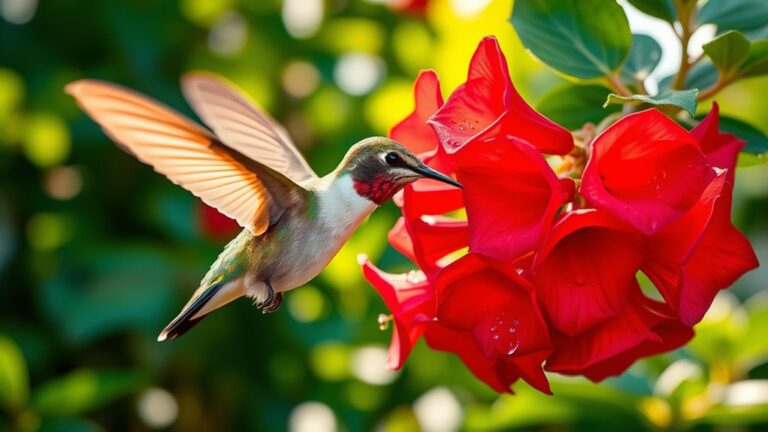
Top 15 Best Flowers for Ruby Throated Hummingbirds Revealed!
Many people who set out to attract ruby throated hummingbirds quickly learn that the best flowers for ruby throated hummingbirds aren’t just about bright colors. Using the wrong types can mean little to no visits and wasted effort, especially when flowers lack the right nectar or shape to suit these birds’ feeding habits.
Often, cheap varieties fail because they do not bloom at the right time or lack the tubular form hummingbirds prefer, making them almost invisible to these tiny visitors.
The flowers that work well typically have a tubular shape and produce enough nectar without too much sugar dilution, often around 20% to mimic natural nectar. Size matters since ruby throated hummingbirds have bills about 1 inch long, so flowers should be similarly sized to allow easy access.
Native species also outperform hybrids, as they are more resilient and attract the specific insects that support the hummingbirds’ diet, improving the overall environment.
Need a Quick Check?
| Image | Product | Price |
|---|---|---|
Our Top Picks 1  | Tower of Jewels Echium Seeds | Check Price |
Our Top Picks 2  | Eatons Penstemon Firecracker | Check Price |
Our Top Picks 3  | Survival Garden Hummingbird Seeds | Check Price |
Our Selected Top 15 Flowers for Ruby Throated Hummingbirds Worth Your Money
This list features the best flowers that attract ruby throated hummingbirds, carefully selected for their appeal and growth qualities. Each review covers how well the flower performs, its ideal growing conditions, and its main advantages and drawbacks to help you choose the right plants for your garden.
1. Tower of Jewels Echium Wildpretii Seeds
Attracting ruby-throated hummingbirds to your garden gets easier with these Tower of Jewels seeds. Perfect for gardeners living in warm climates, their main draw is the towering flower spikes that create a vivid display and lure hummingbirds with ruby red blooms.
It’s an eye-catching addition for anyone wanting a natural hummingbird magnet.
Starting the seeds indoors about 6-8 weeks before the last frost or planting outdoors in spring after frost provides good results. The plant grows slowly the first year, developing a broad, silvery leaf base before climbing up to 6-8 feet during its second year. It’s drought tolerant once set and prefers full sun and dry, sandy or rocky soil, making it quite manageable with minimal watering.
These seeds deliver tall, ruby-colored flower cones in summer that hummingbirds, bees, and butterflies eagerly visit. The plant’s biennial cycle means you won’t see flowers the first year, but the self-reseeding habit often fills in for continuous bloom in following seasons. A common downside is its height, which may overshadow smaller plants, and it’s best suited for USDA zones 9-11.
The plants grow spectacular flower towers packed with ruby red blooms that effectively attract hummingbirds, but patience is needed as flowers only appear in the second year. Its self-reseeding nature allows for ongoing displays once established in the right conditions.
Gardeners in warm climates looking for a striking, hummingbird-friendly plant will appreciate this choice. Those outside USDA zones 9-11 or wanting faster blooms might want to consider alternatives with a quicker flowering cycle.
Pros
- Attracts hummingbirds, bees, and butterflies
- Drought tolerant once established
- Produces dramatic tall flower spikes
- Self-reseeding for annual blooms
Cons
- Requires two years to flower
- Best suited for warm USDA zones 9-11
| Specification | Details |
|---|---|
| Expected Plant Height | 96 inches |
| Expected Blooming Period | Summer |
| Sunlight Exposure | Full Sun |
| USDA Hardiness Zone | 9-11 |
| Soil Type | Sandy, Rocky, Average To Dry |
| Moisture Needs | Average To Dry – Drought Tolerant Once Established |
2. Eatons Penstemon Firecracker Flower Seeds
Bright red blooms reaching about 18 inches tall make it a reliable choice for anyone wanting to attract ruby-throated hummingbirds. Its biggest strength is the vivid color that hummingbirds love and the fact it grows as a perennial with moderate watering needs, perfect for sunny gardens.
Putting the seeds in the ground at the right time is key. They do best when planted in spring, in full sun or partial shade.
With about 12-15 inches between plants, they fit nicely into most gardens. Watering moderately keeps them healthy, and they attract not just hummingbirds but bees and butterflies too, adding to the garden’s life.
For attracting pollinators, the red flowers perform well through late spring to early summer. The seeds are fresh each season, so the plant grows as long as planting instructions are followed carefully. Some say they don’t grow if instructions aren’t followed exactly, which is a common note in reviews.
The seeds produce sturdy plants standing steady at 16 to 18 inches tall.
The strongest praise is for how well it attracts hummingbirds with its vibrant red flowers and steady bloom period. The most common complaint involves challenges in germination when planting instructions are not fully followed, which can be frustrating for those unfamiliar with the proper timing and care.
Gardeners looking for a bright, pollinator-friendly perennial that thrives in full sun or partial shade will appreciate this flower. Those less confident in following detailed planting instructions or planting outside recommended seasons may want to consider other options for easier growth.
Pros
- Attracts hummingbirds, bees, and butterflies
- Vivid red color attracts ruby-throated hummingbirds
- Perennial plant lasting through multiple seasons
- Can grow in a wide range of USDA zones
Cons
- Requires strict adherence to planting instructions
- Does not germinate well if planted outside recommended times
| Specification | Details |
|---|---|
| Bloom Season | Late Spring to Early Summer |
| Plant Height | 16-18 inches |
| Sunlight Exposure | Full Sun, Partial Shade |
| USDA Hardiness Zone | 4,5,6,7,8,9,10,11 |
| Moisture Needs | Moderate Watering |
3. Survival Garden Hummingbird Flower Seeds
Gardeners looking to attract ruby-throated hummingbirds and other pollinators will find this seed mix an excellent choice. It suits outdoor spaces with full sun and offers a colorful variety of nectar-rich flowers that bloom from spring through fall, providing consistent garden interest and wildlife visits.
Planting these seeds in loam soil during spring sets the stage for a vibrant display. Daily care involves moderate watering, and the drought-tolerant nature of the mix means it can handle dry spells without fuss.
The mix includes both annual and perennial varieties, ensuring flowers appear at different times to maintain continuous color and activity in the garden.
Performance-wise, the flowers do well attracting hummingbirds thanks to their tubular shapes and bright colors. The mix germinates reliably, and plants commonly reach up to 36 inches tall, giving a healthy garden presence.
A frequent complaint focuses on some flowers not blooming simultaneously, but that’s also part of the design for prolonged blooming across the season.
The mix reliably attracts hummingbirds with a variety of nectar-rich, colorful tubular flowers that bloom throughout the season. Many appreciate the extended bloom time, though some note that not all flowers appear simultaneously, which reflects the design for continuous garden color rather than a single burst. It’s generally low maintenance and tolerates drought well.
Gardeners wanting a long season of hummingbird visits and colorful blooms will enjoy this variety mix. Those needing instant, full-bloom coverage at once or looking for plants suited to shade environments should look elsewhere for alternatives better suited to those conditions.
Pros
- Nectar-rich blooms attract hummingbirds effectively
- Long-lasting color with staggered bloom times
- Drought tolerant and low maintenance
- High germination rate for quick garden fill
Cons
- Flowers bloom at different times, not all at once
- Only suited for outdoor, full sun locations
| Specification | Details |
|---|---|
| Sunlight Exposure | Full Sun |
| Expected Blooming Period | Spring to Fall |
| USDA Hardiness Zone | 3-10 |
| Expected Plant Height | 36 inches |
| Soil Type | Loam Soil |
| Moisture Needs | Moderate Watering |
4. Earth Science Butterfly & Hummingbird Wildflower Seeds

A vibrant mix of wildflowers designed specifically for attracting butterflies and ruby-throated hummingbirds, perfect for gardeners wanting to create a lively, colorful outdoor space. Its biggest strength lies in covering large areas with a single 4oz pack, yielding over 40,000 seeds to bloom from spring right through fall.
Planting the seeds in an area that receives full sun is straightforward, and moderate watering is enough to keep the flowers thriving. The blend supports a broad pollinator habitat, inviting hummingbirds and butterflies to the garden naturally.
It’s suitable for both small gardens and expansive meadows, making it flexible depending on the space you have available.
These wildflowers grow steadily over the growing season, providing continuous blooms that really attract hummingbirds. The seed blend includes a range of flower types, adding variety and visual interest.
Most find the diversity and bloom duration impressive, though some mention that moderate watering is required, so dry spells can be challenging for growth.
The blend regularly delivers abundant blooms that keep hummingbirds and butterflies coming back for months. A common challenge comes from the need for consistent watering, as neglecting moisture slows flower growth and reduces the overall display.
Gardeners with sunny spaces who can commit to moderate watering will appreciate how well it supports local pollinators. Those with shaded areas or less ability to water regularly might want to consider plants requiring less sun or water.
Pros
- Contains over 40,000 seeds for wide coverage
- Attracts hummingbirds, butterflies, and bees effectively
- Flowers bloom continuously from spring to fall
- Includes a diverse blend of popular garden wildflowers
Cons
- Requires moderate watering for best growth
- Only suited for full sun exposure locations
| Specification | Details |
|---|---|
| Expected Blooming Period | Spring to Fall |
| Sunlight Exposure | Full Sun |
| USDA Hardiness Zone | 4, 5, 6, 7, 8, 9 |
| Moisture Needs | Moderate Watering |
| Coverage | Approx. 1,500 square feet |
5. Cardinal Flower Lobelia Cardinalis Seeds

Cardinal Flower Lobelia Cardinalis Seeds bring vibrant red tubular flowers to your garden, perfect for anyone looking to attract ruby-throated hummingbirds. Its biggest strength lies in its standout color and ability to draw pollinators during the late summer and early fall.
Planting these seeds in a sunny outdoor spot with sandy soil requires regular watering to keep them healthy. They grow tall, between 2 to 4 feet, making them a great addition to gardens aiming for vertical interest.
Blooming starts in mid-summer and lasts until early fall, adding consistent color when many other flowers have faded.
As a perennial, these plants reliably bloom year after year in the correct climate zones. The slender, upright shape with lance-shaped leaves adds to its visual appeal alongside the bright blooms.
Most appreciate how well it draws hummingbirds and butterflies, although some find the care needed for moisture and the sandy soil requirements a bit demanding.
The seeds produce bright red blooms that effectively attract hummingbirds throughout the late summer and early fall period. Regular watering and the need for sandy soil are the most frequently mentioned challenges when growing these plants.
Gardeners living in USDA Zone 9 looking for colorful, wildlife-attracting flowers will find these seeds a fitting choice. Those without suitable soil or consistent watering may want to explore alternatives better suited to drier or less sandy conditions.
Pros
- Striking vibrant red tubular flowers
- Attracts hummingbirds and butterflies
- Blooms mid-summer to early fall
- Tall, upright plant structure
Cons
- Requires regular watering
- Needs sandy soil for best growth
| Specification | Details |
|---|---|
| Sunlight Exposure | Full Sun |
| USDA Hardiness Zone | 9 |
| Soil Type | Sandy Soil |
| Moisture Needs | Regular Watering |
| Expected Blooming Period | Summer, Fall |
| Height | 2 to 4 feet |
6. Wildflower Seeds Butterfly Hummingbird Mix

Bringing vibrant colors and constant blooms to a garden, this seed mix suits anyone wanting to attract ruby-throated hummingbirds and butterflies. Its biggest strength lies in the variety of flowers it grows, offering a lively, pollinator-friendly environment from spring until frost.
Planting the seeds is straightforward and rewarding, especially in full sun where they thrive best. With 5000+ non-GMO heirloom seeds spread over five packets, there’s plenty to cover a generous space.
Watching the mix grow means seeing sunflowers, zinnias, cosmos, and more pop up at different heights and times, creating a constantly changing scene throughout the warmer months.
Performance is solid thanks to a high germination rate, which means most seeds sprout successfully and produce flowers reliably. The mix combines well to create a diverse garden that keeps hummingbirds and butterflies visiting. The strongest praise highlights how colorful and full the blooms stay throughout the season.
A common complaint is that the full sun requirement may limit planting options in shadier yards.
The mix offers a vibrant, season-long display with a strong germination rate that brings most seeds to life. Regular blooms sustain a garden full of color that attracts ruby-throated hummingbirds and butterflies, but it demands a sunny spot to reach its full potential.
Gardeners with ample sunny areas who want diverse flowers and pollinators will be pleased. Those with limited sun exposure or very small spaces might find this mix less ideal and should consider shade-tolerant or smaller seed selections instead.
Pros
- Wide variety of 15 flower types
- High germination rate for better growth
- Long blooming from spring to fall
- Supports hummingbirds and butterflies
Cons
- Requires full sun to thrive
- May not suit smaller or shaded gardens
| Specification | Details |
|---|---|
| Seed Variety Count | 15-Variety Wildflower Seeds |
| Seed Type | Non-GMO heirloom seeds, 5000+ total |
| Blooming Period | Spring to Fall |
| Sunlight Exposure | Full Sun |
| Packing | 5 packets in 1 bag |
| Special Features | High Germination Rate |
7. Hummingbird Trumpet Vine Seeds

Hummingbird Trumpet Vine Seeds offer a generous supply for anyone wanting to attract ruby-throated hummingbirds with bright, tubular flowers. Best for gardeners looking to cover fences or trellises quickly with a fast-growing, colorful vine, its standout strength lies in attracting hummingbirds and butterflies throughout summer and fall.
Sowing seeds is straightforward from spring through early summer, needing well-drained, rich soil and a spot with full sun to partial shade. Regular watering during establishment helps, but once mature, the vine handles drought well. The vigorous climber rapidly wraps around vertical supports, making it perfect for creating natural screens or adding height and color to outdoor spaces.
When it blooms from June to September, the bold orange-red flowers clearly invite hummingbirds, fulfilling its main role effectively. Built to thrive in USDA zones 4-9, the vine grows up to 30 feet tall.
Most praise highlights its quick growth and pollinator appeal, while some find the large size hard to manage or overwhelming in smaller gardens.
The most appreciated feature is how quickly and abundantly it grows, drawing hummingbirds reliably throughout the summer months. The common downside is its size, which can overwhelm compact spaces or require diligent pruning to keep under control.
Gardeners with room for a tall, wide vine will enjoy the splash of color and wildlife it brings. Those with limited space or desire for low-maintenance plants may want to explore smaller or less vigorous flowering options.
Pros
- Large seed count for extensive planting
- Fast-grower covers fences quickly
- Bright blooms attract hummingbirds and butterflies
- Drought tolerant once established
Cons
- Can become too large for small gardens
- Requires regular watering at start
| Specification | Details |
|---|---|
| Expected Plant Height | 30 feet |
| Expected Blooming Period | June Through September |
| Sunlight Exposure | Full Sun To Partial Shade |
| USDA Hardiness Zone | 4-9 |
| Soil Type | Well-drained, Loamy, Rich Organic Soil |
8. Wildflower Seeds Texas California Florida Native Mix

Native wildflower seeds curated from Texas, California, and Florida make up this generous mix designed for outdoor planting in full sun. Perfect for anyone wanting to attract ruby-throated hummingbirds, it creates a colorful, lively natural meadow by encouraging diverse nectar-rich blooms that last year round.
Getting it started is simple with the “throw and grow” approach, scatter seeds across about 100 square feet and watch nature take over. The large packet offers enough seeds to ensure dense coverage, which helps keep weeds down and supports a variety of pollinators like bees and butterflies alongside hummingbirds.
Regular outdoor sun is essential for the blooms to thrive.
The mix delivers on attracting hummingbirds by providing plenty of nectar sources throughout the growing season. Seed purity and quantity are impressive, with over 10,000 live seeds and no fillers, promoting a thick and vibrant display.
Some users find the soil preparation and watering needs more demanding, but the end result is a flourishing meadow that supports wildlife and purifies the air.
The standout feature is the large seed quantity that fills a 100 sq. ft. area with vibrant, nectar-rich flowers, drawing hummingbirds and butterflies effectively. A common difficulty comes from needing consistent sun and soil prep to get the mix fully established.
Gardeners with open, sunny spaces aiming for a natural wildflower patch will appreciate this mix’s diversity and pollinator appeal. Those with limited sun or less time for starting seeds might want a simpler, lower maintenance option.
Pros
- Rich mix of 25 diverse wildflower varieties
- Over 10,000 pure seeds for wide coverage
- Year-round blooming attracts many pollinators
- Air purifying qualities from dense wildflowers
Cons
- Requires ample full sun for best results
- Needs prepared soil and regular watering initially
| Specification | Details |
|---|---|
| Expected Blooming Period | Year Round |
| Sunlight Exposure | Full Sun |
| Packet Weight | 30 grams (over 1 oz) |
| Seed Quantity | 10,000+ Pure Seeds |
| Indoor/Outdoor Usage | Outdoor |
9. Wildflower Seeds Mix 24 Variety Perennial & Annual

Bright and diverse, the Wildflower Seeds Mix offers 24 different annual, perennial, and biennial flowers perfect for attracting ruby-throated hummingbirds. Ideal for gardeners looking to add natural beauty and pollinator activity, its strongest point is the high germination rate ensuring a vibrant garden display from fresh seeds.
Planting involves sowing the seeds outdoors during spring or summer in full sun. The seeds quickly sprout within 35-75 days, growing up to 48 inches tall, which makes daily garden care enjoyable as you watch a variety of colorful flowers bloom. The mix supports a lively ecosystem with butterflies, bees, and ladybugs joining the hummingbirds daily.
Performance meets expectations with a solid germination rate and reliable seed purity at 99%, guaranteeing few wasted seeds. The mix endures outdoors well through the growing seasons. Most praise focuses on the flower variety and pollinator attraction.
A repeated note is that some plants take longer to bloom or need consistent sun exposure to thrive fully.
Users appreciate the wide variety of flowers and the mix’s high germination rate, making for a lively garden full of hummingbirds and other pollinators. Some plants can take their time to bloom, needing patience and steady sun for the best results.
Those wanting to attract ruby-throated hummingbirds and other pollinators while adding colorful blooms will enjoy this mix. Gardeners with shaded yards or who prefer faster blooming plants might look for alternatives better suited to less sun or quicker results.
Pros
- Includes 24 annual, perennial, and biennial varieties
- High germination rate for strong plant growth
- Attracts diverse pollinators including hummingbirds
- Grows well in spring and summer seasons
Cons
- Requires full sun exposure to bloom properly
- Some flower varieties take longer to bloom
| Specification | Details |
|---|---|
| Expected Blooming Period | 35-75 days |
| Sunlight Exposure | Full Sun |
| Expected Plant Height | 48 inches |
| Indoor Outdoor Usage | Outdoor |
| High Germination Rate | Yes |
10. Cardinal Flower Lobelia Cardinalis Seeds

Cardinal Flower Lobelia Cardinalis seeds are perfect for anyone wanting to attract ruby-throated hummingbirds with dazzling deep red flowers. Their standout feature is the naturally intense red color, considered the reddest red in nature, which draws hummingbirds and butterflies looking for nectar.
Planting these seeds is straightforward, especially in zones 2-9 where they thrive outdoors from summer through fall. They like moist soil and can tolerate both sun and partial shade, making them flexible for garden spots.
They need little attention once established and can reseed themselves, which saves time on replanting year after year.
The flowers provide a reliable nectar source, making them very attractive to hummingbirds. The plant is sturdy and deer-resistant, which means fewer interruptions in your garden. The most common complaint is the need for consistently moist soil, which can be a challenge in drier gardens.
The vivid red color of the blossoms successfully attracts hummingbirds and butterflies, making it a favorite for wildlife gardens. Its need for moist soil is a frequent challenge, especially in areas where watering is limited or during dry spells.
Gardeners looking for a low-maintenance, deer-resistant flower with great hummingbird appeal will appreciate this choice. Those in hot, dry climates or without easy access to moisture might find other drought-tolerant plants better suited to their needs.
Pros
- Brightest red flower color available
- Self-reseeds under good conditions
- Deer resistant for less damage
- Low maintenance once planted
Cons
- Requires consistently moist soil
- Mostly suited to cooler zones 2-9
| Specification | Details |
|---|---|
| Hardiness Zones | 2-9 |
| Blooming Period | Summer to Fall |
| Indoor/Outdoor Usage | Indoor |
| Maintenance | Low |
| Sun Exposure | Sunny to partially shaded areas |
| Soil Type | Moist soils |
11. Wildflower Seeds Butterfly Hummingbird Mix

Trying to attract ruby-throated hummingbirds to your garden calls for flowers that provide both color and nectar. This wildflower mix suits gardeners wanting a low-effort way to create a buzzing patch of beauty.
Its biggest strength lies in the large amount of seeds included, enough to cover 100 square feet and draw in the birds.
Getting the seeds planted is straightforward thanks to clear instructions included in the reusable package. You just need a sunny spot and moderately watered soil.
The mix adapts well to most soil types, so it fits many garden situations. Keeping the seeds fresh is easy with the premium packaging, which helps maintain germination rates.
Once grown, the flowers reach around 4 feet tall and bloom from spring all the way through fall, giving consistent appeal to hummingbirds during their migration. A strong point is the high germination rate, making it reliable for creating a hummingbird-friendly space.
Some find the packet more than needed for smaller areas, leaving extra seeds to store carefully.
The large number of seeds and freshness result in a reliable, colorful garden that appeals to hummingbirds, but sometimes gardeners end up with leftover seeds. The reusable packaging helps with storage though extra seeds might still be more than needed for small plots.
Those who want to plant a sizable wildflower area will enjoy how this mix grows and attracts hummingbirds steadily. Gardeners with limited space or shady yards might want to look for a smaller packet or plants tolerant of less sun.
Pros
- Large packet covers 100 square feet
- High germination rates with fresh seeds
- Reusable packaging with planting instructions
- Flowers bloom from spring through fall
Cons
- Packet size may be too big for small gardens
- Requires full sun for best blooming
| Specification | Details |
|---|---|
| Expected Blooming Period | Spring to Fall |
| Sunlight Exposure | Full Sun |
| Expected Plant Height | 4 feet |
| Soil Type | Adaptable to most soils |
| Moisture Needs | Moderate Watering |
12. Mexican Firecracker Cuphea Ignea Seeds

Bright tubular flowers in shades of red and orange attract ruby throated hummingbirds and other pollinators all summer long. Suited for gardeners in USDA zones 8-11 looking for a lively splash of color that keeps on blooming. Its continuous reblooming is the biggest draw for anyone wanting long-lasting wildlife visits.
Growing these seeds is straightforward, whether starting indoors before the last frost or planting outdoors after it passes. They need average soil and moisture, making maintenance simple without special care.
Planted at recommended spacing, the plants reach 12-18 inches and thrive in full sun to partial shade, fitting well into most garden layouts.
The flowers consistently attract hummingbirds, bees, and butterflies, proving effective in its main role. Verified as a popular annual, some people appreciate that it reseeds itself easily. The evergreen leaves add visual interest beyond bloom times, but occasional complaints mention slower germination when started indoors as a minor setback.
The blooms consistently attract hummingbirds and other wildlife, keeping the garden lively all summer, though slow germination indoors may delay initial growth. This ease of attracting pollinators is balanced by occasional patience needed for seeds to sprout well inside.
Gardeners in zones 8-11 who want a dependable, colorful plant with ongoing blooms will appreciate this choice. Those outside these zones or seeking faster indoor starts might consider other options better suited for colder climates or quicker germination.
Pros
- Attracts hummingbirds, butterflies, bees, and birds
- Reblooms continuously throughout summer
- Can grow indoors or outdoors
- Easy average soil and water needs
Cons
- Seeds sometimes slow to germinate indoors
- Limited to hardiness zones 8-11 outdoors
| Specification | Details |
|---|---|
| Sunlight Exposure | Full Sun To Part Shade |
| Expected Plant Height | 18 inches |
| USDA Hardiness Zone | 8-11 |
| Expected Blooming Period | All Summer (Reblooming) |
| Soil Type | Average |
| Moisture Needs | Average |
13. BBB Seed Hummingbird Flower Wildflower Mix

Gardeners aiming to attract ruby-throated hummingbirds will appreciate BBB Seed Hummingbird Flower Wildflower Mix. It suits those with outdoor spaces wanting a variety of hummingbird-friendly flowers that bloom consistently.
Its biggest strength lies in offering a mix of high-quality seeds guaranteed to grow vibrant flowers hummingbirds love.
Planting works best in spring or late fall, especially in sandy soil that gets full sun. The seeds cover over 100 square feet, enough to fill medium-sized gardens with colorful blooms. Watering needs are moderate, making daily maintenance manageable without excessive effort.
The mix includes both annuals and perennials, so some flowers will return year after year, providing lasting appeal.
Designed with open-pollinated, non-GMO seeds, the mix supports healthy garden ecosystems. It performs well in USDA zones 2 through 9, showing durability across various climates. Frequent compliments highlight the variety and quality of flowers that reliably attract hummingbirds.
A noted downside is its full-sun requirement, which limits planting options in shaded yards.
Many users praise the rich diversity of flowers that consistently attract hummingbirds, thanks to the carefully selected non-GMO seeds. The most common drawback is the need for full sun, which can be a problem in gardens with significant shade or dense tree cover.
This seed mix suits gardeners with sunny, well-drained outdoor spaces who want a steady supply of hummingbird-attracting blooms. Those with shaded or heavy clay soil gardens might want to explore alternatives better adapted to their conditions.
Pros
- High-quality open-pollinated, non-GMO seeds
- Attracts a variety of hummingbirds
- Covers over 100 sq. ft. with one package
- Suitable for a wide range of USDA zones
Cons
- Requires full sun, limiting shady garden use
- Best with sandy soil, less ideal in heavy soils
| Specification | Details |
|---|---|
| Expected Blooming Period | Year Round |
| Sunlight Exposure | Full Sun |
| Expected Planting Period | Spring and late Fall |
| USDA Hardiness Zone | 2-9 |
| Soil Type | Sandy Soil |
| Moisture Needs | Moderate Watering |
14. Red Hummingbird Tree Sesbania Grandiflora Seeds

Red Hummingbird Tree Sesbania Grandiflora Seeds offer a vivid burst of bright red flowers that naturally attract ruby-throated hummingbirds. Perfect for gardeners in warm, tropical, or subtropical climates wanting a visually striking yet low-maintenance plant. Its biggest strength lies in its ability to thrive in full sun and bring hummingbirds directly to your outdoor space.
Planting these seeds only requires well-drained soil and a sunny spot, making the setup straightforward. Since it thrives outdoors but can be grown indoors too, flexible placement is a bonus.
The seeds are fresh and plentiful, allowing for a generous start to your garden. Daily growth is easy to manage as the tree demands little upkeep, so maintaining vibrant flowers stays stress-free.
Bright red blossoms consistently draw in hummingbirds as promised, fulfilling its primary purpose with ease. The tree grows best in USDA zones 9-11, making it ideal for warmer locations.
Praise highlights its low maintenance and strong attraction to pollinators, while a noted downside is its limited hardiness outside these zones. The seeds reliably germinate, but patience is required in less-than-ideal climates.
The seeds reliably produce vibrant, hummingbird-attracting flowers when grown in warm areas, making garden care straightforward and enjoyable. Some struggle with growing it outside its preferred USDA zones, which can hinder its bloom and survival.
Those living in tropical or subtropical zones wanting low-effort hummingbird-attracting plants will find this a solid choice. Those in cooler or variable climates should consider alternatives better suited to their environment.
Pros
- Attracts hummingbirds effectively
- Low maintenance once established
- Bright red flowers for visual appeal
- Seeds come fresh and abundant
Cons
- Thrives only in zones 9-11
- Less hardy in cooler climates
| Specification | Details |
|---|---|
| Seed Quantity | 20+ Fresh Seeds |
| Flower Color | Bright red |
| Growing Conditions | Full sun, well-drained soil |
| Ideal Climate | Warm, tropical or subtropical |
| Indoor Outdoor Usage | Indoor, Outdoor |
| USDA Hardiness Zone | 9-11 |
15. Sereniseed Hummingbird Wildflower Mix Seeds

Sereniseed Hummingbird Wildflower Mix Seeds brings an inviting splash of color and nectar designed especially for ruby throated hummingbirds. Ideal for gardeners aiming to attract these delicate visitors, it stands out with a carefully chosen mix of vibrant flowers that bloom from spring through summer.
Planting involves spreading seeds outdoors in a sunny spot, as the mix thrives in full sun. The resealable 2 oz pouch keeps seeds fresh for both current and next year’s growing seasons. Regular watering aids in germination and steady growth of a diverse patch that will feed hummingbirds all through its blooming period.
Performance impresses with a wide variety of flowers such as Coreopsis, Zinnia, and Rocky Mountain Columbine that reliably bloom when expected. Quality control is evident with seeds stored in climate-controlled conditions, enhancing germination rates. Some find the diverse bloom colors less uniform than expected, but the vibrant wildlife activity compensates for this minor drawback.
Flowers reliably grow from spring into summer, providing nectar that draws ruby throated hummingbirds consistently. Germination rates benefit from temperature and humidity controlled seed storage. Some users note the bloom colors are less consistent, which can affect visual appeal for those seeking a uniform garden look.
Those wanting a lively, multi-species garden to attract hummingbirds will appreciate the mix’s diversity and lasting nectar supply. Gardeners seeking a highly uniform floral display or indoor planting alternatives might consider other options better suited to those needs.
Pros
- Wide variety of wildflowers included
- Pouch resealable for extended freshness
- Stored in controlled environment for germination
- Attracts ruby throated hummingbirds effectively
Cons
- Bloom colors lack uniformity
- Outdoor planting only, no indoor option
| Specification | Details |
|---|---|
| Indoor Outdoor Usage | Outdoor |
| Expected Blooming Period | Spring to Summer |
| Sunlight Exposure | Full Sun |
| Seed Packaging | 2 oz resealable pouch |
| Seed Type | 100% non-GMO and open pollinated |
Best Flowers for Ruby Throated Hummingbirds Comparison Table
| Product | Attracts Hummingbirds | Blooming Period | Sunlight Exposure | USDA Hardiness Zone |
|---|---|---|---|---|
| Tower of Jewels Echium Seeds | Yes | Summer | Full Sun | – |
| Eatons Penstemon Firecracker | – | Spring to Summer | Full Sun, Partial Shade | 4-11 |
| Survival Garden Hummingbird Seeds | – | Spring to Fall | Full Sun | 3-10 |
| Earth Science Butterfly Hummingbird | – | Spring to Fall | Full Sun | 4-9 |
| Cardinal Flower Lobelia Seeds | – | Summer, Fall | Full Sun | 9 |
| Butterfly Hummingbird Wildflower Mix | – | Spring to Fall | Full Sun | – |
| Hummingbird Trumpet Vine Seeds | Yes | Summer to Fall | Full Sun to Partial Shade | – |
| Texas California Florida Wildflower Mix | – | Year Round | Full Sun | – |
| 24 Variety Perennial Annual Mix | – | 35-75 days | Full Sun | – |
| Lobelia Cardinalis Cardinal Flower | – | Summer to Fall | – | – |
| Wildflower Butterfly Hummingbird Mix | – | Spring to Fall | Full Sun | – |
| Mexican Firecracker Cuphea Seeds | Yes | All Summer | Full Sun to Part Shade | – |
| BBB Seed Hummingbird Mix | – | Year Round | Full Sun | 2-9 |
| Red Hummingbird Tree Sesbania Seeds | – | – | Full Sun | 9-11 |
| Sereniseed Hummingbird Wildflower Mix | – | Spring to Summer | Full Sun | – |
- Attracts HummingbirdsYes
- Blooming PeriodSummer
- Sunlight ExposureFull Sun
- USDA Hardiness Zone–
- Attracts Hummingbirds–
- Blooming PeriodSpring to Summer
- Sunlight ExposureFull Sun, Partial Shade
- USDA Hardiness Zone4-11
- Attracts Hummingbirds–
- Blooming PeriodSpring to Fall
- Sunlight ExposureFull Sun
- USDA Hardiness Zone3-10
- Attracts Hummingbirds–
- Blooming PeriodSpring to Fall
- Sunlight ExposureFull Sun
- USDA Hardiness Zone4-9
- Attracts Hummingbirds–
- Blooming PeriodSummer, Fall
- Sunlight ExposureFull Sun
- USDA Hardiness Zone9
- Attracts Hummingbirds–
- Blooming PeriodSpring to Fall
- Sunlight ExposureFull Sun
- USDA Hardiness Zone–
- Attracts HummingbirdsYes
- Blooming PeriodSummer to Fall
- Sunlight ExposureFull Sun to Partial Shade
- USDA Hardiness Zone–
- Attracts Hummingbirds–
- Blooming PeriodYear Round
- Sunlight ExposureFull Sun
- USDA Hardiness Zone–
- Attracts Hummingbirds–
- Blooming Period35-75 days
- Sunlight ExposureFull Sun
- USDA Hardiness Zone–
- Attracts Hummingbirds–
- Blooming PeriodSummer to Fall
- Sunlight Exposure–
- USDA Hardiness Zone–
- Attracts Hummingbirds–
- Blooming PeriodSpring to Fall
- Sunlight ExposureFull Sun
- USDA Hardiness Zone–
- Attracts HummingbirdsYes
- Blooming PeriodAll Summer
- Sunlight ExposureFull Sun to Part Shade
- USDA Hardiness Zone–
- Attracts Hummingbirds–
- Blooming PeriodYear Round
- Sunlight ExposureFull Sun
- USDA Hardiness Zone2-9
- Attracts Hummingbirds–
- Blooming Period–
- Sunlight ExposureFull Sun
- USDA Hardiness Zone9-11
- Attracts Hummingbirds–
- Blooming PeriodSpring to Summer
- Sunlight ExposureFull Sun
- USDA Hardiness Zone–
How to Choose the Best Flowers for Ruby Throated Hummingbirds
Choosing flowers with bright colors, tubular shapes, and rich nectar helps attract ruby-throated hummingbirds effectively. Selecting plants suited to your local climate and soil conditions ensures they thrive, saving money and reducing maintenance efforts over time.
Flower Attractiveness
Bright colors stand out to tiny birds, making a flower easy to spot from a distance. Reds and oranges attract them best, while dull or pale flowers often go unnoticed.
The shape of the flower needs to fit their long, narrow beaks to allow easy access to nectar; blossoms that are too deep or too shallow can waste their effort. Small or extremely large flowers can slow feeding, as they either don’t hold enough nectar or are too awkward to approach.
Flowers around 1 to 2 inches in diameter work well, giving enough space to perch and feed comfortably. Tubular flowers that are not too tightly clustered let birds reach the nectar inside while minimizing pollen waste. Nectar availability is key, flowers offering plentiful, easily accessible nectar keep these birds returning throughout the day.
Blooming Season and Duration
Flowering periods that stretch from late spring through fall cover the crucial time when ruby-throated birds migrate and feed. Short blooming spells leave gaps in nectar supply, forcing birds to search elsewhere. Multiple blooming cycles within a single season ensure a steady food source instead of a one-time snack.
Flowers that repeatedly bloom every few weeks work best for continuous feeding opportunities. Matching bloom times with local migration patterns means birds find nourishment right when they need it most. Going for long-lasting blooms or plants that rebloom regularly eliminates the frustration of empty feeders during critical feeding windows.
Native and Noninvasive Status
Native or well-adapted plants support local ecosystems and avoid disrupting natural balances. Gardeners who plant aggressive non-native species risk those flowers overtaking native plants or changing habitats, which can harm other wildlife. Choosing plants known to fit in with the local environment creates a better habitat for a diversity of species beyond just the hummingbirds.
Plants that attract native insects, provide shelter for local birds, or coexist peacefully with native plants strengthen the garden’s natural harmony. Checking with local extension services or native plant societies can help identify species that won’t become invasive or outcompete native vegetation.
Hardiness and Growing Conditions
Flowers that thrive in native soil types and tolerate local moisture conditions reduce the need for constant intervention. Clay, sandy, or loamy soils each support different plants well. Recognizing whether a candidate flower needs consistently moist or drought-resistant conditions can prevent plants from wilting or becoming diseased.
Strong resistance to pests and diseases cuts back on the need for pesticides or fungicides, easing upkeep. Plants bred or naturally suited to the regional climate will hold up through heat, frost, or storms without getting sick or dropping blooms early. This resilience leads to healthier, longer-lasting plants in the garden.
Maintenance and Care Requirements
Flowers that handle standard watering schedules, tolerate occasional neglect, and respond well to pruning make daily care manageable. Needing special fertilizers or treatments introduces extra work and expense that not every gardener wants. Choosing plants with moderate maintenance keeps the garden enjoyable instead of feeling like a chore.
Long-lived plants reduce the hassle of replanting yearly. Seasonal clean-ups like deadheading spent blooms or cutting back after flowering help sustain plant health but should fit into a reasonable routine.
Understanding each flower’s care needs upfront prevents surprises and supports consistent nectar production throughout the season.
Tips for Attracting Ruby Throated Hummingbirds with Flower Placement
Ruby-throated hummingbirds prefer flowers positioned where they can easily access the nectar while staying safe from predators. Placing flowers in clusters rather than scattered individually helps them spot food sources more efficiently.
Choose sunny spots since these birds are more active in well-lit areas. Avoid placing flowers too close to areas with heavy foot traffic, which can disturb their feeding habits.
Keep these points in mind when arranging flowers:
- Group blooms at different heights to accommodate hovering behavior.
- Include native plants as these are naturally appealing and easier to maintain.
- Place feeders or flowers away from strong winds to offer calm feeding zones.
By paying attention to placement, the chances of watching ruby-throated hummingbirds increase significantly. Thoughtful positioning allows the birds to comfortably feed and return regularly.
Common Mistakes to Avoid When Planting Flowers for Ruby Throated Hummingbirds
Planting flowers for ruby-throated hummingbirds can miss the mark if certain details are overlooked. One common mistake is relying on exotic flowers that don’t offer enough nectar or the right shape. Hummingbirds have long, specialized bills suited for tubular flowers, so flat or shallow flowers typically don’t attract them.
Other errors to avoid include:
- Using pesticide-treated plants, which can harm these birds directly or reduce insect prey.
- Planting in shady areas where flowers produce less nectar and are less visible.
- Failing to provide a variety of plants that bloom throughout the season, leading to gaps in food supply.
Ensuring the right flower types and conditions help make your garden a reliable feeding spot and prevent wasted effort on plants that won’t serve ruby-throated hummingbirds well.
People Also Asked
What Flowers Attract Ruby-Throated Hummingbirds Most Effectively?
Trumpet vine, bee balm, and cardinal flower attract ruby-throated hummingbirds effectively. Planting these in groups improves visibility and makes it easier for hummingbirds to spot them during feeding.
Are Certain Flowers Safe for Ruby-Throated Hummingbird Feeders Nearby?
Flowers grown near hummingbird feeders should not be treated with pesticides or chemicals. Native flowers like columbine or red buckeye are generally safe and provide natural nectar sources without harming the birds.
How Long Do Hummingbirds Usually Stay Around Specific Flower Types?
Ruby-throated hummingbirds may spend a few minutes up to half an hour at favored flowers, depending on nectar availability. Regularly deadheading spent blooms can encourage continuous nectar production, keeping birds coming back longer.
Can I Plant Flowers That Bloom All Season for Hummingbird Care?
Planting a mix of early, mid, and late-season bloomers like hummingbird mint, salvia, and fuchsia provides nectar throughout the season. This approach supports hummingbirds during migration and breeding periods without gaps.
What Common Problems Arise with Flowers Near Ruby-Throated Hummingbird Habitats?
Common issues include fungal diseases from poor air circulation and damage from strong winds or heavy rain. Avoid overcrowding plants and ensure good drainage to reduce these problems near hummingbird habitats.
Conclusion
Choosing flowers that attract ruby-throated hummingbirds comes down to color, shape, and nectar availability. Bright red or orange tubular flowers tend to draw these birds.
The flower shape should allow easy access to nectar, which is the hummingbird’s main fuel. Native plants often provide the right conditions and bloom at the right times to support local hummingbird populations.
Pick flowers that fit your garden space and how much time you want to spend maintaining them. Smaller yards or container gardens need compact plants, while larger spaces can handle bigger or more varieties.
Budget also plays a role since some perennials require less upkeep. Use the comparison table and details above to find the best fit for your specific needs and location.